Horse And Cart On The Village Street — History & Facts
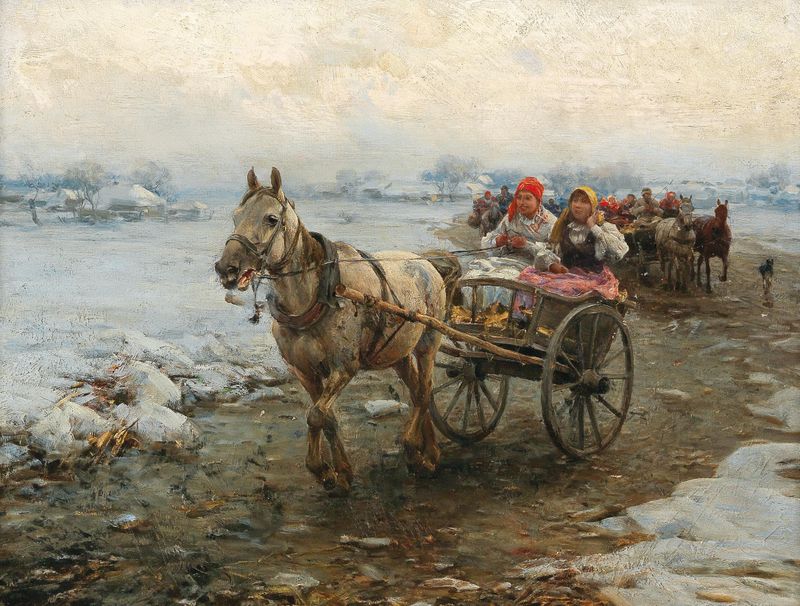
Could beauty survive in a century of chaos? In a world often riddled with turmoil, the quiet grace of everyday life unfolds in unexpected places. Look closely at the center of the canvas, where a horse-drawn cart ambles down a village street. The earthy tones of the cobblestones contrast with the vibrant greens of surrounding trees, creating a sense of harmony. Notice how the artist employs soft brushstrokes to depict the dappled sunlight filtering through the leaves, illuminating the cart and its passengers.
The gentle play of light evokes a feeling of nostalgia, inviting viewers to linger and breathe in the simplicity of this serene moment. As you explore the edges of the scene, hidden narratives emerge. The figures in the cart, seemingly lost in conversation, embody a connection to their surroundings, suggesting an unspoken bond between humanity and nature. The subtle tension between movement and stillness is palpable, as the cart’s leisurely pace defies the sometimes frantic tempo of village life, reminding us of the importance of pausing to appreciate our journey.
The languid quality of the scene speaks to destiny itself, hinting at the lives intertwined on this path. Alfred von Wierusz-Kowalski painted this work during a period marked by a fascination with rural life and its cinematic charm. While specific dates are often elusive, his style flourished in the late 19th century, when artists sought to capture the essence of everyday moments amidst a rapidly industrializing world in Europe. This period saw a shift towards realism, allowing him to depict the beauty of simple, pastoral scenes while engaging with broader social changes.