
Horsepond on a River — History & Facts
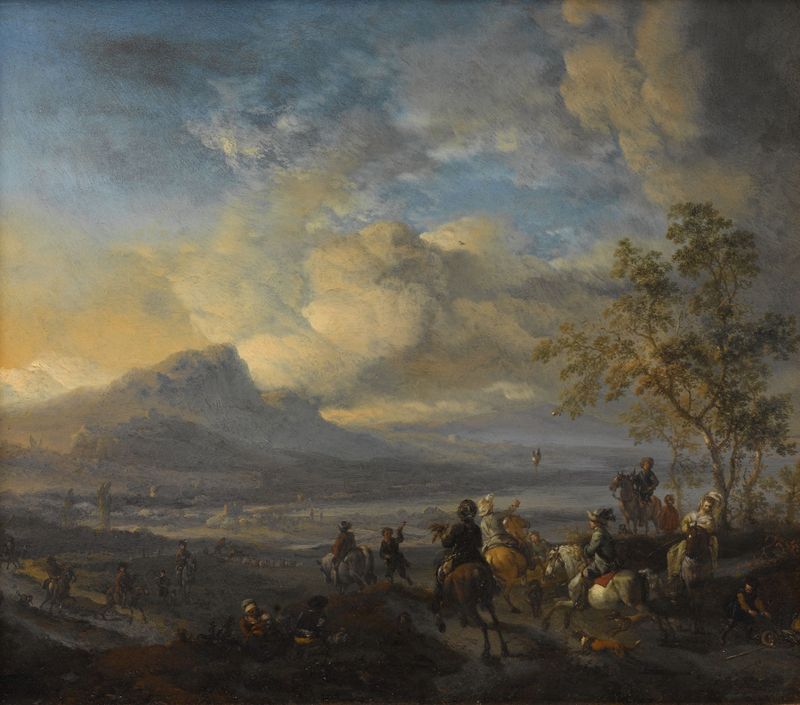
In the deep stillness of Horsepond on a River, Philips Wouwerman invites us to confront that silence, capturing a moment where nature and humanity intertwine, revealing a subtle yet poignant melancholy. Look to the lower left corner where the earthy browns of the riverbank meet the gentle ripples of the water, drawing your eye to the reflection of a somber sky. The soft palette—muted greens and faded blues—creates an atmosphere ripe with introspection. Notice how the intricate strokes of the horses and their riders give a sense of fluid motion, yet they seem lost in their own thoughts, almost like shadows lingering on the edge of reality. Beneath the serene surface lies a tension—the looming clouds hint at an approaching storm, echoing the unspoken anxieties of the era.
The horses, graceful yet burdened, are emblematic of the weight of existence, caught between the tranquility of the landscape and the turmoil of their path. This duality, between light and shadow, joy and sorrow, invites viewers to ponder the fragility of life in a seemingly idyllic moment. Wouwerman painted this work around 1662-1663, during a period of personal and artistic transition in his life. Based in Haarlem, he was deeply influenced by the Baroque movement, which emphasized the interplay of light and dark, and the emotional depth of subjects.
As the art world grappled with the shifting tides of style and technique, the artist's ability to evoke melancholy through vibrant yet muted scenes became a hallmark of his legacy.
More Artworks by Philips Wouwerman
Browse all →
Halt of Cavaliers at an Inn
Philips Wouwerman

Halt of Travellers
Philips Wouwerman

Travelers Awaiting a Ferry
Philips Wouwerman
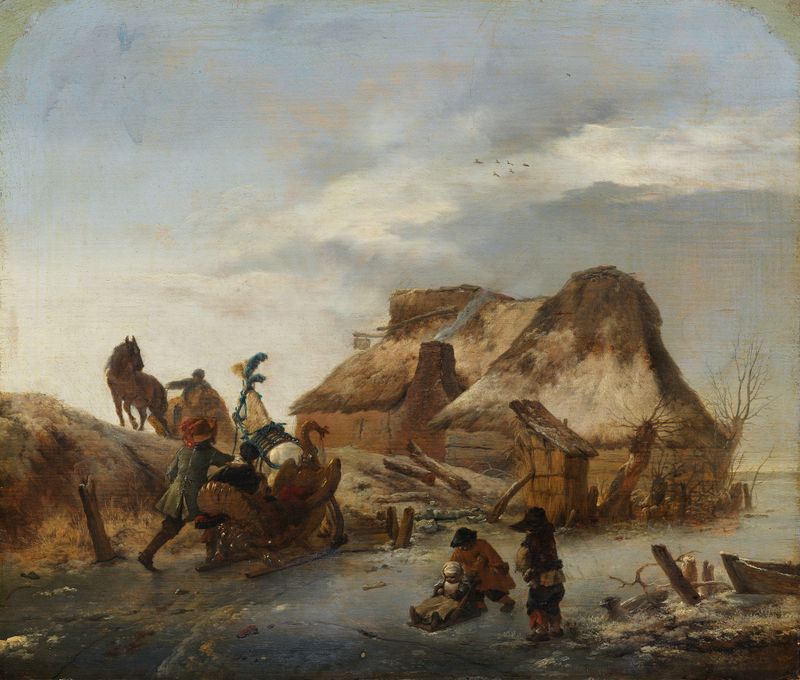
A Nobleman’s Sleigh on the Ice
Philips Wouwerman
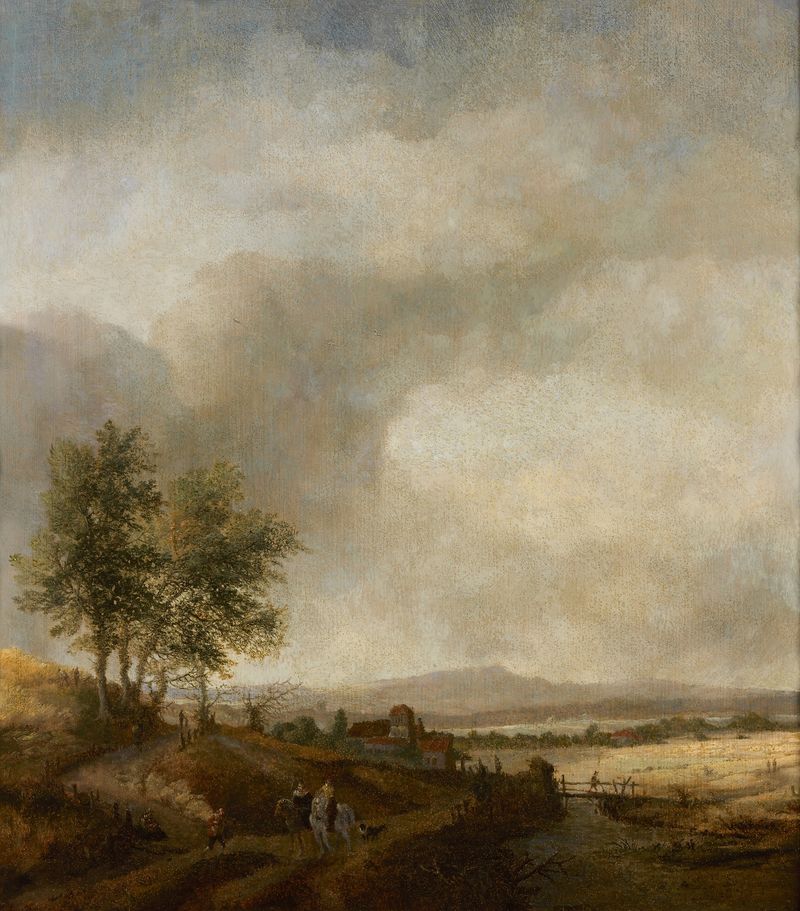
Landschap met ruiters
Philips Wouwerman
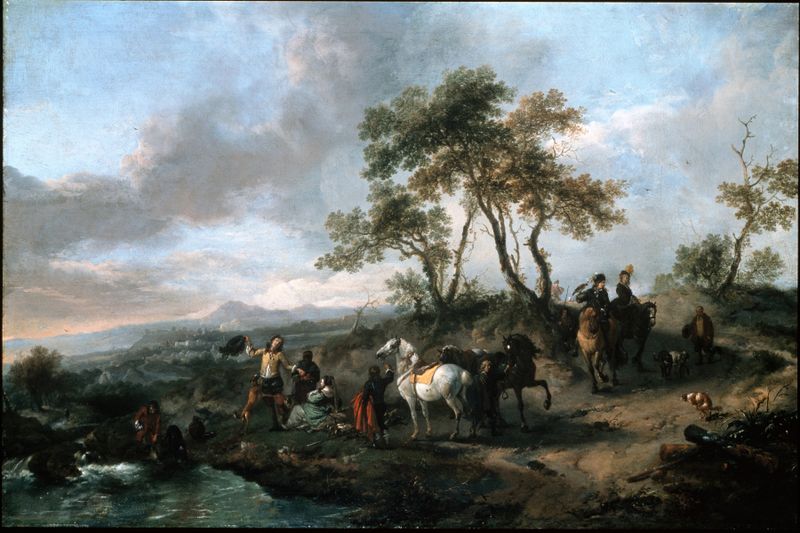
Halt of a Hunting Party
Philips Wouwerman
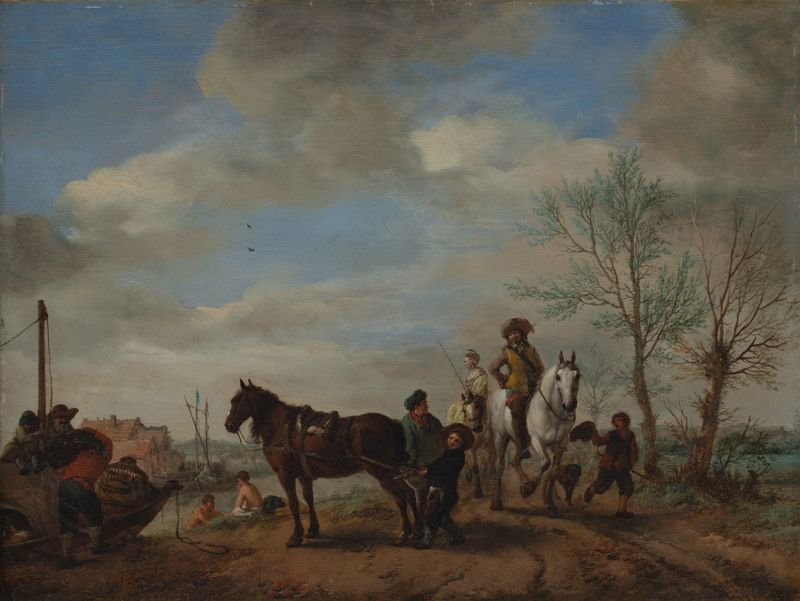
A Man and a Woman on Horseback
Philips Wouwerman
The Falcon Hunt
Philips Wouwerman

Riders at a Blacksmith’s
Philips Wouwerman

Rider in the Dunes
Philips Wouwerman





