
Riders at a Blacksmith’s — History & Facts
Could beauty survive in a century of chaos? Amidst the tumult of the 17th century, Riders at a Blacksmith’s curates a moment of divine harmony, where art transcends turmoil. Look to the left of the canvas, where two horsemen pause in their journey, their noble steeds glistening under a gentle light that bathes the entire scene. The artist expertly captures the textures of their garments and the sheen of the horses’ coats, drawing the viewer’s eye to the intimate interplay between man and beast. The blacksmith, to the right, engages in his craft, his muscular form highlighted against the soft, warm tones of the forge, creating a striking contrast that speaks to both labor and artistry.
The composition is structured yet fluid, reminiscent of a classical tableau, inviting contemplation on the balance of nature and human endeavor. Delving deeper, one might notice the symbolism woven throughout. The blacksmith’s forge, a source of fire and creation, stands as a metaphor for transformation, while the riders, poised and reflective, embody the journey of life and its inherent trials. The serene expressions on their faces contrast with the hard labor of the blacksmith, echoing the coexistence of beauty and toil, divinity and mundanity.
This delicate tension invites viewers to ponder the essence of their own existence in turbulent times. Philips Wouwerman painted this piece in the mid-17th century, during a period marked by profound change in the Dutch Republic. The art world was thriving, characterized by the rise of genre painting and a burgeoning interest in everyday life. Wouwerman’s focus on horses and landscapes attracted acclaim and positioned him among the leading Dutch artists of his era, as he captured the elegance and grace of life in a rapidly evolving society.
More Artworks by Philips Wouwerman
Browse all →
Halt of Cavaliers at an Inn
Philips Wouwerman

Halt of Travellers
Philips Wouwerman

Travelers Awaiting a Ferry
Philips Wouwerman
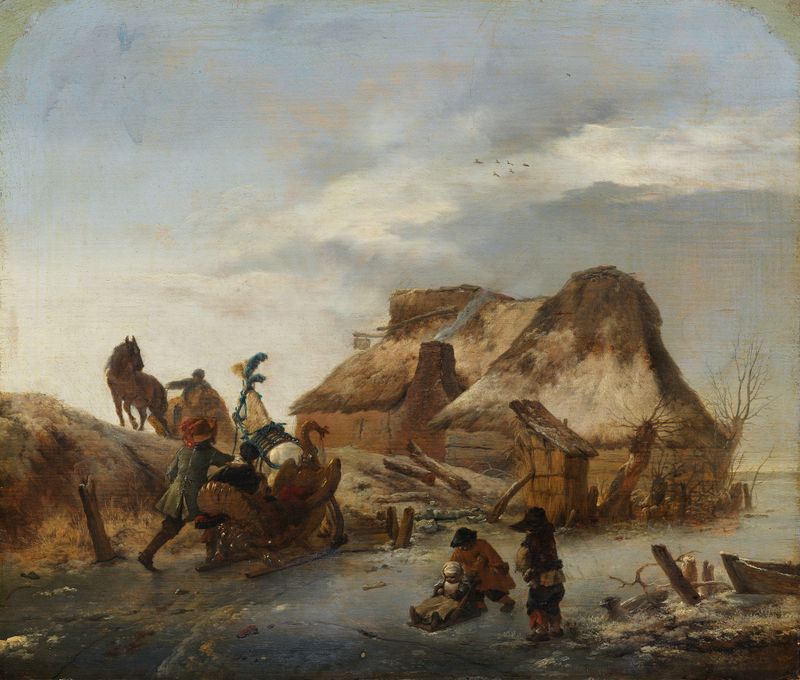
A Nobleman’s Sleigh on the Ice
Philips Wouwerman
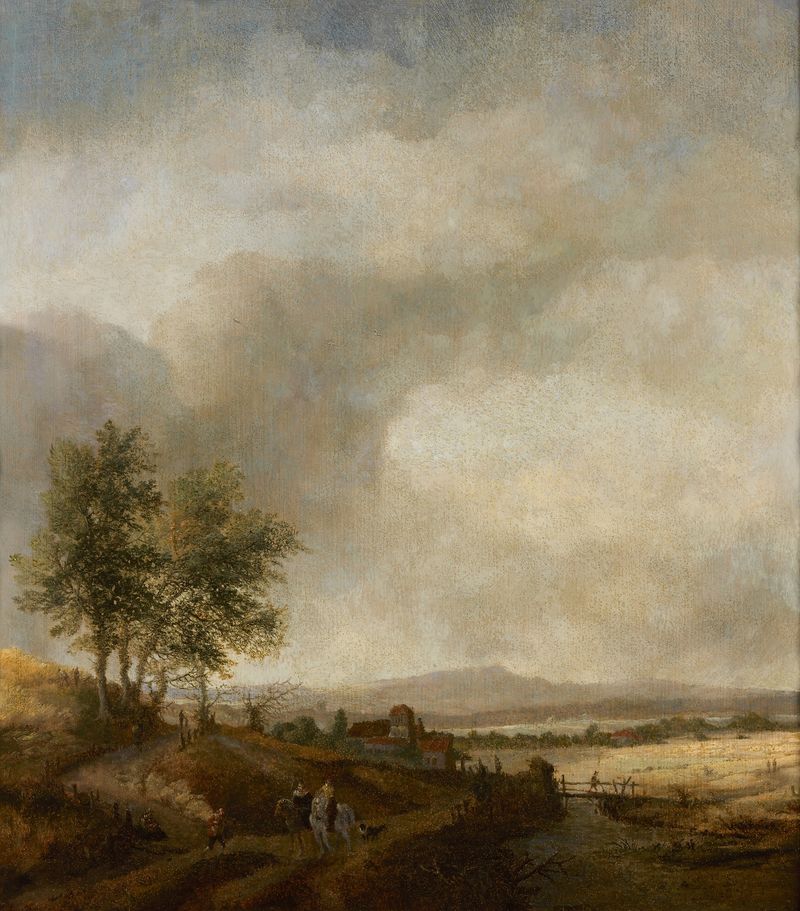
Landschap met ruiters
Philips Wouwerman
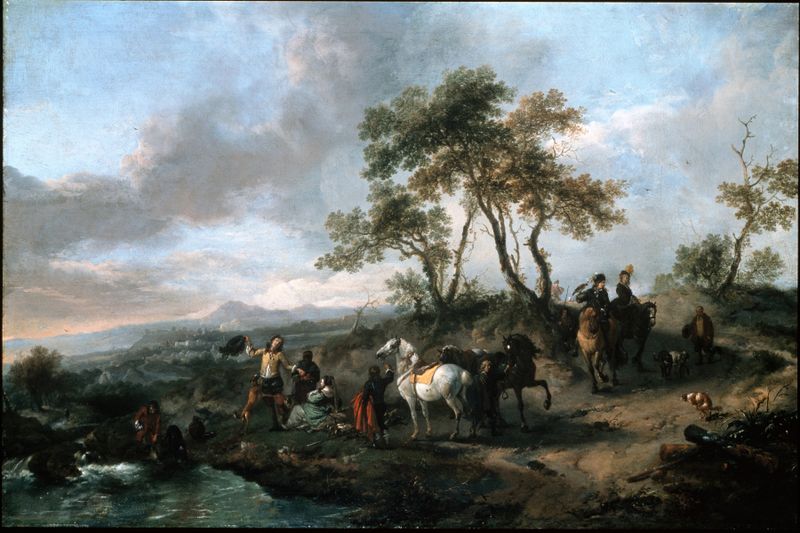
Halt of a Hunting Party
Philips Wouwerman
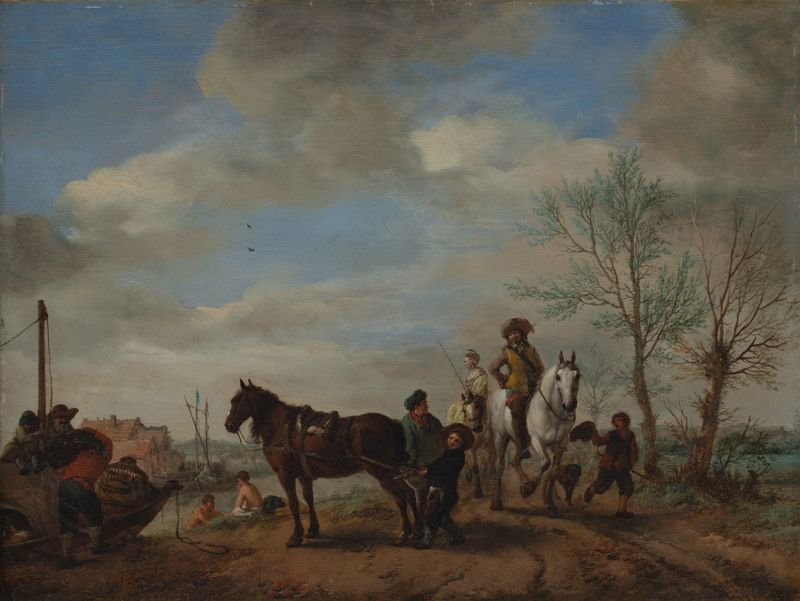
A Man and a Woman on Horseback
Philips Wouwerman
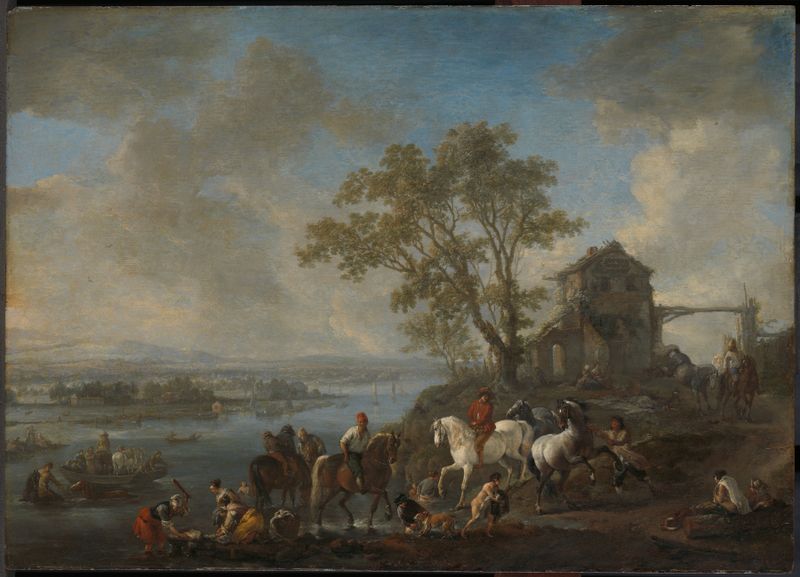
Horsepond on a River
Philips Wouwerman
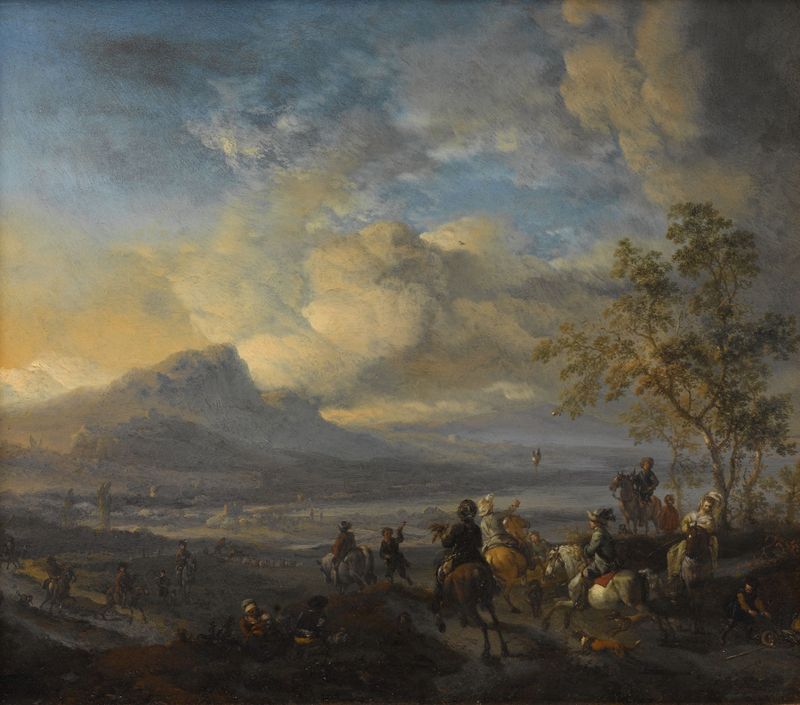
The Falcon Hunt
Philips Wouwerman

Rider in the Dunes
Philips Wouwerman





