
A Man and a Woman on Horseback — History & Facts
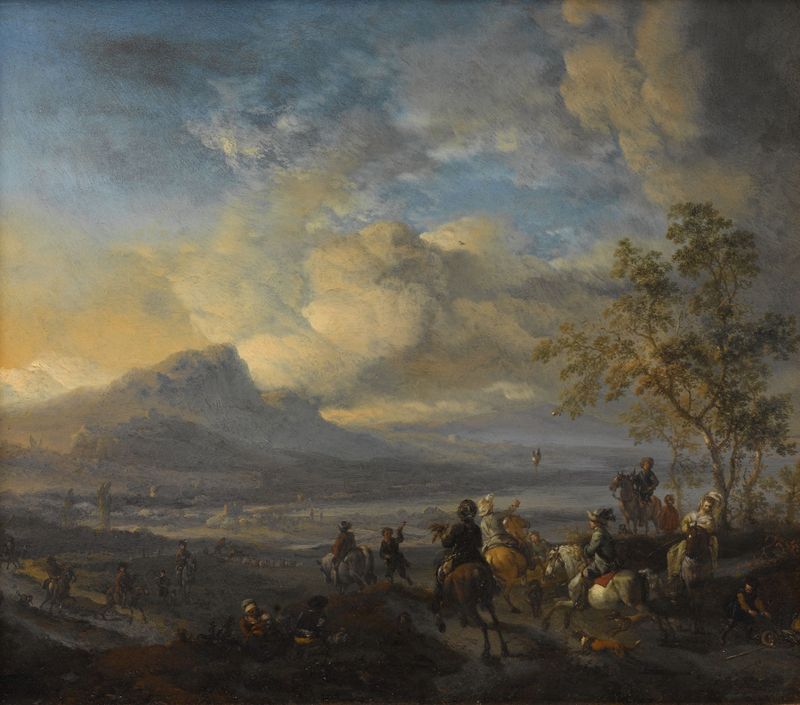
In a world rife with tumult, moments of awakening hint at a deeper harmony waiting to be uncovered. This tranquil encounter on horseback invites us to explore the interplay of nature, connection, and emotion. Look to the center of the canvas where a man and a woman sit poised on their horses, effortlessly merging with the landscape around them. Notice how the gentle curves of their bodies contrast with the sharp, vibrant greens and browns of the foliage.
The light dances across their figures, casting soft shadows that accentuate the depth of their connection. Wouwerman’s meticulous brushwork renders not just the subjects but the essence of movement, capturing an intimacy as they navigate the wild, untamed beauty of their surroundings. Delve deeper, and you’ll find subtle hints of longing and camaraderie woven through the details. The horses, alert yet serene, symbolize freedom and adventure, while the couple’s shared gaze reflects a moment suspended in time.
The serene backdrop of rustic trees and reflective water speaks to both the tranquility and the complexity of their relationship, suggesting a journey that is both internal and external. Each stroke of paint resonates with the awakening of shared experiences, evoking a sense of balance amidst the chaotic rhythms of life. In the years 1653 to 1654, the Dutch Golden Age flourished, and Wouwerman, already an established painter, created this piece while experimenting with the nuances of composition and color. Based in Haarlem, he was influenced by the burgeoning interest in genre scenes that captured everyday life with elegance and depth, a contrast to the violent upheavals of his time.
This work reflects not only his artistic evolution but also the broader societal shift toward celebrating harmony in nature and human connection through art.
More Artworks by Philips Wouwerman
Browse all →
Halt of Cavaliers at an Inn
Philips Wouwerman

Halt of Travellers
Philips Wouwerman

Travelers Awaiting a Ferry
Philips Wouwerman
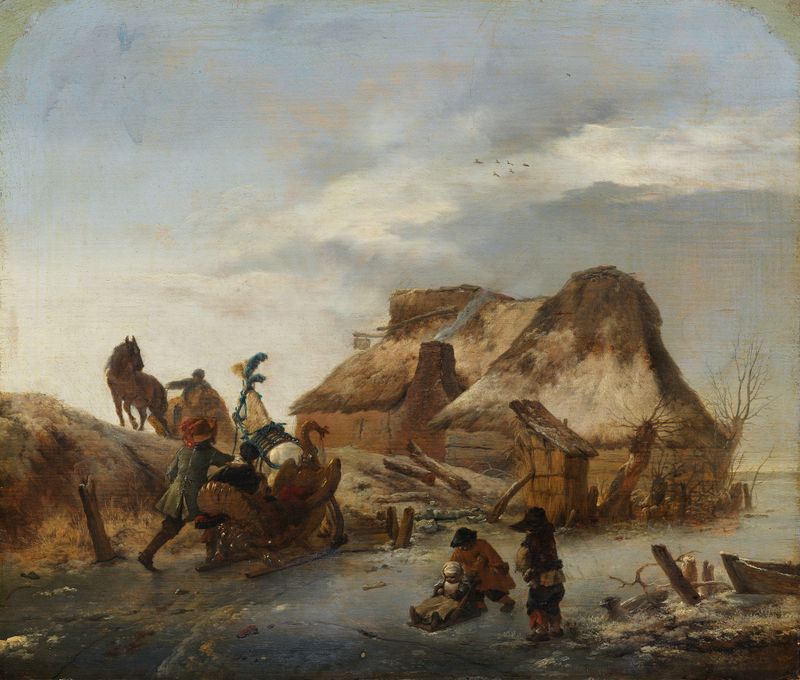
A Nobleman’s Sleigh on the Ice
Philips Wouwerman
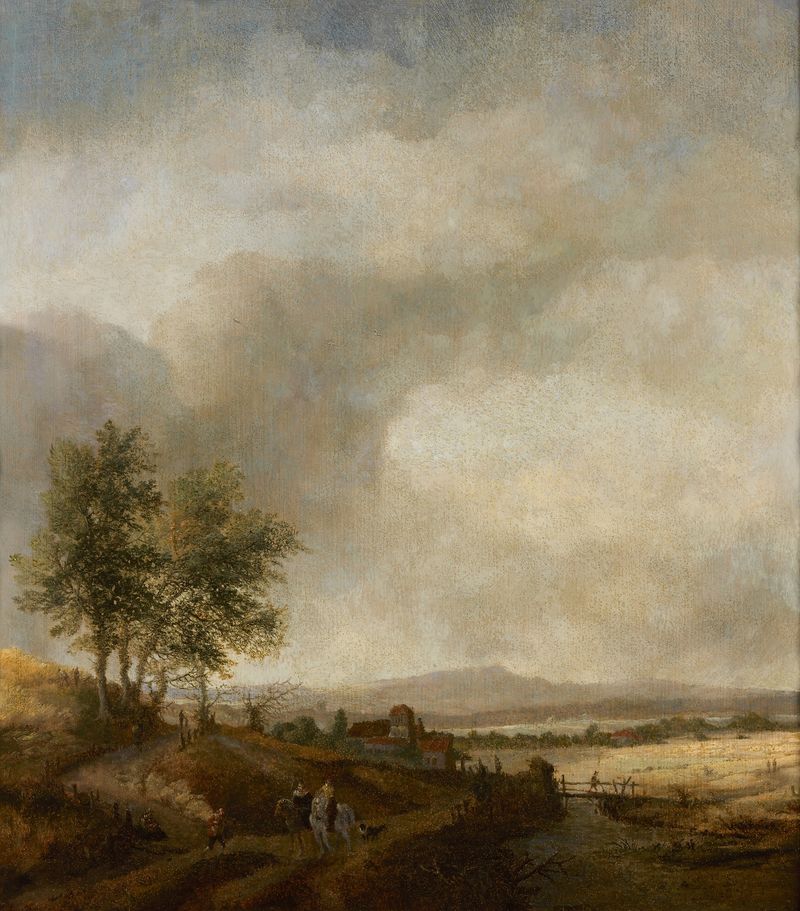
Landschap met ruiters
Philips Wouwerman
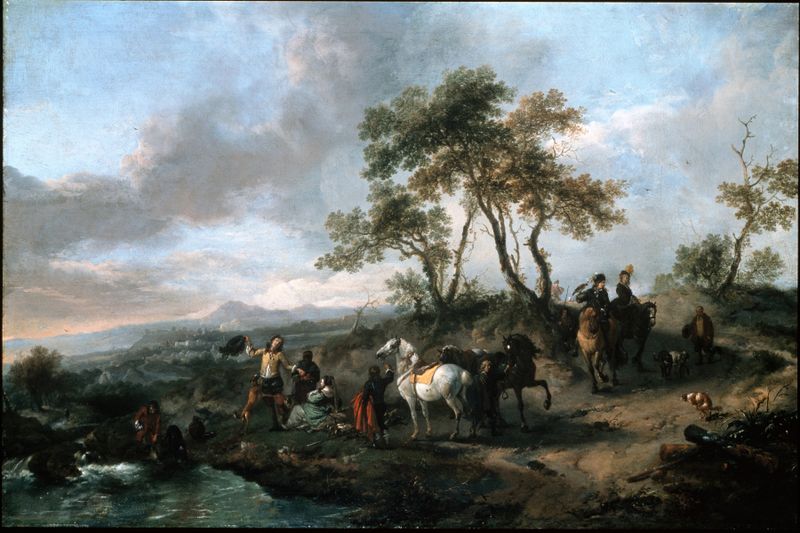
Halt of a Hunting Party
Philips Wouwerman
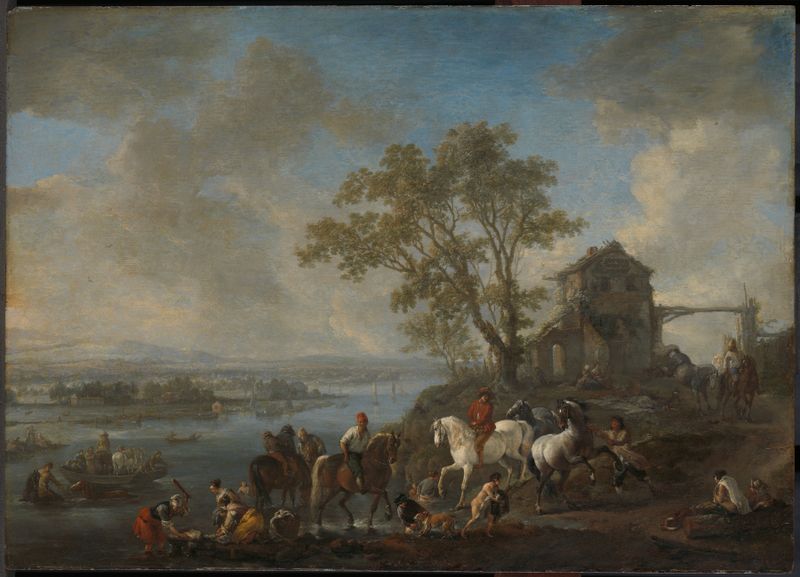
Horsepond on a River
Philips Wouwerman
The Falcon Hunt
Philips Wouwerman

Riders at a Blacksmith’s
Philips Wouwerman

Rider in the Dunes
Philips Wouwerman





