Houses in a Village — History & Facts
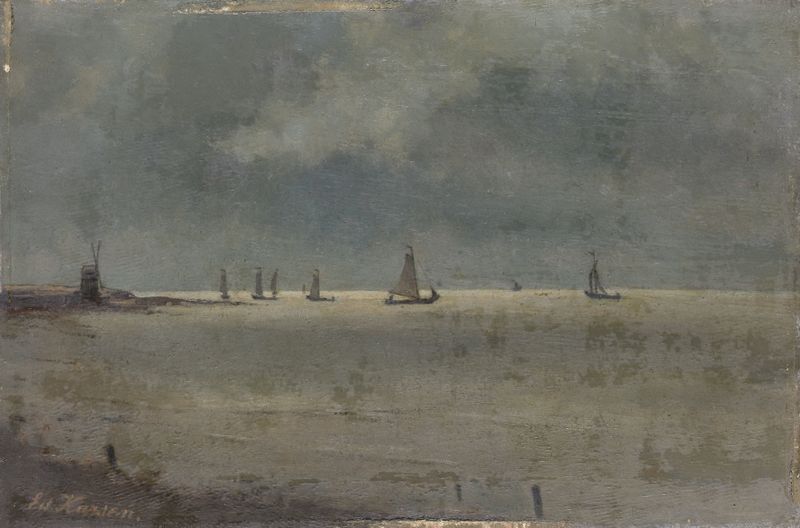
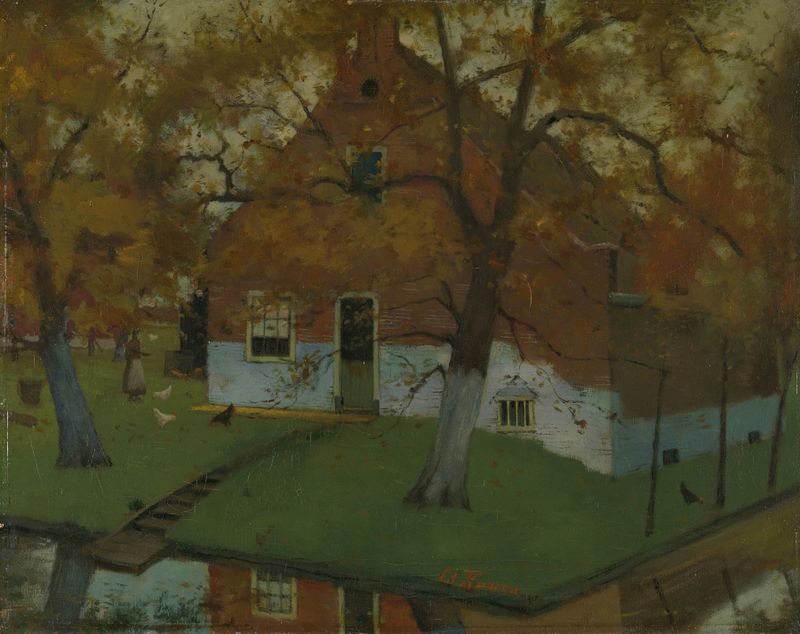
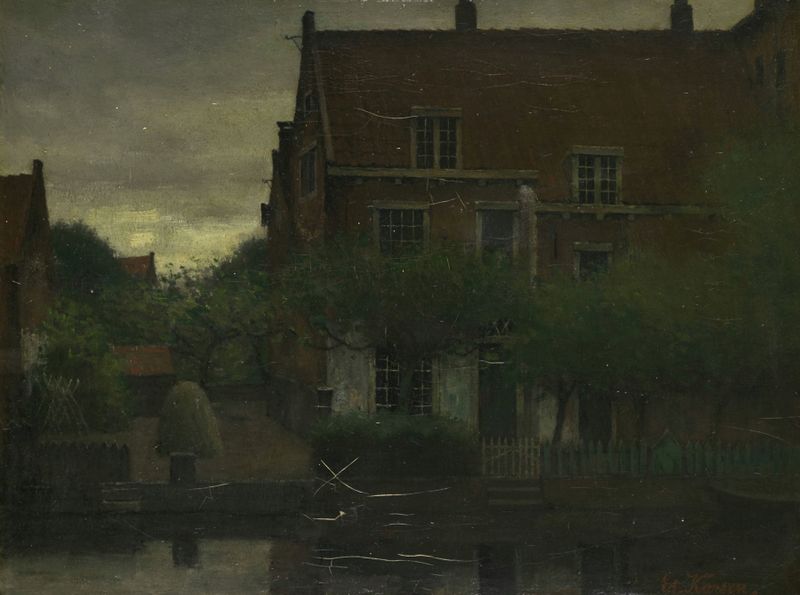
Can paint confess what words never could? In Eduard Karsen's Houses in a Village, the passage of time breathes life into the canvas, capturing a moment that transcends mere representation. Focus on the warm, inviting hues that adorn the houses, their ochres and soft blues melding with shades of green, echoing the tranquility of rural life. The gentle brushstrokes create a sense of texture that invites the viewer to imagine the rough wood and cool stone. Look to the distant horizon where the sky meets the village, a soft gradient hinting at the transition from day to night, suggesting both the end of one chapter and the promise of another. Delve into the overlapping shadows cast by the houses, which tell stories of solitude and community as they stand side by side yet distinct in character.
The slight variations in architecture symbolize the uniqueness of each inhabitant’s experience, while the serene landscape envelops them, hinting at nature’s ever-present influence. This interplay between manmade structures and the natural world reveals a deeper narrative about the passage of time — the houses endure while lives within them evolve. Karsen created Houses in a Village in the late 19th century, a period marked by rapid industrialization and urban migration in Europe. Working in the Netherlands, he was part of a movement that sought to capture the beauty of rural life amidst the changing tides of modernity.
During this time, Karsen’s approach reflected both a nostalgia for a simpler existence and a recognition of the inevitable march of time, as he immortalized a scene that might soon be transformed or forgotten.