Watercourse with Sail Barges — History & Facts
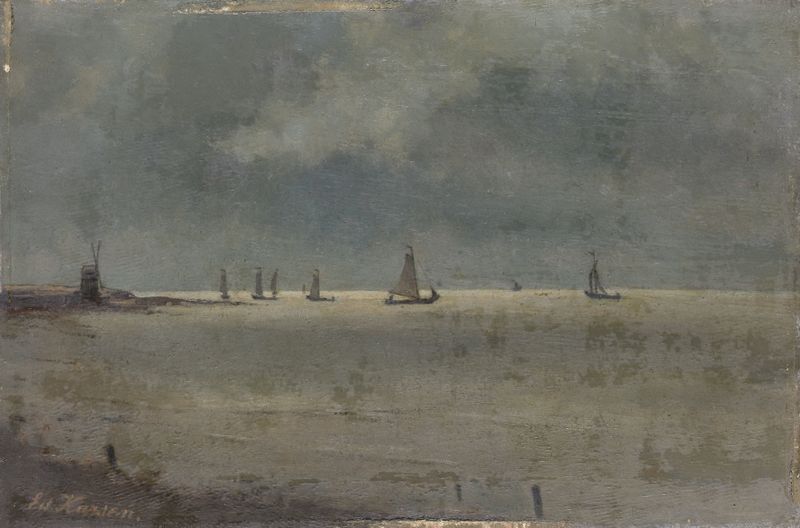
What secret hides in the quiet of the canvas? In a world that often rushes by, stillness can be a profound revelation, inviting us to listen closely to the whispers of nature. Focus first on the tranquil water stretching across the composition, a reflective tableau that captures the essence of calm. The gentle strokes of blue and green merge seamlessly, evoking a sense of serenity. Notice how the sail barges drift with an almost deliberate slowness, their white sails billowing softly against the muted backdrop of trees.
Each element is painted with meticulous care, drawing the viewer’s eye toward the horizon, where water meets sky in a delicate embrace. Beneath this peaceful exterior lies a tension between human industry and the natural world. The barges, though serene in their motion, serve as a reminder of the ever-present influence of man on the landscape. The contrast between the vibrant sails and the subdued colors of the surrounding vegetation highlights this relationship, suggesting both harmony and disturbance.
The silence of the scene invites contemplation on the balance between progress and preservation, evoking a deeper emotional resonance. During the period of 1885 to 1912, the artist explored themes of nature and modernity, reflecting a broader transition in the art world towards Impressionism. Working in the Netherlands, Eduard Karsen captured the essence of quietude in a time when industrialization was rapidly changing landscapes. His commitment to representing subtle beauty amidst shifting social dynamics marked a significant moment in his artistic evolution.