Overcast Day — History & Facts
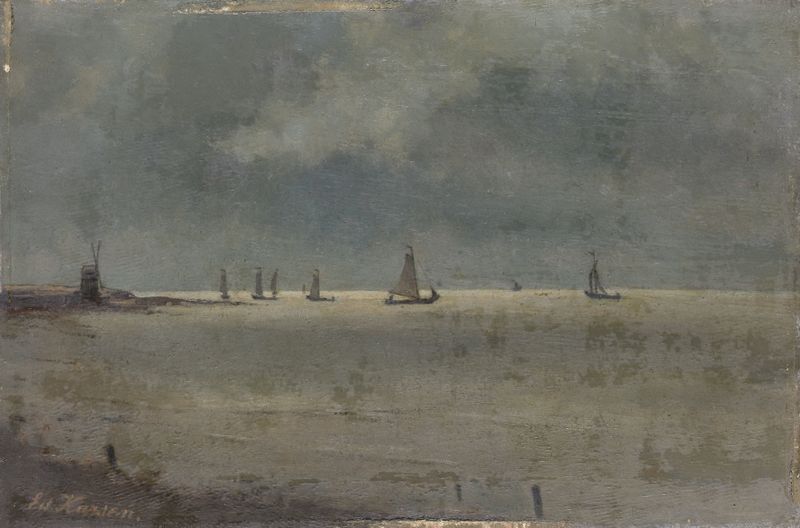
In Overcast Day, the realm of movement unfolds like a whisper, beckoning viewers to delve into its serene yet dynamic embrace. Look to the center of the canvas, where a swirling tableau of muted grays and soft blues dances in unison. The sky, heavy and overcast, looms above a tranquil landscape that is alive with subtle gestures. Notice how each stroke of Karsen's brush captures the gentle sway of trees, their limbs bending gracefully under the weight of the clouds.
The fluidity of the technique creates a sense of breath, inviting the viewer to feel the soft caress of the wind. Beneath this calm surface lies a profound interplay of emotion and tension. The contrast between the dark, brooding sky and the tender earth suggests both comfort and unease, emblematic of an inner struggle. As the landscape pulses with life, one senses an underlying yearning — a desire for the sun to break through the overcast veil.
The movement within the scene mirrors human experience, oscillating between tranquility and the anticipation of change. Created between 1885 and 1900, Karsen's work reflects a period of great innovation within the art world, where Impressionism was sweeping across Europe. Living in the Netherlands, he was influenced by the changing light and weather of his surroundings, capturing the emotional resonance of nature. During this time, artists sought to infuse their works with a sense of immediacy and truth, a response to the rapidly shifting modern world.