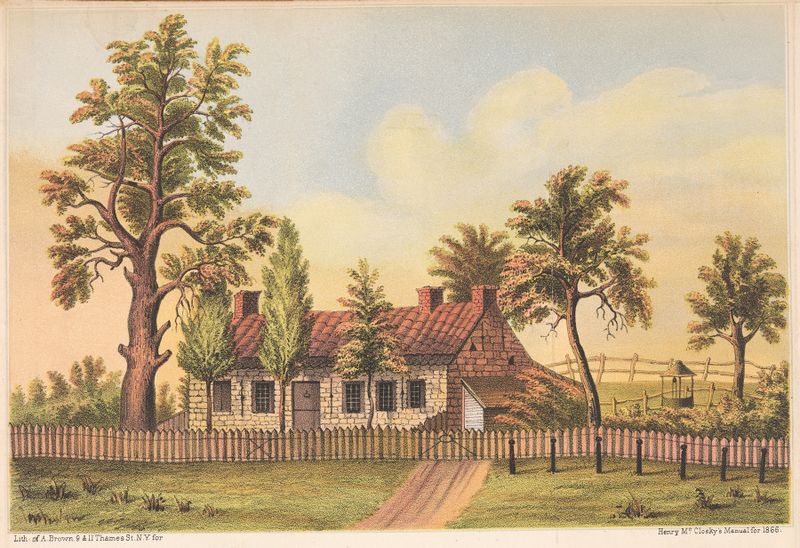
Howard’s Inn. 1776. From which the guides of the flanking detachment of the British were taken. — History & Facts
What if silence could speak through light? In Arthur Brown's Howard’s Inn, the interplay between shadow and illumination unveils a poignant narrative of innocence lost amid the echoes of history. Look to the center of the canvas, where a warm glow emanates from an inviting hearth, casting gentle radiance that dances across the faces of weary travelers. The figures, draped in the garb of another era, are caught in a moment of respite, their expressions conveying a mix of hope and trepidation. Notice how the intricate details of the inn's architecture, with its rustic beams and soft textures, invite the viewer into a world of safety, even as the darkened corners whisper of the surrounding conflict. Yet, beneath this idyllic surface lies a deeper tension.
The juxtaposition of comfort against the historical backdrop of the British detachment offers a meditation on the fragility of peace. The inn, a haven for the weary, stands as a silent witness to the encroaching chaos of war. Each figure reflects a unique story, their innocence juxtaposed against the reality of impending change, suggesting a collective yearning for stability in uncertain times. In 1868, Arthur Brown painted Howard’s Inn amidst a rapidly evolving artistic landscape.
The years following the American Civil War saw artists grappling with themes of conflict and reconciliation, often exploring the human condition against a backdrop of societal upheaval. Brown's choice to capture a moment of serenity amidst such turmoil reveals his commitment to highlighting the innate resilience of the human spirit, a quiet testament to the enduring quest for solace.