
Huis Heringa te Marsum — History & Facts
What secret hides in the quiet of the canvas? In the stillness of Huis Heringa te Marsum, a yearning for the past whispers from the painted walls and the gentle landscape that cradles them. Look to the center of the composition, where the stately house stands proudly, its elegant lines cutting into the soft blue of the sky. Notice how the light dances across the roof, illuminating the intricate details of the architecture, while shadows play in the garden below. The lush greenery surrounding the building invites the viewer’s gaze, creating a serene balance between structure and nature, a harmony that draws one into the scene's tranquil embrace. Yet, beneath the surface of this idyllic setting lies an emotional tension, a sense of longing for what once was.
The house, a symbol of stability, stands alone, hinting at stories untold and memories faded. The distant horizon suggests the passage of time, while the muted colors evoke a bittersweet melancholy, reminding us of life’s fleeting moments. Each brushstroke serves as a reminder of impermanence — a longing for connection and reminiscence. During 1734, when this piece was created, Abraham de Haen the Younger was establishing himself in the Dutch art scene, focusing on landscapes and architectural studies.
At this time, the Netherlands was navigating the aftermath of its Golden Age, grappling with change and nostalgia for its former splendor. The artist's work reflects this cultural shift, capturing both the beauty of the present and an echo of a cherished past, inviting viewers to reflect on their own longings.
More Artworks by Abraham de Haen the Younger
Browse all →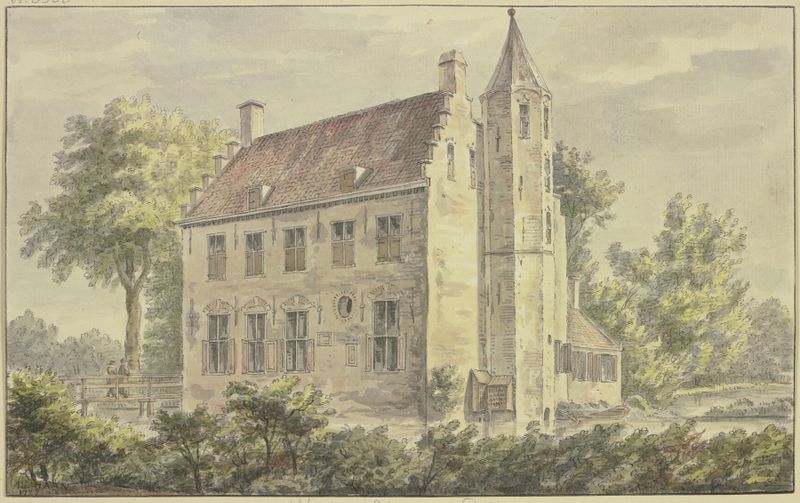
More Architecture Art
Browse all →
The statue of Liberty
Frédéric Auguste Bartholdi

View of Houses in Delft, Known as ‘The Little Street’
Johannes Vermeer

View of Houses in Delft, Known as ‘The Little Street’
Johannes Vermeer

The Cathedral in Rouen. The portal, Grey Weather
Claude Monet

The yellow house
Vincent van Gogh

The Church in Auvers-sur-Oise, View from the Chevet
Vincent van Gogh