t’Huis te Altena by Delft — History & Facts
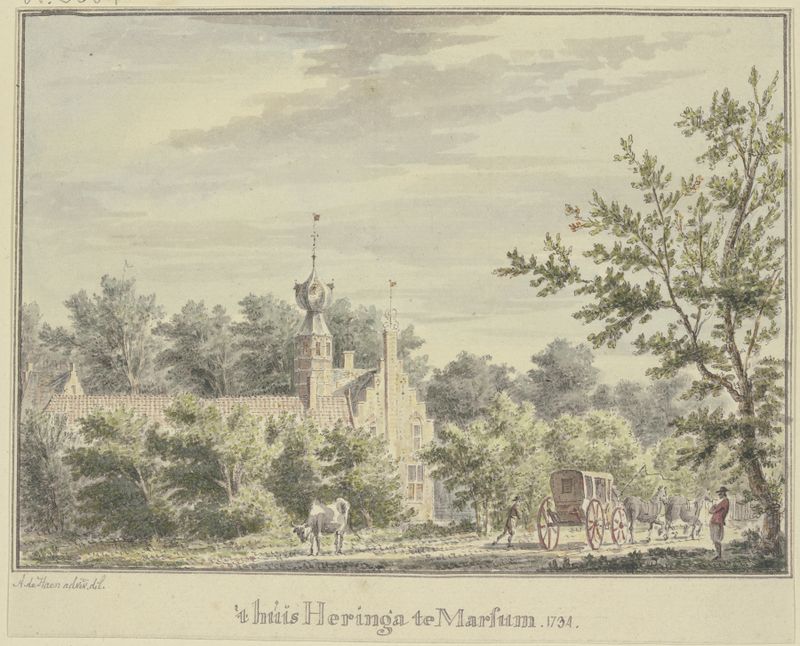
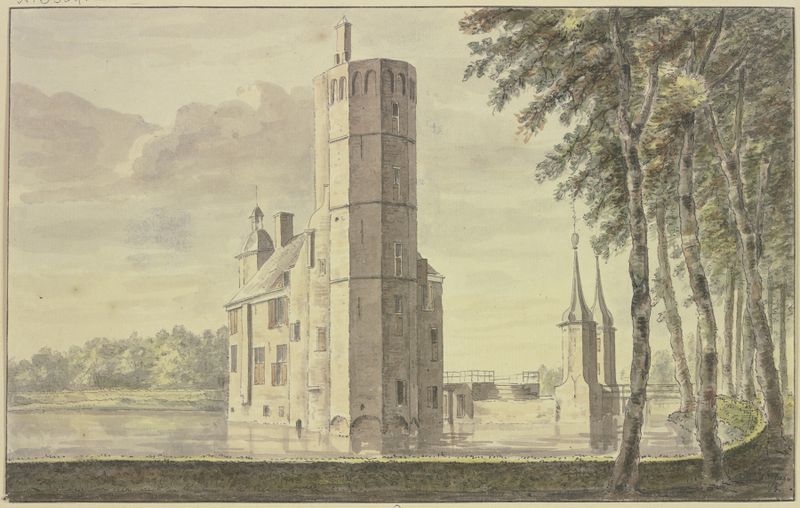
Could beauty survive in a century of chaos? In t’Huis te Altena, the essence of rebirth whispers through the delicate brushstrokes, inviting viewers into a world where tranquility and artistry converge amidst tumultuous times. Look to the foreground, where a charming house stands proudly amid lush greenery, its white façade glowing beneath a gentle, diffuse light. Notice how the vibrant greens of the surrounding foliage contrast with the serene blues of the sky, framing the structure with a sense of harmony. The careful attention to detail in the way the shadows dance across the landscape reveals the artist's hand, echoing the hope of serenity in an uncertain era. This painting unfolds layers of meaning through its composition.
The idyllic setting suggests a refuge from the chaos of the early 18th century, perhaps reflecting a desire for stability and peace. The interplay of light and shadow not only highlights the architectural elegance but also symbolizes the transition from despair to hope, a reminder that beauty can emerge even in the darkest moments. The solitary house acts as a metaphor for resilience, standing firm against the tide of history. Abraham de Haen the Younger painted t’Huis te Altena in 1728 while residing in Delft, a city known for its rich artistic heritage.
During this period, Europe was grappling with the aftermath of wars and social upheaval, yet the artist sought to capture a moment of beauty and stability. His work contributes to the Dutch tradition of landscape painting, emphasizing the importance of nature and architecture as symbols of refuge and renewal.