
Huts on a mountain pasture — History & Facts
Could beauty survive in a century of chaos? In the tender embrace of nature, the landscape breathes with an ecstasy that defies turmoil. The serene composition, with its gentle hues and soft outlines, invites reflection on the harmony between humanity and the world around it. Look to the foreground, where quaint huts nestle against the undulating slopes, their wooden forms echoing the ruggedness of the mountain. Notice how muted earth tones contrast with splashes of vibrant green and cobalt sky, drawing the eye upward.
The painter’s brushstrokes create a lush texture in the grass, while the clouds drift lazily, casting soft shadows that dance over the scene. The composition’s balance reflects a tranquil coexistence, inviting contemplation. Here, the juxtaposition of architecture and nature speaks to the tension between civilization and the wild. The huts, humble yet resilient, suggest a fleeting human presence in a vast landscape.
The light filtering through clouds hints at hopeful resilience amidst uncertainty, while the peaceful setting serves as a reminder of the beauty that persists, even when chaos looms nearby. Each detail captures the essence of a moment where ecstasy can flourish, transcending the surrounding complexities. Franz Steinfeld painted this work during a time when the Romantic movement was gaining momentum, stirring a deep appreciation for nature's beauty. Emerging from the backdrop of 19th-century Europe, characterized by rapid industrialization and political upheaval, the artist sought to portray idyllic scenes that celebrated harmony.
His focus on rural landscapes reflects a yearning for simplicity and a connection to the natural world, resonating with a society grappling for meaning amidst change.
More Artworks by Franz Steinfeld
Browse all →
Ansicht aus dem Salzkammergut
Franz Steinfeld

A View of Perchtoldsdorf near Vienna
Franz Steinfeld
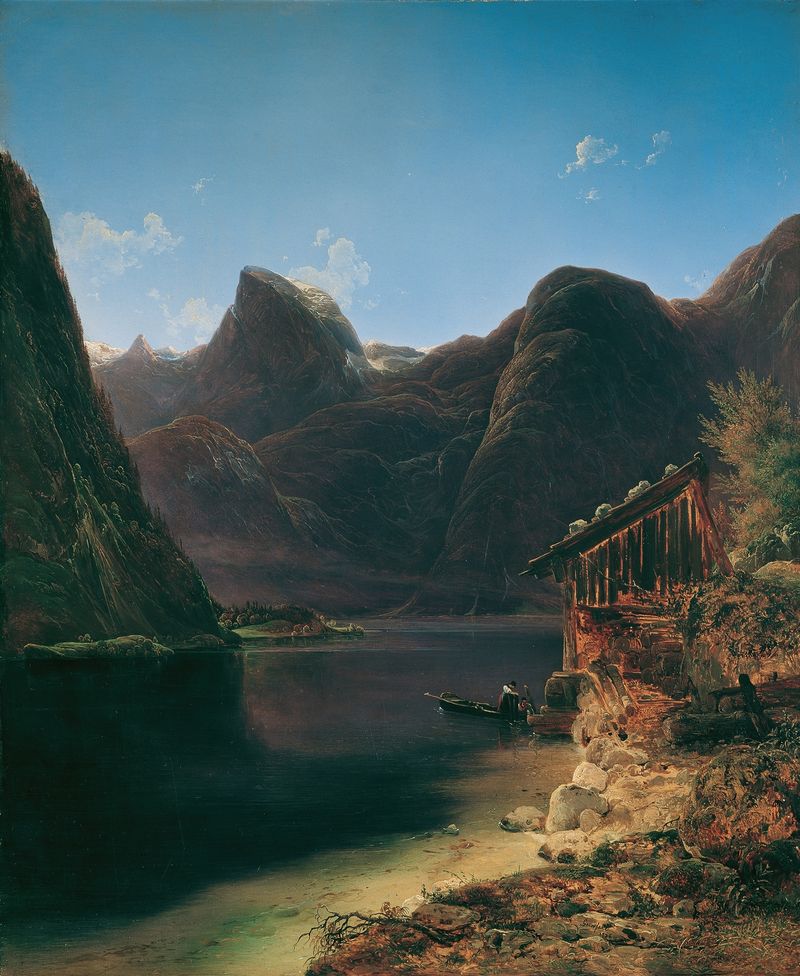
Der Hallstätter See
Franz Steinfeld
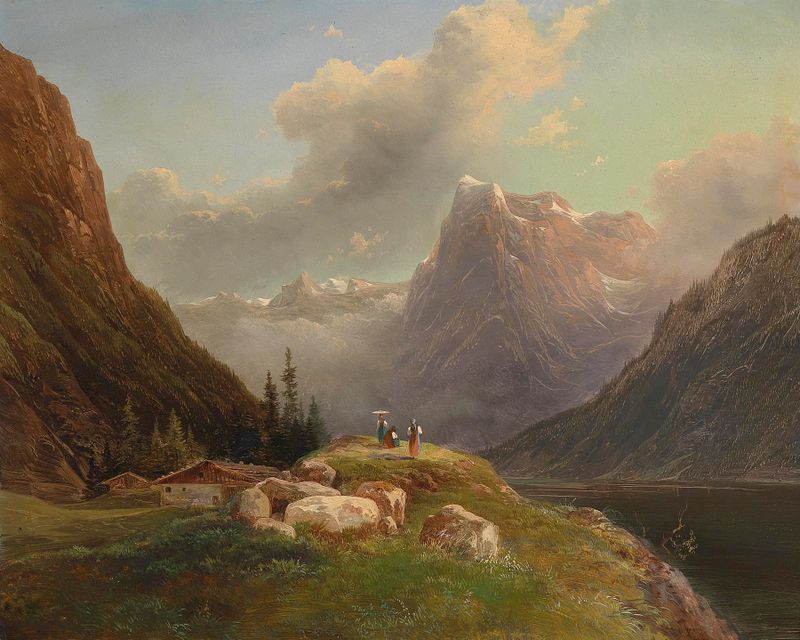
Salzkammergut
Franz Steinfeld

Felsental (Im Höllental)
Franz Steinfeld
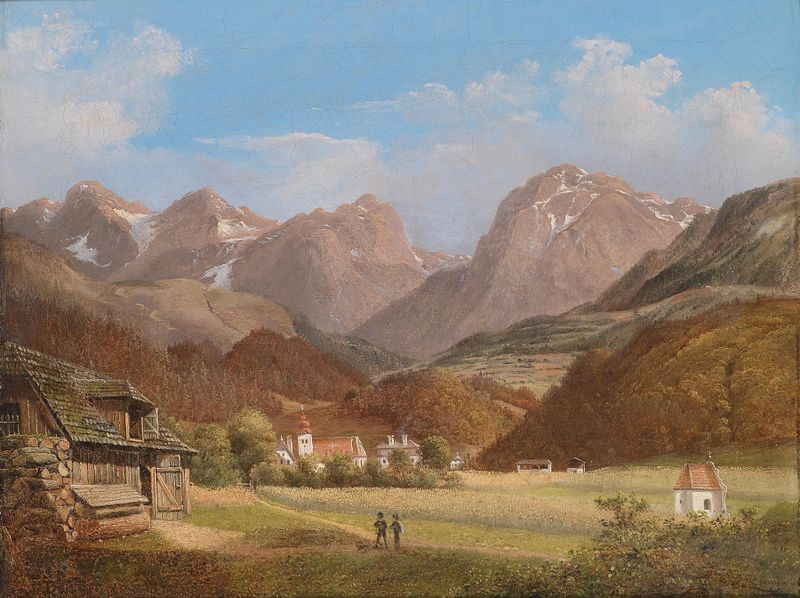
Scene near Krain
Franz Steinfeld
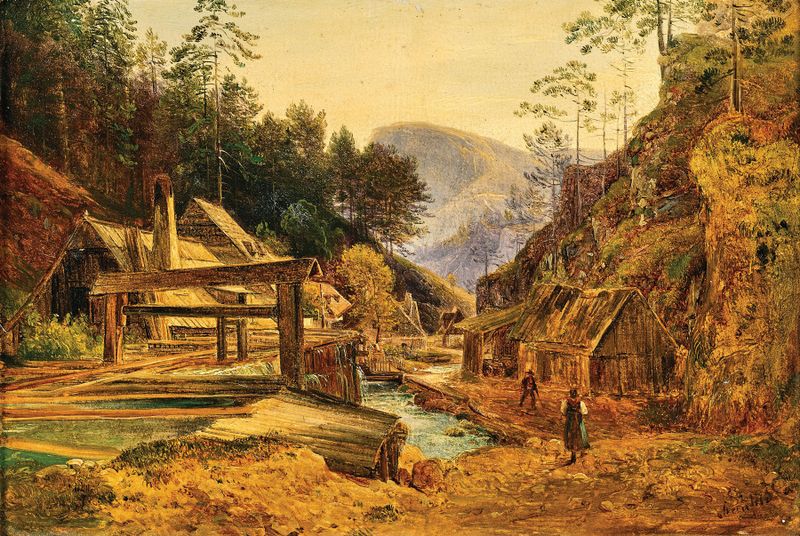
A Landscape with a Hammer Mill
Franz Steinfeld
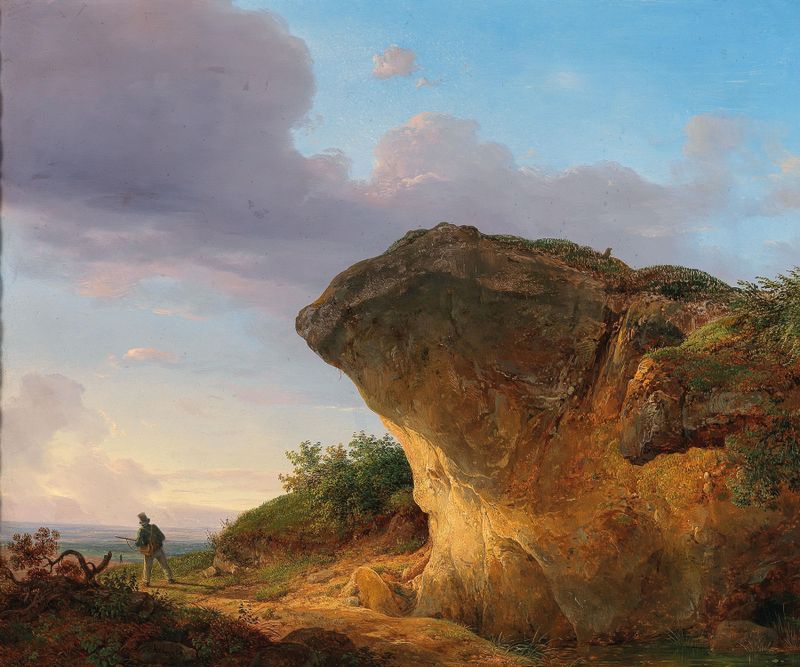
Hunter before a Rock
Franz Steinfeld

Mill On Lake Hallstatt
Franz Steinfeld

Wild Waters
Franz Steinfeld





