Ideallandschaft — History & Facts
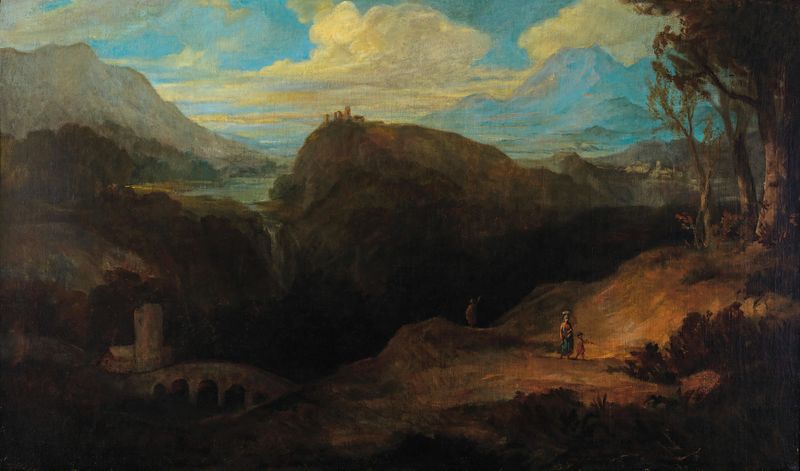
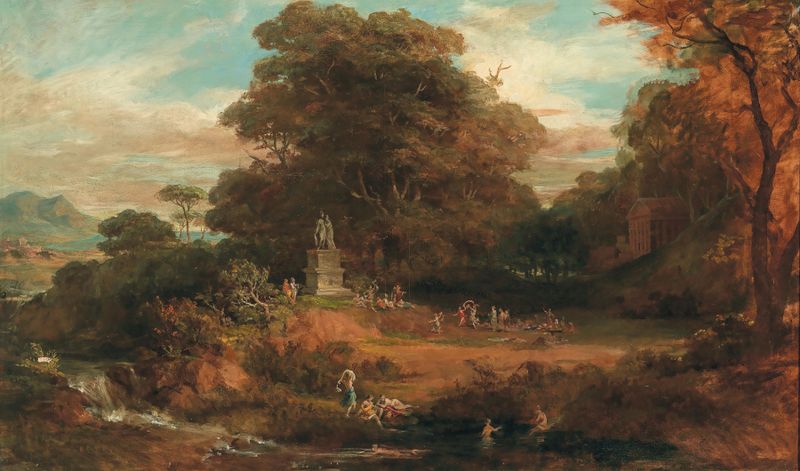
What secret hides in the quiet of the canvas? In the interplay of light and shadow, we find an invitation to explore the depths of our own contemplation. Focus first on the serene landscape that stretches across the canvas, where soft hues blend seamlessly into one another. The gentle rise of the hills greets the horizon, while the delicate interplay of light and shadow reveals an ethereal quality, as if nature itself is whispering secrets. The palette, dominated by soothing greens and warm earth tones, evokes a sense of harmony and tranquility, inviting the viewer to linger and absorb every detail. Yet, beneath this veneer of calm, there lies a tension that brings the scene to life.
Notice the juxtaposition of light and dark; the shadows cast by the trees hint at mysteries lurking just beyond the visible. This contrast, both inviting and foreboding, speaks to the duality of existence—the beauty of nature interwoven with the unresolved questions that dwell within it. Each brush stroke is a meditation on the uncharted territories of our emotions and thoughts. Friedrich von Amerling painted this work during a time of personal growth and exploration, likely in the mid-19th century, when Romanticism was deeply influencing artists across Europe.
As an Austrian painter entrenched in the tradition yet looking toward modernity, he was navigating a world filled with shifts in artistic expression. This quiet yet profound landscape captures the essence of a moment where life and art intersect, inviting viewers into a dialogue with their inner selves.