
Ideallandschaft mit Christus und den Jüngern — History & Facts
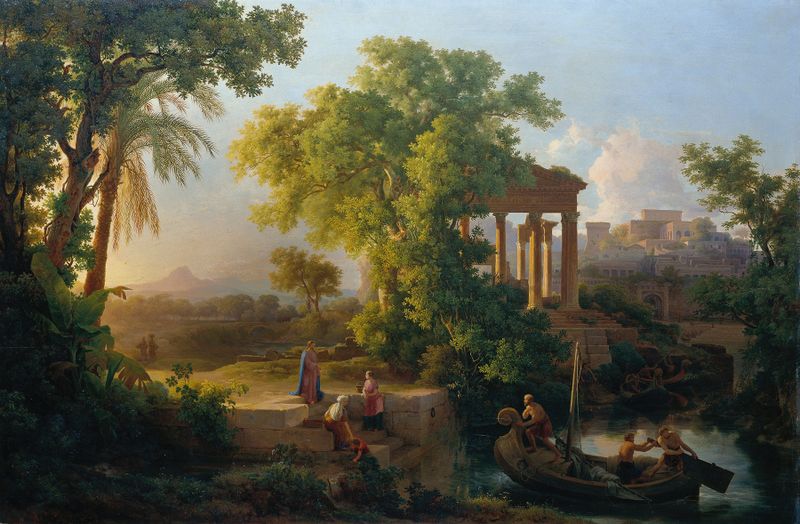
In the realm of art, light serves not only as illumination but as a silent narrator of stories yearning to be told. Focus on the delicate luminescence that bathes the figures in Ideallandschaft mit Christus und den Jüngern. Notice how the ethereal light cascades over Christ and his disciples, casting both illumination and shadow that enhances their solemn expressions. The verdant landscape envelops them in soft hues of greens and browns, providing a serene backdrop that feels almost otherworldly.
The harmonious interplay of light and color invites the viewer to a sanctuary of contemplation, drawing attention to the divine presence at the center. As you gaze deeper into the composition, you might sense an emotional tension, a juxtaposition between the tranquility of the idyllic landscape and the weight of the moment it captures. The figures’ postures convey a sense of reverence and unity, yet their gazes remain contemplative, hinting at the struggles of faith and doubt. The celestial light seems to symbolize hope, yet its gentle embrace reveals the fragility of human existence in contrast to the divine. Created during a period of artistic exploration in the 19th century, Károly Markó painted this piece amidst a burgeoning interest in Romanticism, where nature and spirituality intertwined.
Though the exact date remains unknown, this painting reflects the artist’s profound engagement with landscapes that evoke both peace and introspection, characteristic of his broader body of work. At this time, Markó was refining his style, merging his academic training with his personal vision, weaving narratives that resonate through time.
More Artworks by Károly Markó
Browse all →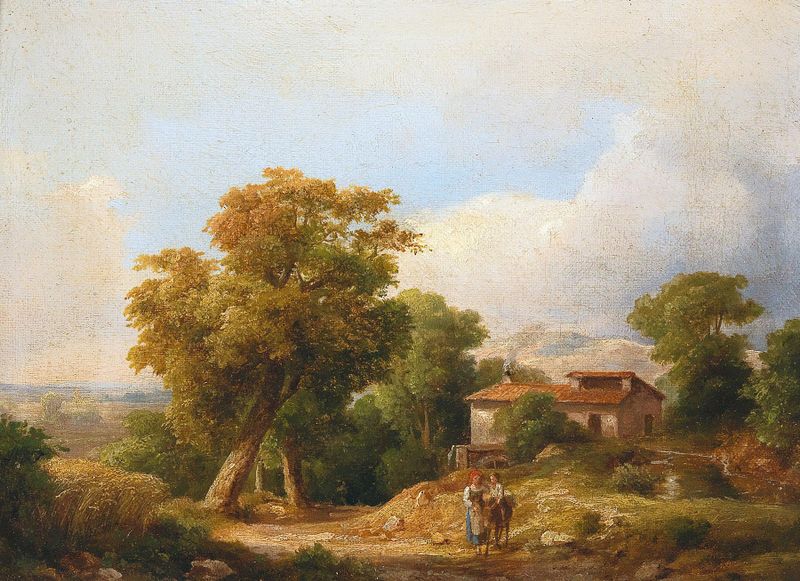
Italian Landscape with Farmhouse
Károly Markó

Landschaft mit Heuernte
Károly Markó
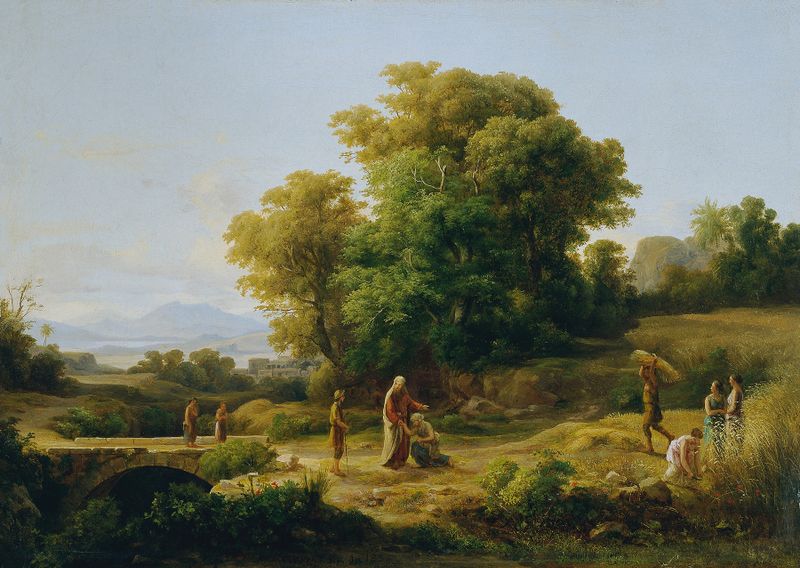
Ideale Landschaft mit Boas und Ruth
Károly Markó

Landscape at Tivoli, with a Scene from the Grape Harvest
Károly Markó
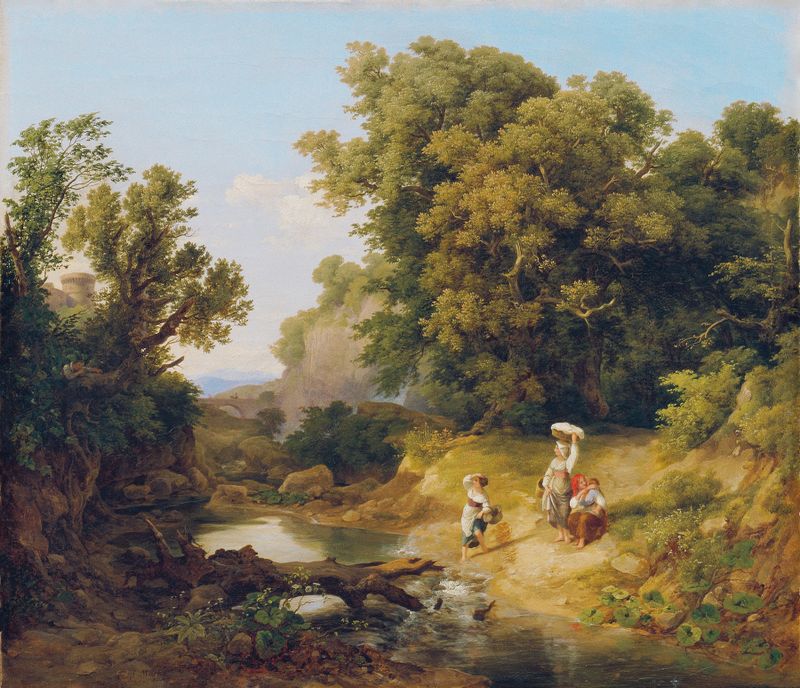
Ideale Landschaft (Italienische Landschaft)
Károly Markó
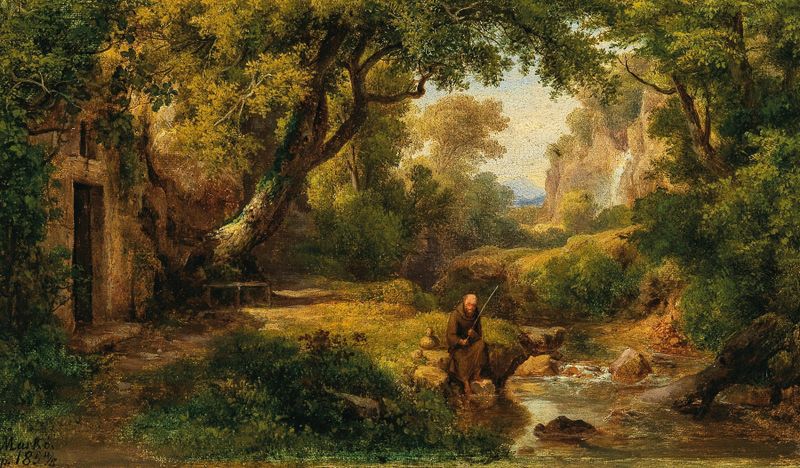
Flusslandschaft mit angelndem Mönch
Károly Markó

Italian Landscapes at Sunset, Fishermen
Károly Markó
Landschaft mit der Berufung des Hl. Petrus
Károly Markó
Landschaft mit Sonnenuntergang
Károly Markó

Frühling am Fluss
Károly Markó
More Religious Art
Browse all →
The Return of the Prodigal Son
Rembrandt van Rijn

The Garden of Earthly Delights
El Bosco

Count Orgaz’ funeral
El Greco

The Hundred Guilder Print: the central piece with Christ preaching, the plate arched
Rembrandt van Rijn

The Descent from the Cross
Rogier van der Weyden

The return of the prodigal son
Rembrandt van Rijn