
Flusslandschaft mit angelndem Mönch — History & Facts
What if beauty was never meant to be finished? In the quiet embrace of nature, Károly Markó invites us to contemplate the eternal. Look to the left at the serene river winding through the landscape, its waters a shimmering reflection of the vibrant greens and earthy browns that cradle the scene. The solitary monk, poised with rod in hand, draws our attention to the delicate interplay between man and nature. Notice how the soft light filters through the trees, casting gentle shadows that dance on the water's surface, creating a tranquil tapestry that speaks of peaceful solitude. The juxtaposition of the monk's stillness against the flowing river serves as a powerful reminder of the fleeting moments of existence.
Here, the act of fishing transcends mere recreation; it becomes a meditative practice, a communion with the divine. Each brushstroke captures not just the physical landscape but the emotional depth found in such simple endeavors, suggesting that in stillness, one can discover a profound connection to the world. During the period when this piece was created, Markó was deeply engaged in the Romantic tradition, which emphasized the beauty of nature and human emotion. Working in Hungary, he captured the essence of the landscape with a focus on realism that sought to evoke both admiration and introspection.
In a time when the world was rapidly industrializing, his works remained a refuge for those seeking solace in the serenity of unspoiled nature.
More Artworks by Károly Markó
Browse all →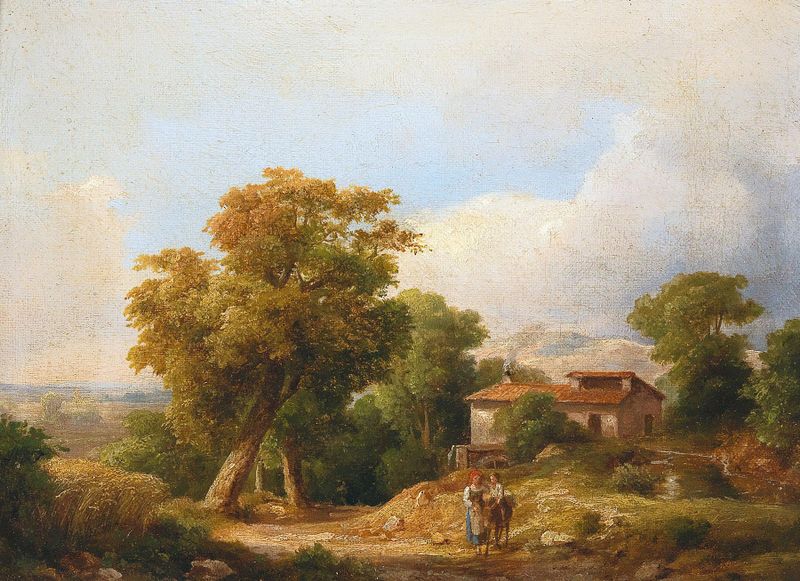
Italian Landscape with Farmhouse
Károly Markó

Landschaft mit Heuernte
Károly Markó
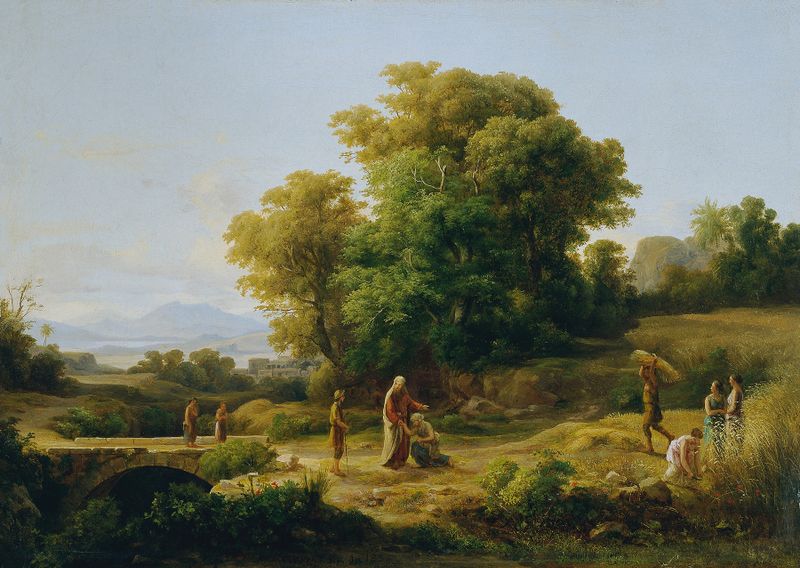
Ideale Landschaft mit Boas und Ruth
Károly Markó

Landscape at Tivoli, with a Scene from the Grape Harvest
Károly Markó
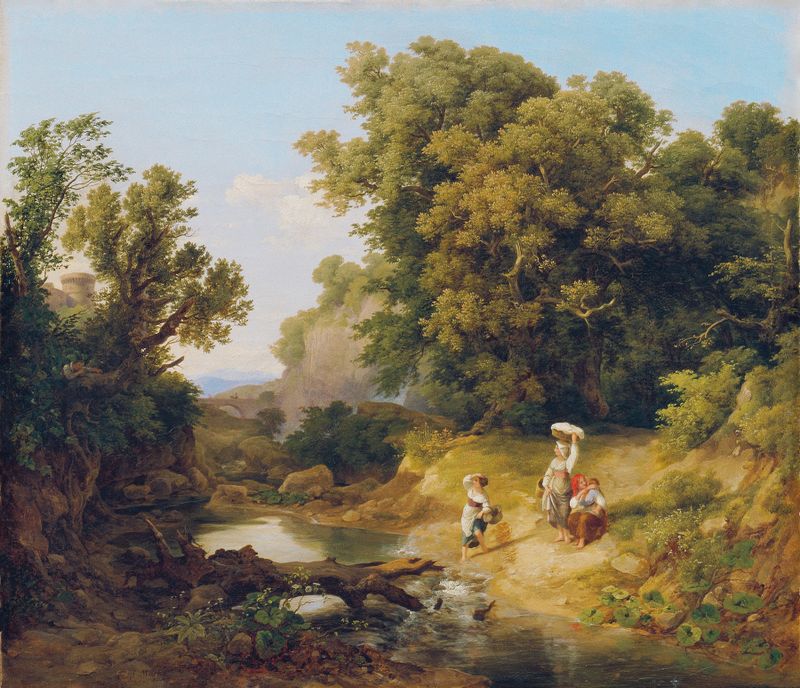
Ideale Landschaft (Italienische Landschaft)
Károly Markó

Italian Landscapes at Sunset, Fishermen
Károly Markó
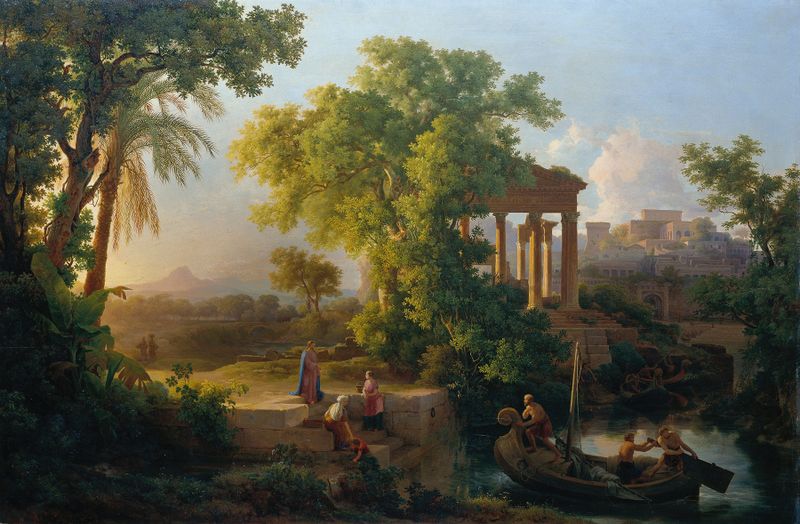
Landschaft mit der Berufung des Hl. Petrus
Károly Markó
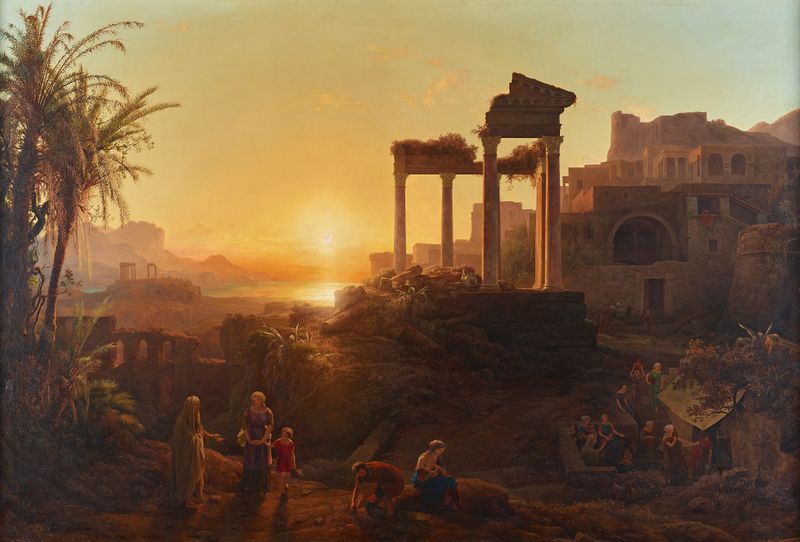
Landschaft mit Sonnenuntergang
Károly Markó

Ideallandschaft mit Christus und den Jüngern
Károly Markó

Frühling am Fluss
Károly Markó





