
Ideale Landschaft mit Boas und Ruth — History & Facts
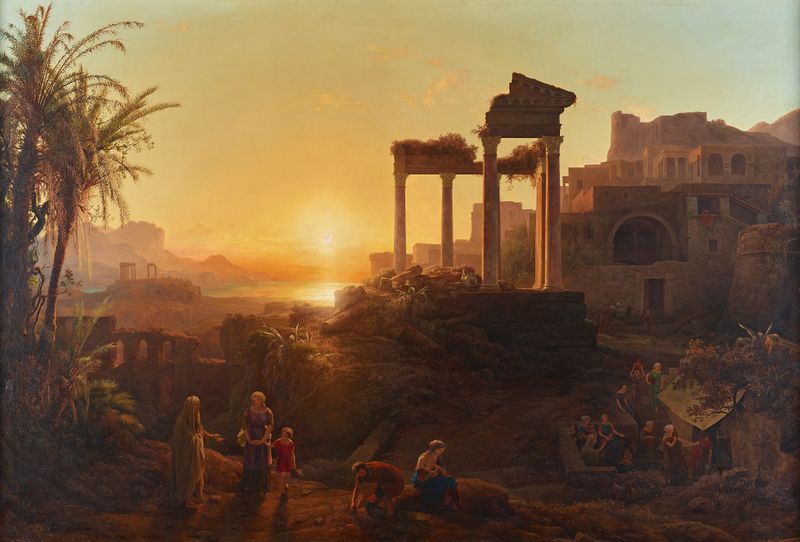
In this serene landscape, destiny unveils itself through the stillness, hinting at stories untold and paths yet to be woven. Look to the left at the gentle curve of the river, where the water reflects the tranquil hues of the sky—a delicate blend of soft blues and warm golds that immerses the viewer in tranquility. The elegant figures of Boaz and Ruth stand nobly amid the verdant surroundings, their gestures imbued with promise. Notice how the light bathes the scene, illuminating the lush greenery and casting shadows that create a sense of depth, almost as if inviting the viewer to step into this idyllic world. As you explore deeper, consider the contrast between the lush landscape and the pronounced stillness of the figures.
Their calm demeanor juxtaposes the swirling currents of fate that intertwine their lives, suggesting that even amidst the beauty of nature, choices linger with gravity. The composition subtly resonates with themes of love and providence, emphasizing the emotional weight that rests upon simple moments—each glance and gesture entwined with a sense of destiny. Károly Markó painted this work in 1859 during a period of artistic flourishing in Hungary, where romantic landscapes were gaining prominence. At this time, the artist was finding his niche, merging classical themes with the evolving Romantic sensibilities of his era.
The painting echoes the broader movement, capturing not just a moment in nature, but an exploration of human experience and divine orchestration within the landscape.
More Artworks by Károly Markó
Browse all →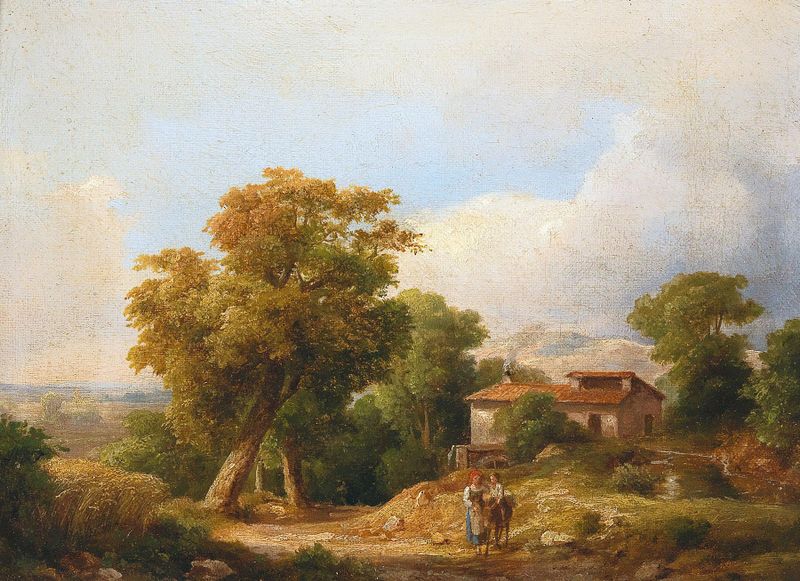
Italian Landscape with Farmhouse
Károly Markó

Landschaft mit Heuernte
Károly Markó

Landscape at Tivoli, with a Scene from the Grape Harvest
Károly Markó
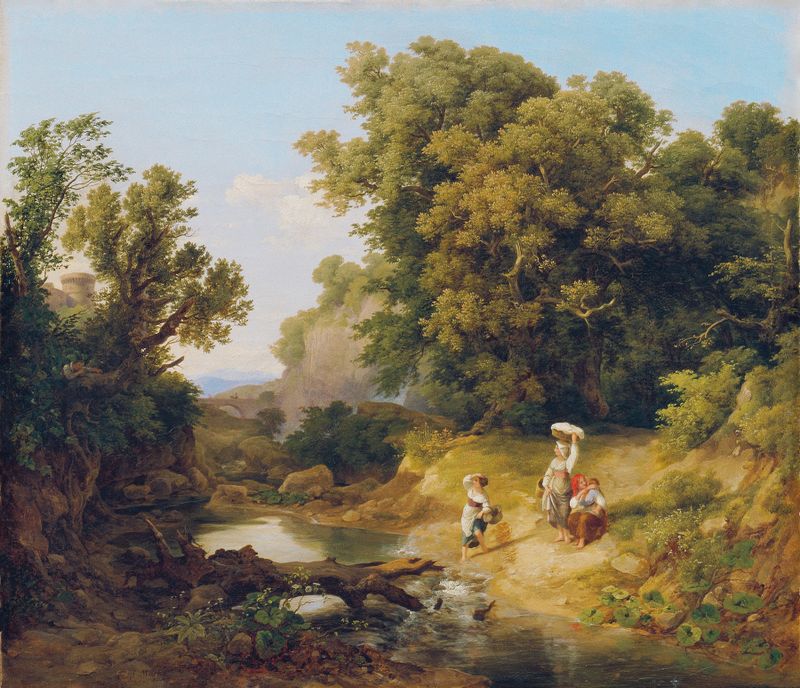
Ideale Landschaft (Italienische Landschaft)
Károly Markó
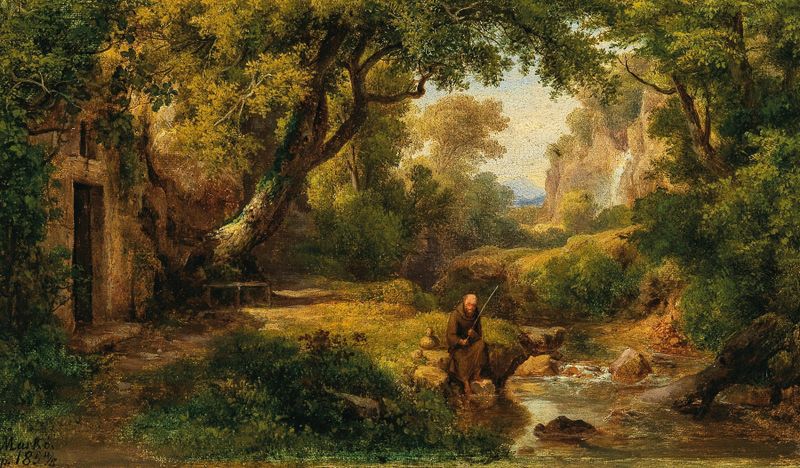
Flusslandschaft mit angelndem Mönch
Károly Markó

Italian Landscapes at Sunset, Fishermen
Károly Markó
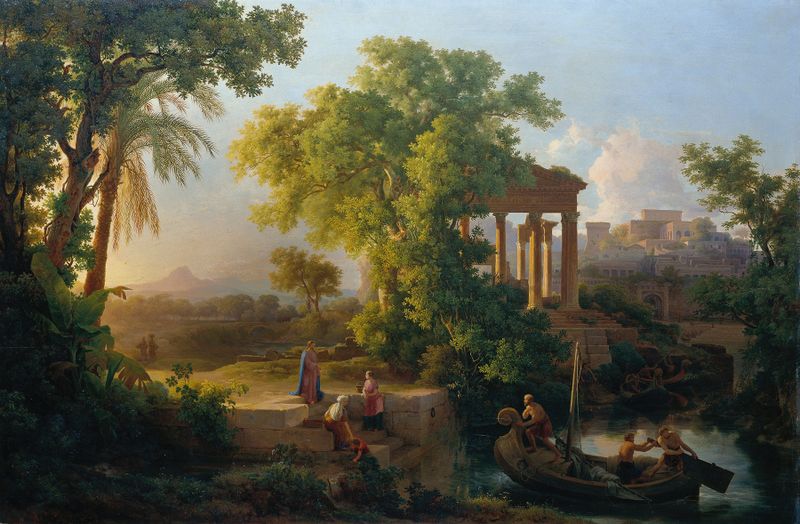
Landschaft mit der Berufung des Hl. Petrus
Károly Markó
Landschaft mit Sonnenuntergang
Károly Markó

Ideallandschaft mit Christus und den Jüngern
Károly Markó

Frühling am Fluss
Károly Markó





