
Landschaft mit Sonnenuntergang — History & Facts
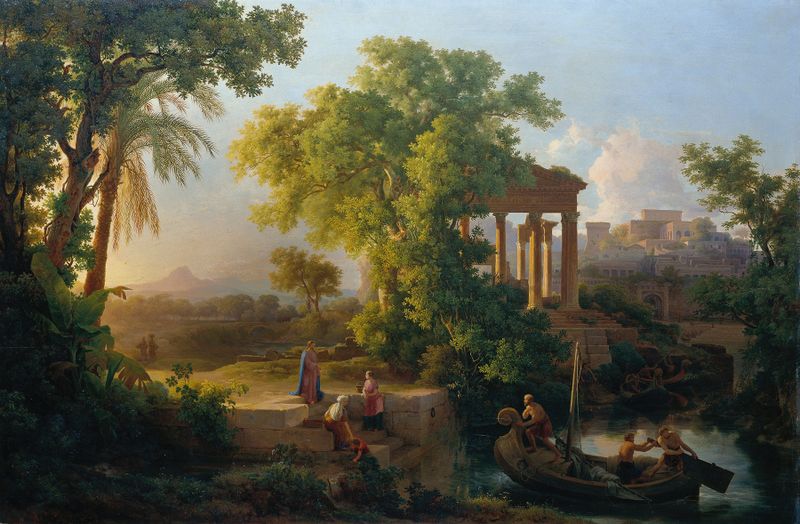
When did color learn to lie? The world seen through a painter's brush often reveals a truth more profound than mere representation. In Landschaft mit Sonnenuntergang, the dialogue between light and shadow speaks volumes, weaving emotion into the very fabric of the landscape. Look to the horizon where the sun sinks, casting a warm glow across the vast expanse. The rich oranges and soft pinks of the sky contrast with the cool blues of the water below, a careful orchestration of color that draws your eye.
Notice how the brushstrokes create a gentle ripple in the foreground, inviting you to linger. The trees, mere silhouettes against the vibrant backdrop, form a natural frame, guiding your gaze towards the fading light. At first glance, the painting suggests peace, yet there is a tension woven within the tranquility. The sunset symbolizes the passage of time, the end of a day that will not return.
The juxtaposition of light and shadow hints at the fleeting nature of beauty and life itself. Each brushstroke carries a whisper of the artist's reflection on mortality and the eternal cycle of day giving way to night. In 1847, Károly Markó painted this scene during a period of personal exploration and the broader upheaval of artistic movements. He was influenced by the Romantic ideals of nature's majesty and human emotion.
This work emerged as he navigated the balance between reality and the evocative power of color, marking his place in the evolving landscape of 19th-century art.
More Artworks by Károly Markó
Browse all →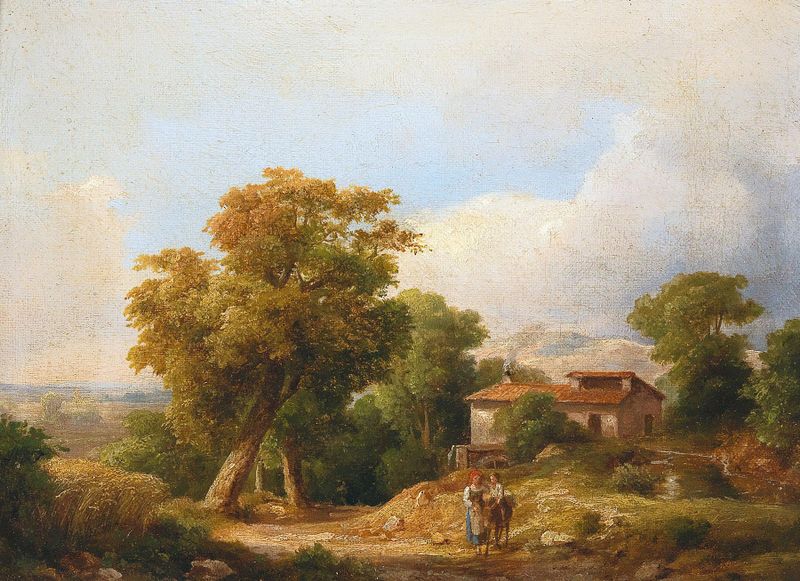
Italian Landscape with Farmhouse
Károly Markó

Landschaft mit Heuernte
Károly Markó
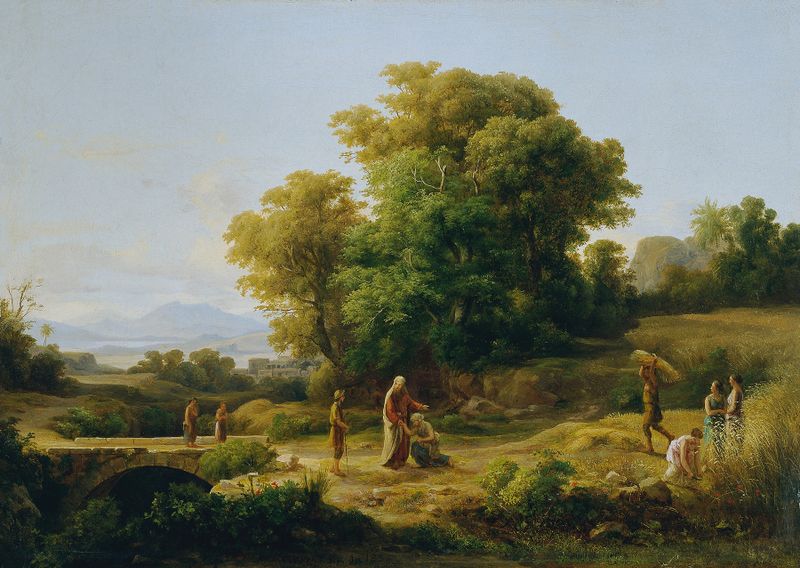
Ideale Landschaft mit Boas und Ruth
Károly Markó

Landscape at Tivoli, with a Scene from the Grape Harvest
Károly Markó
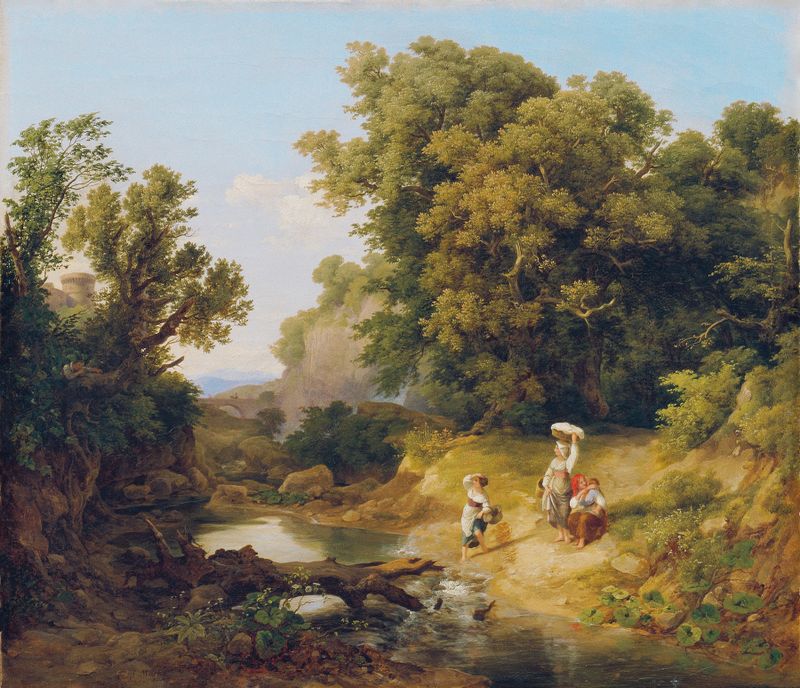
Ideale Landschaft (Italienische Landschaft)
Károly Markó
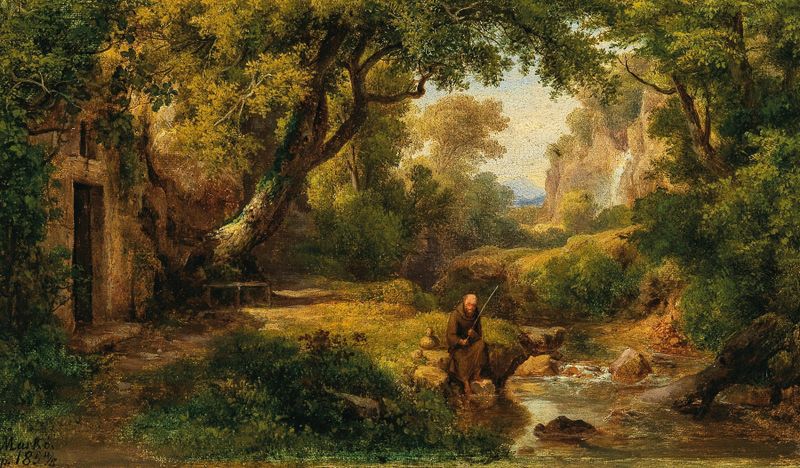
Flusslandschaft mit angelndem Mönch
Károly Markó

Italian Landscapes at Sunset, Fishermen
Károly Markó
Landschaft mit der Berufung des Hl. Petrus
Károly Markó

Ideallandschaft mit Christus und den Jüngern
Károly Markó

Frühling am Fluss
Károly Markó





