Impression — History & Facts
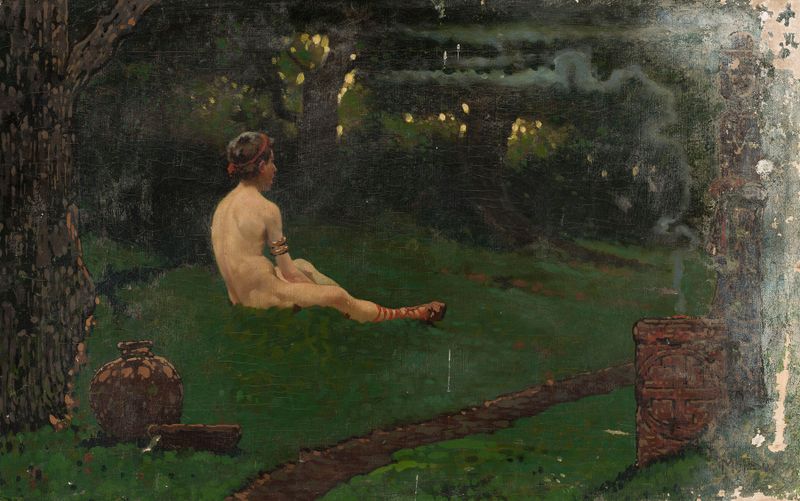
What if silence could speak through light? In Impression, a symphony of color and soft brushwork invites viewers to listen to the unspoken language of hope. Look closely at the interplay of diffused light washing over the canvas. The gentle strokes create a scene filled with ethereal warmth, where hues of lavender and gold blend seamlessly, echoing the quiet beauty of dawn. Focus on the central figure—a solitary subject illuminated with a delicate glow, standing as a beacon of resilience amid the surrounding soft chaos.
The composition draws the eye inward, leading to a tranquility that feels almost tangible. The contrasts within Wawrzeniecki's work deepen the emotional experience. The juxtaposition of light against shadow evokes a sense of longing and the promise of new beginnings. Each brushstroke seems to vibrate with silent whispers of hope, inviting the viewer to contemplate their own journey through difficulty and renewal.
The almost dreamlike quality of the piece suggests that within every moment of stillness lies the potential for transformation. In 1894, the artist was fully immersed in the Impressionist movement, working primarily in Kraków, Poland. This period marked a time of burgeoning artistic exploration as Wawrzeniecki sought to capture fleeting moments and emotional depths through innovative techniques. Amid a rapidly changing world, where art was breaking away from traditional constraints, Impression reflects the spirit of an artist grappling with the interplay of light, emotion, and the human experience.