In der Partnachklamm bei Partenkirchen — History & Facts
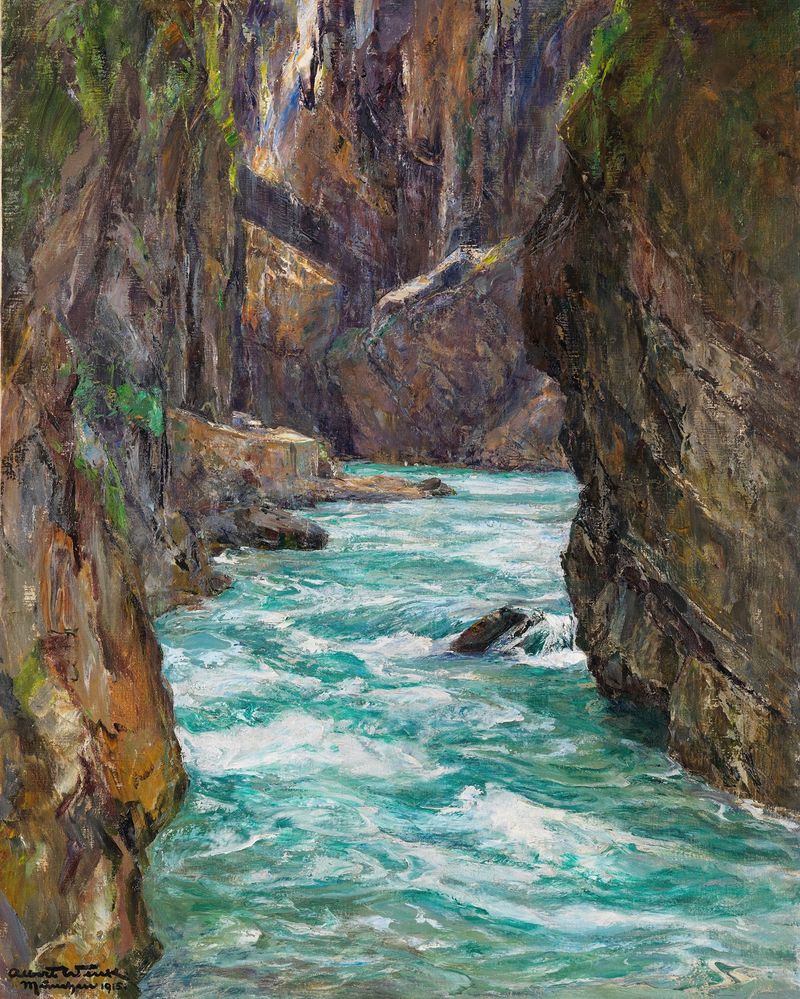
Who listens when art speaks of silence? In a world on the brink of revolution, In der Partnachklamm bei Partenkirchen captures the stillness that often precedes upheaval, an echo of a quiet moment ripe with tension. Look to the center of the canvas, where the rugged cliffs rise steeply, their dark stone contrasting with the soft light cascading down the narrow gorge. The artist's brushwork creates an almost palpable texture, allowing the viewer to feel the cool, damp air as the shadows dance playfully along the water's surface. Notice how the earthy tones of green and gray hint at the somber beauty of nature, while splashes of white capture the rush of water in the foreground, creating a vivid sense of movement amidst the stillness. The interplay between light and shadow reflects the internal conflict of the time; the natural beauty of the scene belies the turmoil brewing just beyond its borders.
The towering cliffs may symbolize the immense pressures of societal change, while the tranquil water suggests a fleeting peace. Each stroke of the brush reveals layers of emotion, inviting contemplation on the fragile balance between serenity and chaos. In 1915, Albert Wenk was navigating the tumultuous waters of a world torn apart by World War I, a period that forced artists to confront the reality of their existence. Working in Germany, he sought solace in the landscapes around him, capturing moments of beauty that contrasted sharply with the chaos of contemporary life.
This painting stands as a testament to the power of nature as a refuge amidst the clamor of revolution.