Felsenküste auf Capri — History & Facts
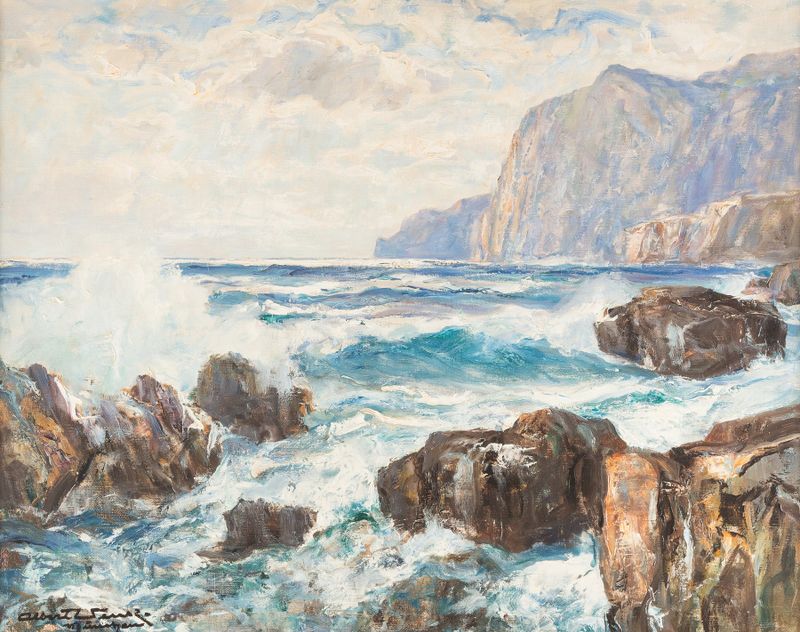
On the cusp of the 20th century, the interplay between light and shadow reveals a deeper narrative, one where beauty coexists with sorrow. The artwork invites viewers to contemplate the duality of existence, where serenity intertwines with underlying tension. Look to the foreground, where the rugged cliffs rise dramatically against the azure sea. Notice how the gentle brush strokes create texture, drawing the eye toward the crevices that seem to both cradle and threaten life.
The vivid blues and earthy browns contrast sharply, highlighting the precarious balance between nature’s splendor and its ferocity. As sunlight glimmers on the water's surface, it casts a golden hue that hints at the blissful moments concealed within the harshness of the landscape. Delve deeper into the scene, and you might spot the delicate interplay of harmony and discord. The tranquil waters suggest stillness, yet the jagged edges of the cliffs evoke a sense of danger, as if the beauty of Capri is a mask for turmoil.
This tension resonates with the viewer, reminding us that within breathtaking landscapes may lie hidden struggles, emphasizing the fragility of human emotion amid natural grandeur. During the early 20th century, Wenk painted this scene while capturing the essence of a changing world, marked by modernist movements. Taking inspiration from the Mediterranean’s enchanting allure, he sought to express the balance between the idyllic and the wild, reflecting both personal and societal transitions in art. This piece emerged during a period when artists were beginning to explore the emotional depths of landscapes, seeking to convey the complex relationship between humanity and nature.