Breakers on a rocky coast — History & Facts
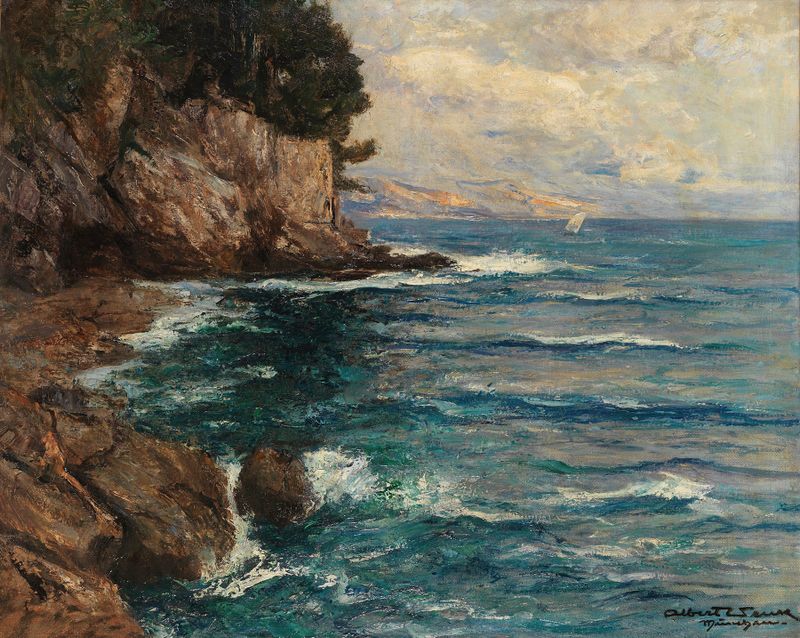
Who listens when art speaks of silence? In the stillness of a moment, Breakers on a Rocky Coast encapsulates the bittersweet echo of nostalgia, inviting us to ponder the unvoiced stories of nature and memory. Look to the foreground where the tumultuous waves crash against the jagged rocks, their foamy edges captured with vigorous brushstrokes that convey both movement and chaos. The tumult of the ocean contrasts with the serene hues of the sky, where shades of grey and soft pastels blend, hinting at both dawn and dusk. Notice how the light dances on the water, illuminating certain crests while the shadows of the stones loom large, creating a dynamic interplay that draws the eye into the depths of the scene. Within this tumult lies a sense of solitude.
The vastness of the coastline evokes feelings of isolation, while the tumultuous sea passionately clashes with the steadfast rocks, a metaphor for the conflict between memory and reality. Tiny details—perhaps a distant gull in flight or the swirling of foam—whisper of fleeting moments and the impermanence of time, grounding the viewer in an emotional landscape that is both intimate and expansive. Albert Wenk painted this work during a period when he was deeply influenced by natural scenes, likely in the late 19th century. Living in an era where the Impressionist movement was flourishing, he sought to capture raw emotion and the beauty of the natural world, navigating the subtle tension between the wildness of nature and the stillness of human reflection in his art.