In Riva Al Mare — History & Facts
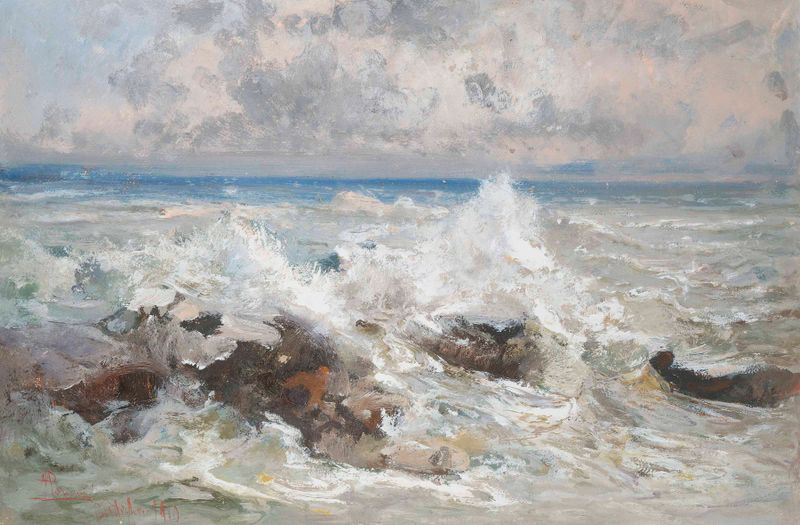
Can beauty exist without sorrow? This question resonates in the shimmering interplay of light and shadow, inviting viewers to explore the delicate balance between joy and melancholy. Look to the left at the woman reclining on the sun-drenched rocks, her serene expression in stark contrast to the tumultuous waves crashing against the shore. Notice how the warm golden hues of sunlight caress her skin, contrasting with the deep blues and greens of the sea. The artist’s brushwork captures the dynamic movement of water, as if it were alive, while the tranquil figure embodies a moment of stillness amidst nature's chaos. As your gaze wanders, you’ll find small details that enrich the narrative: the delicate lace of her dress billowing slightly in the breeze, hinting at a fleeting connection to the outside world.
The rugged rocks serve as a reminder of life’s obstacles, grounding her beauty in the harshness of reality. Here, light becomes a character of its own—illuminating both the woman’s grace and the turbulent sea, suggesting that beauty often emerges from struggle. Pompeo Mariani created In Riva Al Mare during a period marked by the rise of Italian Impressionism, a movement embracing light and color over line. Living in Milan, Mariani was deeply influenced by the natural landscape around him and sought to translate emotional depth through radiant palettes.
This painting reflects the artist’s desire to capture fleeting moments of beauty, amid an era of both artistic innovation and personal exploration.