Sulla spiaggia di Bordighera — History & Facts
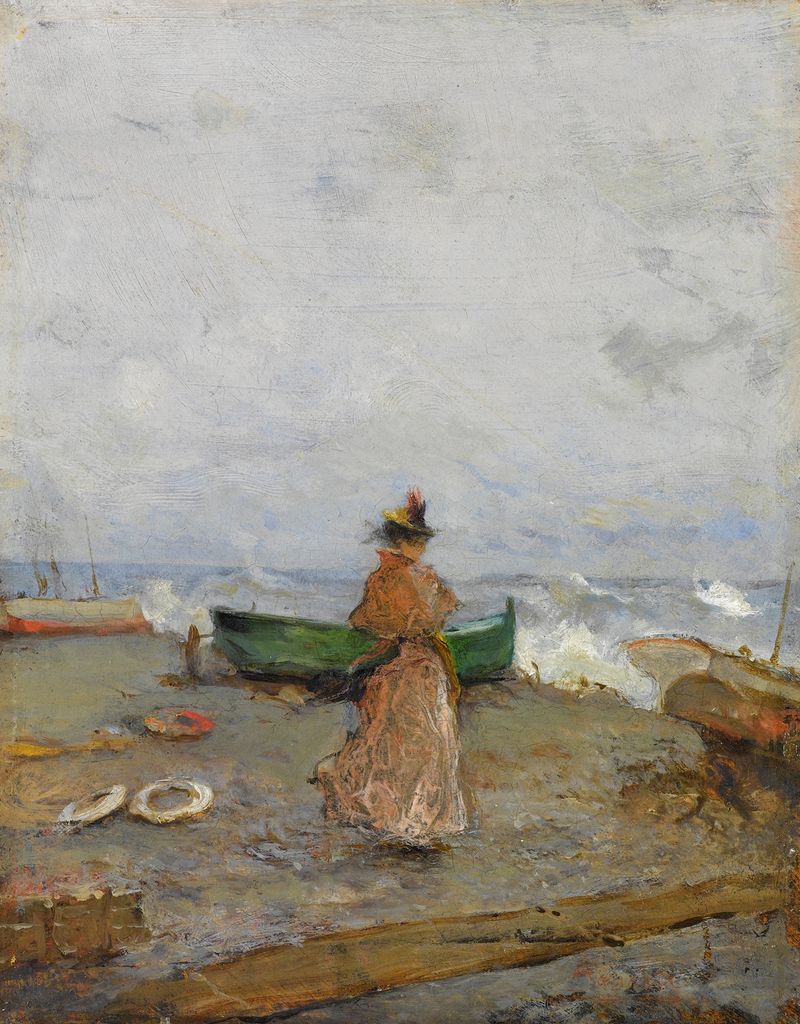
When did color learn to lie? It whispers of warmth and tranquility while concealing the undercurrents of anxiety that ripple beneath the surface. This dichotomy invites us to question the authenticity of what lies before us. Look to the left at the sun-drenched sand, where the golden hues blend into soft creams and whites, creating an inviting shoreline. The figures, seemingly engrossed in leisure, are shrouded in shadows that dance and flicker, hinting at untold stories beneath their tranquil expressions.
Notice how Mariani's delicate brushwork captures the gentle lapping of waves, each stroke echoing the rhythm of both nature and the human heart, reinforcing the painting's illusory charm. Yet, there exists a deep contrast between the serene setting and the underlying tension. The way the figures are positioned—almost oblivious to the encroaching waves—hints at a fragile ignorance of life’s impermanence. The vibrant color palette vibrates with life but also suggests an unsettling anxiety; every bright tone holds a hint of fear, revealing the vulnerability of these moments captured in time.
What does it mean to find solace in beauty when danger may lurk just beyond the horizon? In 1909, Mariani created this work during a tumultuous time for the art world, as shifting styles and the rise of modernism were challenging traditional representations. Painted in Bordighera, Italy, where he often sought refuge, he was both embracing the vibrancy of color while grappling with its deeper implications. This period marked a transition for many artists, and Mariani was no exception; he sought to balance the allure of the idyllic with the introspection of the human condition, capturing a fleeting moment that feels eternally layered.