Waves crashing on the rocks at Bordighera — History & Facts
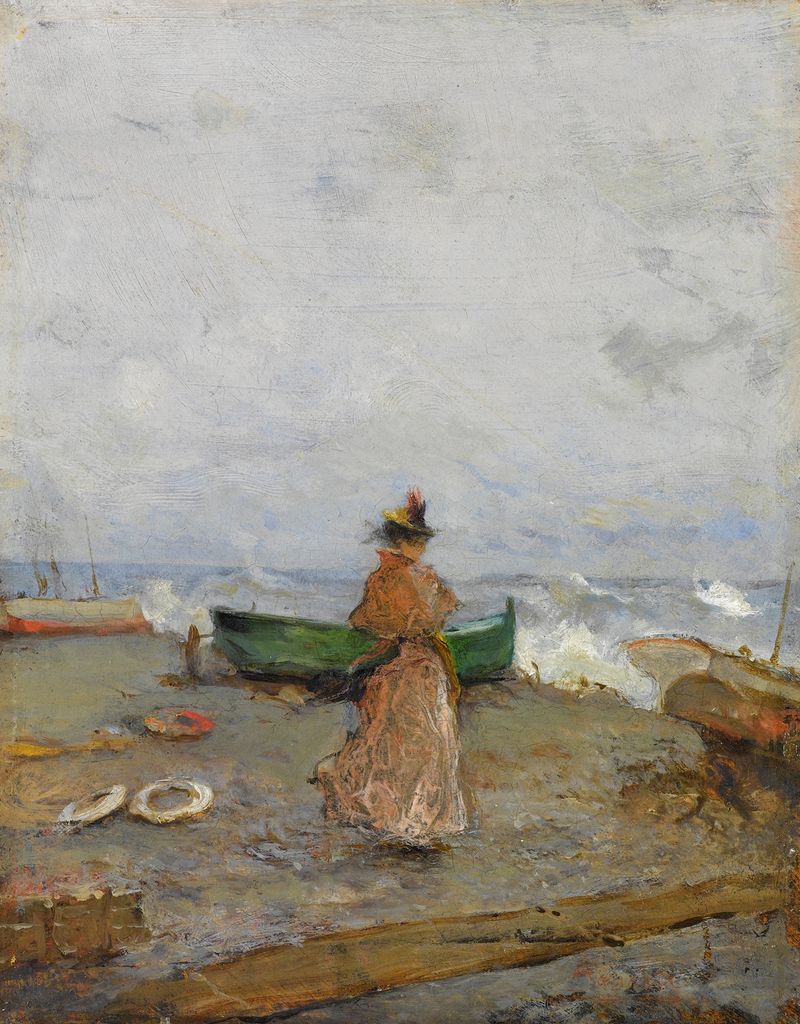
What if silence could speak through light? In Waves Crashing on the Rocks at Bordighera, the artist captures a moment where nature's tumultuous beauty whispers secrets of destiny to the viewer. Look closely at the dynamic interplay of colors in the waves, swirling shades of azure and emerald drawing your eyes to the forefront. The crashing surf creates a frothy white crest, a stark contrast against the solid, rugged rocks that stand strong and defiant. Notice how the sunlight filters through the spray, illuminating droplets that seem to hang in mid-air, encapsulating the preciousness of this fleeting moment.
The soft gradient of the sky hints at the day's end, a perfect backdrop for the vivid energy below. Beneath the surface, the painting reveals an emotional tension between the serene sky and the chaotic sea. The steadfast rocks symbolize resilience, while the waves depict the relentless pursuit of change — a metaphor for life's unpredictability. This contrast evokes a sense of duality; one cannot exist without the other, hinting at the deeper destinies that intertwine within nature’s rhythms.
The scene challenges us to reflect on the juxtaposition of stability and turbulence in our own lives. In 1919, Mariani was immersed in a post-World War I landscape, where artists sought to reconcile their creative expression with the turmoil of the world around them. Painted in Bordighera, Italy, a favored retreat for many artists, it reflects a yearning for peace amidst chaos. During this time, Mariani explored both realism and impressionism, striving to capture the essence of nature while grappling with the shifting tides of contemporary art.