In the church porch — History & Facts
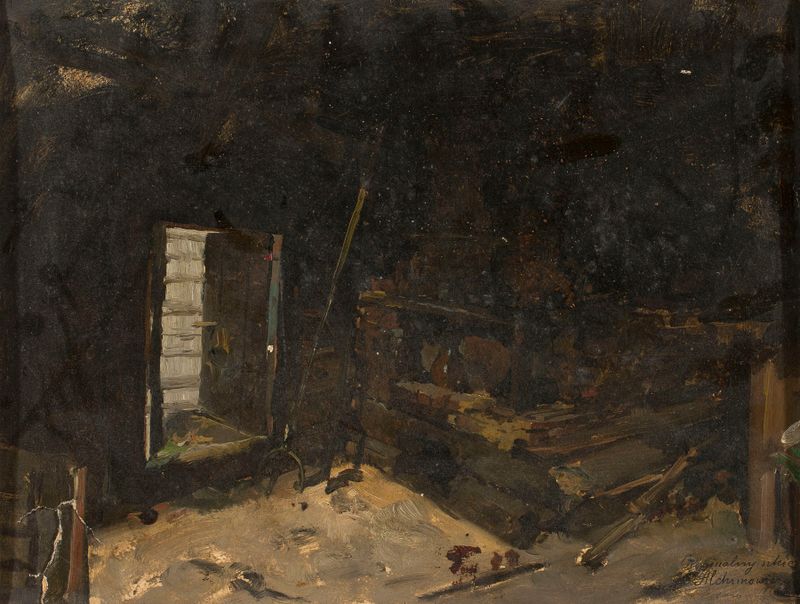
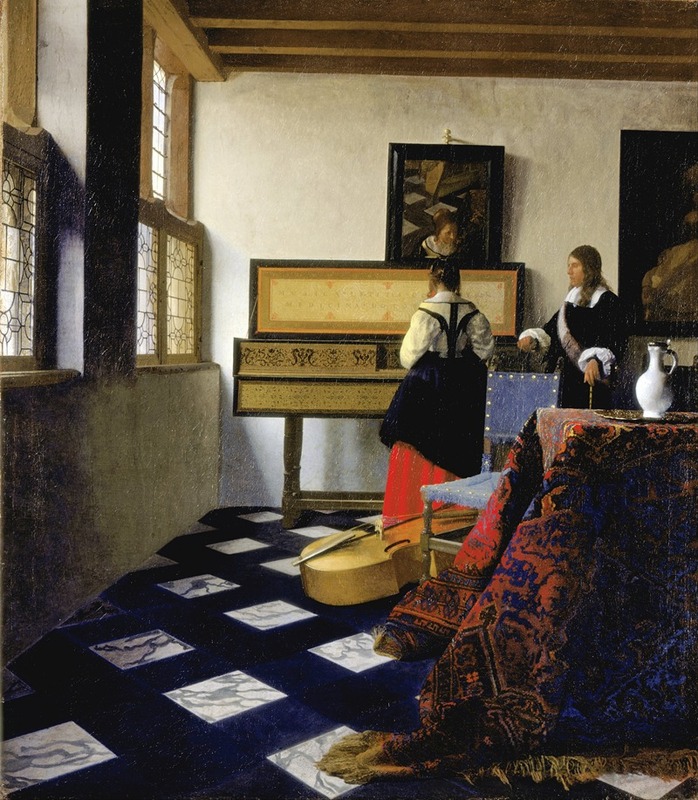
This thought lingers in the air when faced with the intricate layers of human experience. Focus on the delicate interplay of dark and light as you examine the painting. The shadowed church porch invites you in, but its corners hold a depth of mystery. Notice how the warm tones of gold and ochre contrast with the cooler blues and grays, creating a tension that embodies both warmth and isolation.
The figures, loosely defined yet intimately engaging, draw you into their quiet contemplation of faith or perhaps doubt. Within this seemingly simple composition lies a profound exploration of balance. The juxtaposition of the elegantly arched doorway and the stoic figures suggests an invitation to transcendence, yet their stillness hints at hesitation. Each character embodies a different emotional state, echoing a collective struggle between belief and uncertainty.
The ornate details of the architecture frame their solitude, emphasizing the weight of their presence within this sacred space. In 1904, Kazimierz Alchimowicz was steeped in the artistic currents of his time, influenced by Symbolism and early Modernism. He painted In the church porch during a period marked by social change and a questioning of traditional values, mirroring the emotional tensions of the early 20th century. This backdrop informs his work, as he captures the delicate balance between spirituality and existential questioning, reflecting both personal and broader societal narratives.