Interior of a peasant cottage, sketch — History & Facts
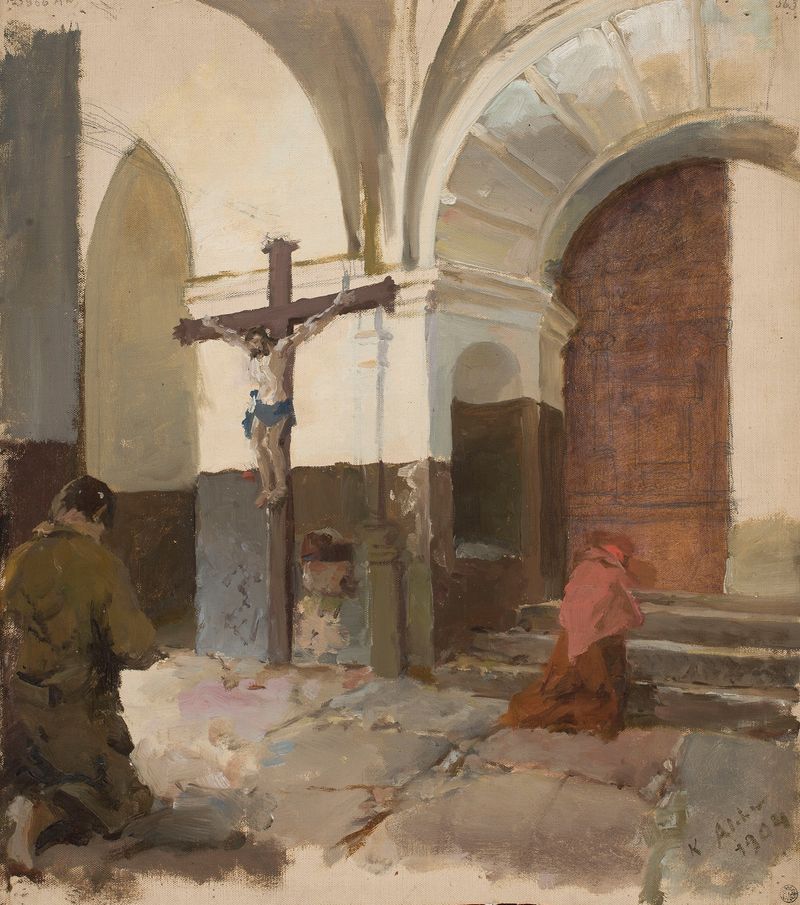
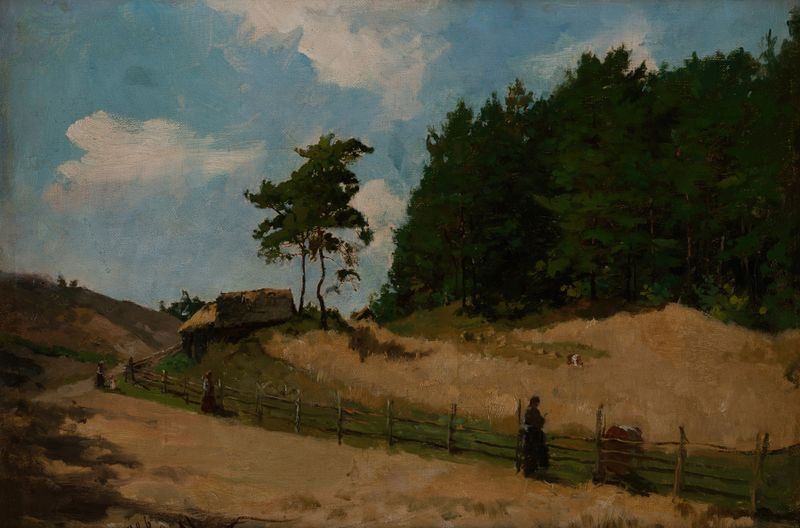
Did the painter know this moment would outlive them? In the quiet chaos of everyday life, fragments of human existence are forever captured in art. Look to the left at the rough-hewn wooden table, its surface cluttered with unpretentious objects—simple tools, a piece of bread, and an earthenware jug. The brushstrokes animate the room, while soft shadows stretch across the walls, hinting at the flickering light from an unseen fire. Notice how the palette of muted earth tones envelops the scene, embodying the warmth and struggle of peasant life, drawing the viewer into the intimate space. The juxtaposition of light and dark here reveals deeper emotions: the struggle against poverty intertwined with an enduring spirit of resilience.
The slightly ajar door allows a glimpse into the outside world, suggesting the tension between confinement and freedom. Within this cottage, chaos reigns in the form of disarray, yet it is a chaos teeming with life—each object holds a story, and each life is a thread in the tapestry of existence. Kazimierz Alchimowicz created this sketch during a time when Eastern European art was grappling with the shift from tradition to modernism. Although the exact date remains unknown, his focus on peasant life reflected an era of social realism amidst ongoing political and cultural changes.
The artist sought to portray the raw authenticity of daily struggles, capturing a fleeting moment that speaks to the resilience of humanity.