In the evening — History & Facts
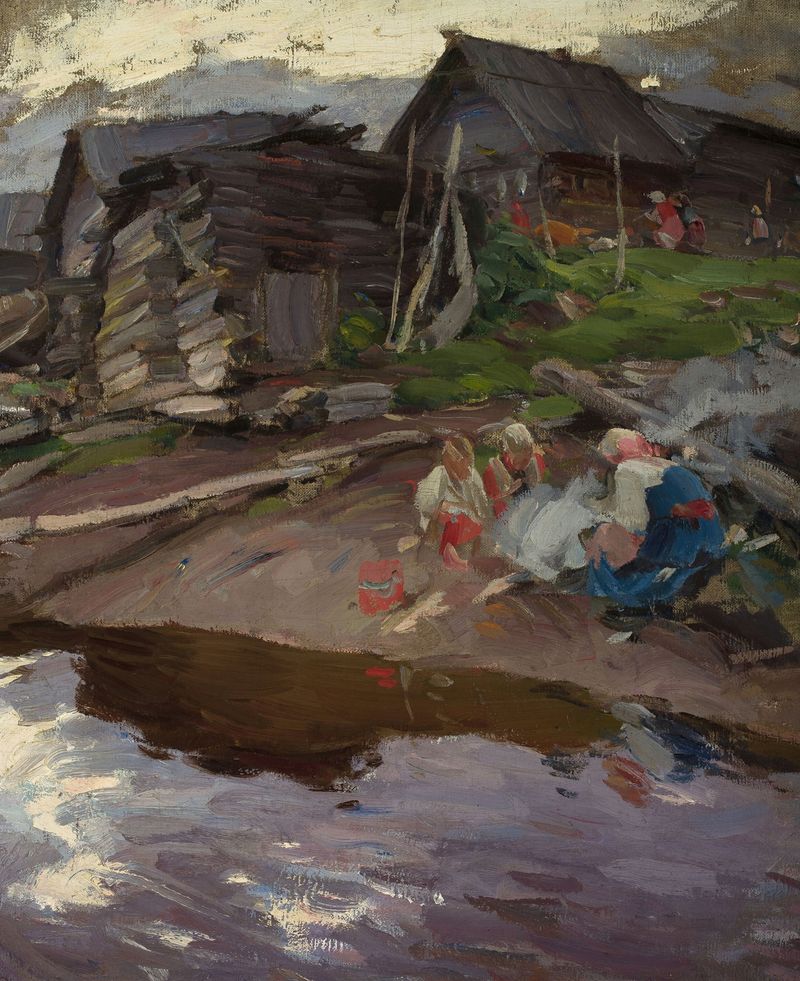
Could beauty survive in a century of chaos? In a world where betrayal lurks around every corner, the soft glow of evening light offers a moment of tranquility, inviting us to reflect on the fragility of joy amidst turmoil. Look to the left at the warm hues of ochre and gold, where twilight descends, casting elongated shadows across the figures. The women, draped in simple yet elegant garments, sit together, their faces illuminated by the fading sun. Notice how the brushwork captures the delicate textures of their clothing, and how the play of light and shadow creates a serene yet charged atmosphere, hinting at unspoken tensions between comfort and disquiet. As you examine the scene, consider the emotional undercurrents at play.
The intimacy shared among the women suggests a bond that may be tested by societal upheavals, while the fading light symbolizes the encroaching darkness of the era. Each figure’s posture speaks volumes: their relaxed poses contrast sharply with the weight of anticipation in the air, whispering of betrayals both personal and collective. This duality creates a fragile balance, showcasing the beauty of connection while acknowledging the threats that loom. In the years surrounding 1910, the artist worked primarily in Russia, a country on the brink of monumental social change.
Amidst rising political tensions and the impending revolution, Arkhipov sought solace in the everyday lives of women, capturing their strength and resilience. This artwork reflects his dedication to portraying the human experience, even as the world around him unraveled, making it a poignant testament to art’s power to encapsulate beauty in tumultuous times.