
In the meadow — History & Facts
Who listens when art speaks of silence? In the stillness of In the meadow, a longing pulsates beneath the surface, inviting us to explore the delicate interplay between desire and nature. Look to the center where figures emerge, enveloped in a gentle embrace of soft greens and muted browns. The brushwork captures the fleeting moment of connection, each stroke alive with longing. Notice how the light filters through the leaves, illuminating their faces with an ethereal glow that hints at emotions unspoken.
The composition, framed by the vibrant meadow, contrasts the warmth of human interaction with the cool detachment of the surrounding landscape, merging intimacy with isolation. Beneath the surface, the painting resonates with deeper themes of yearning and unfulfilled desire. The couple, though together, appear almost ghostlike, as if the very essence of their love is fleeting and insubstantial. The wildflowers in the foreground, vivid yet ephemeral, symbolize beauty and transience, mirroring the fragility of the moment they share.
This tension invites contemplation on the complexities of intimacy—how proximity can amplify both connection and solitude. Władysław Podkowiński created this work during the late 19th century, a transformative period in Polish art. Influenced by Impressionism, he sought to express emotion through color and light rather than rigid forms. It was a time of personal upheaval for the artist, with his tumultuous relationships often mirroring the desires depicted in his work.
This painting reflects not only his artistic evolution but also a universal sensation that transcends time—an exploration of love caught in the silence of a meadow.
More Artworks by Władysław Podkowiński
Browse all →
Widok na Nowy Świat w Warszawie zimą
Władysław Podkowiński
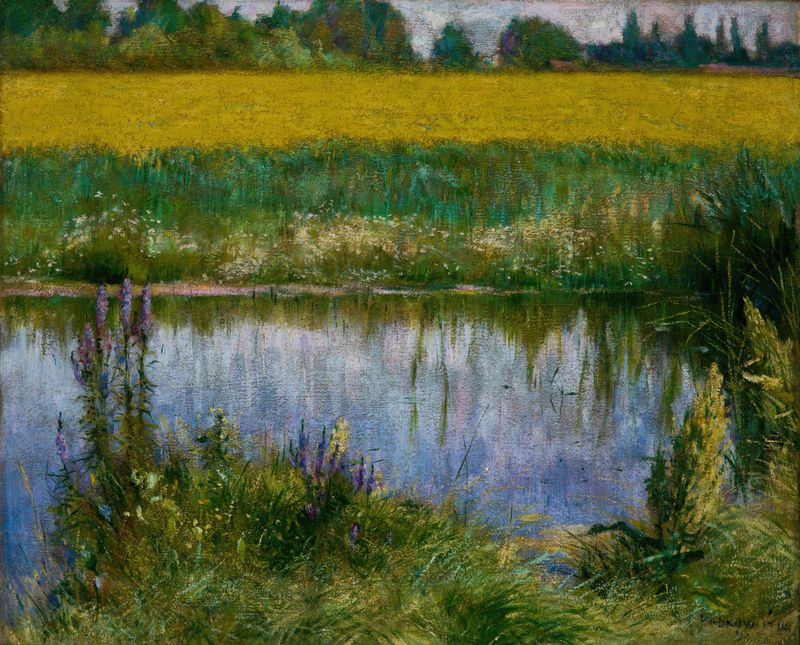
Field of Lupine
Władysław Podkowiński
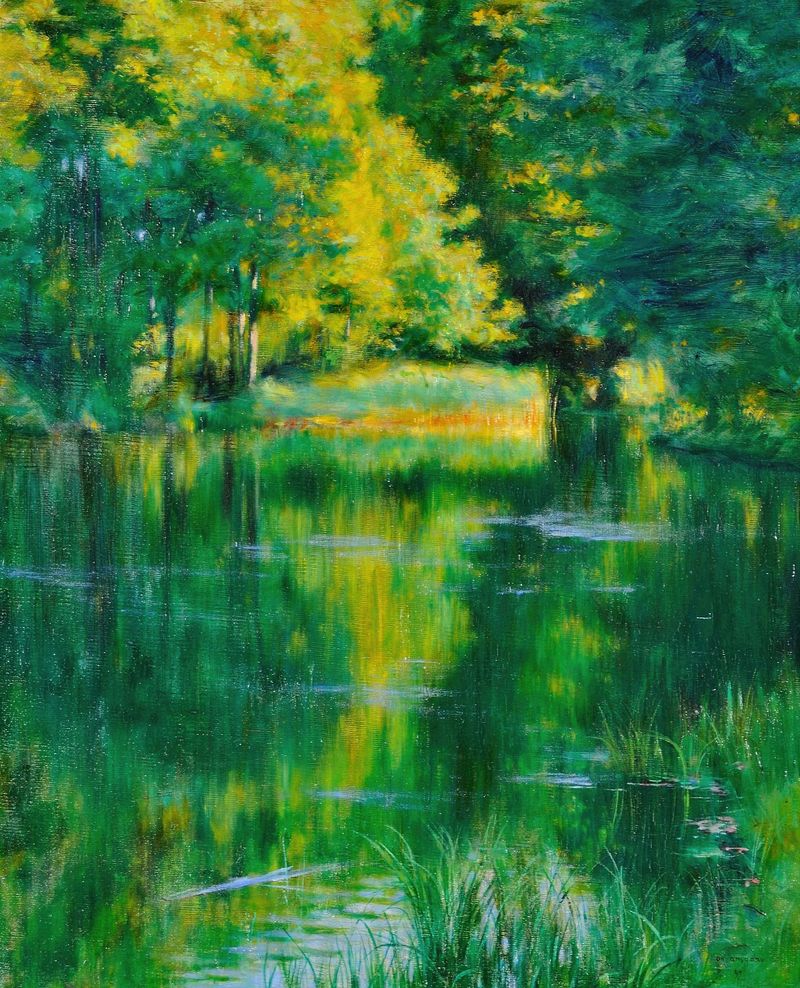
Lake in a park
Władysław Podkowiński
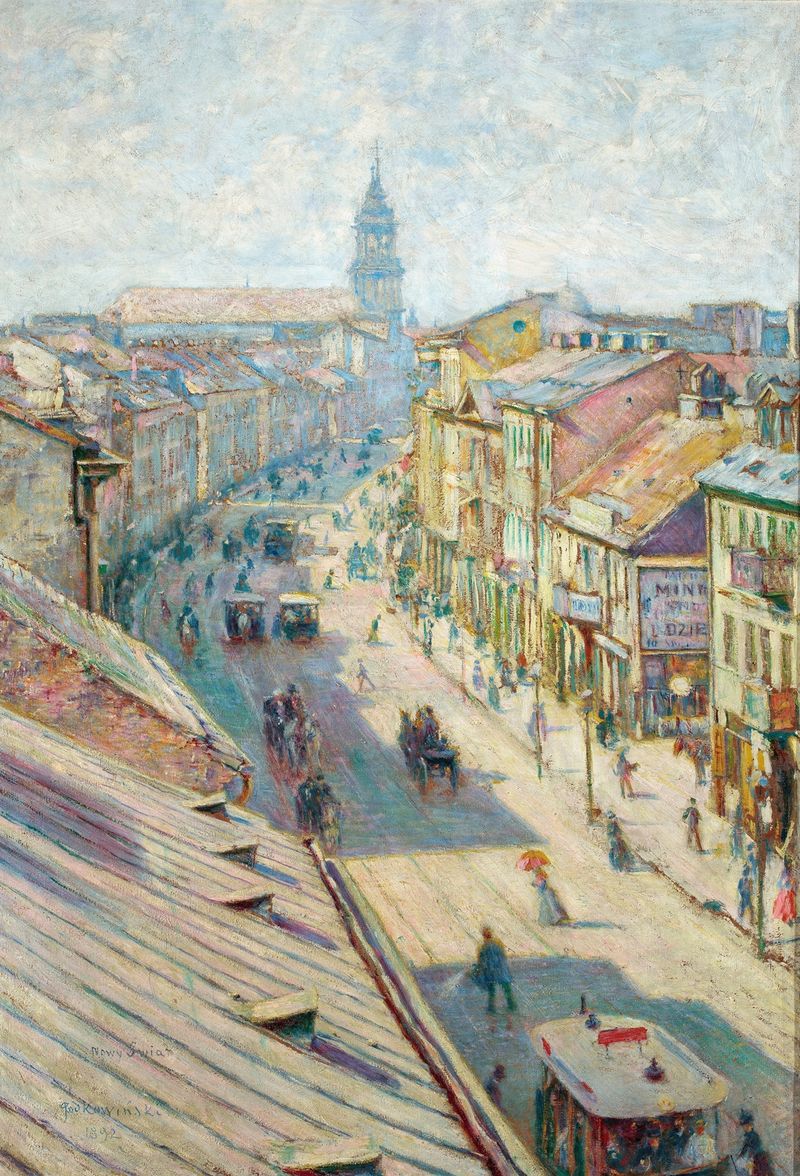
Nowy Świat Street in Warsaw on a summer day
Władysław Podkowiński
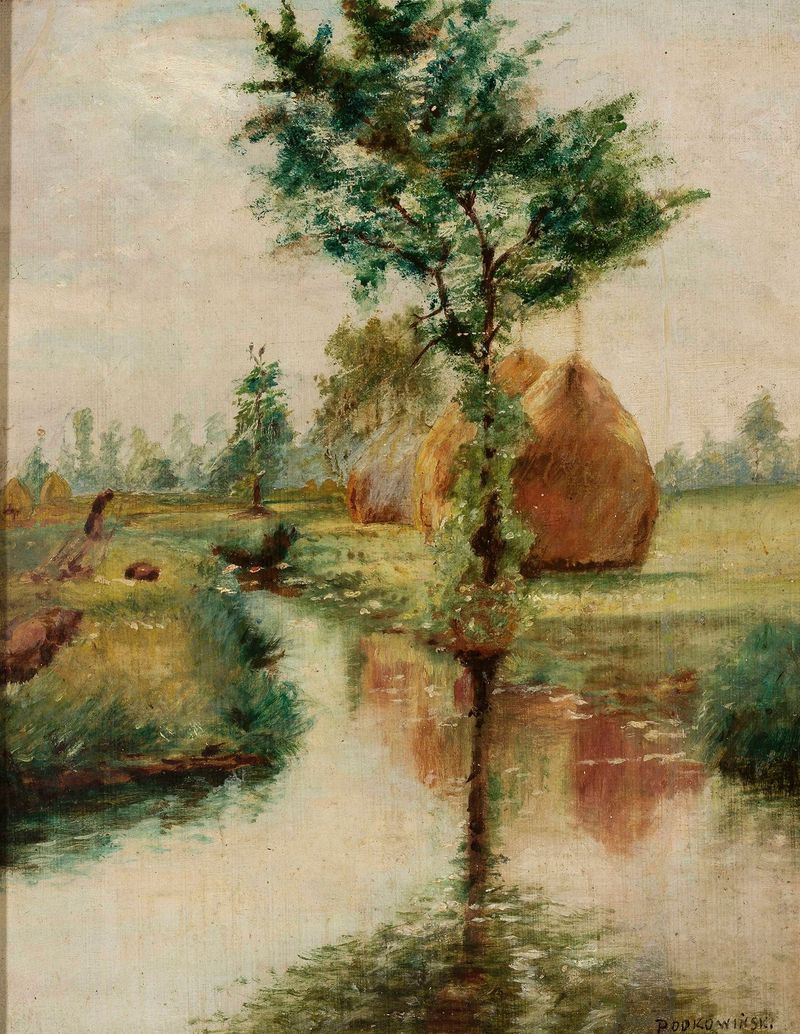
Haystacks at a stream
Władysław Podkowiński
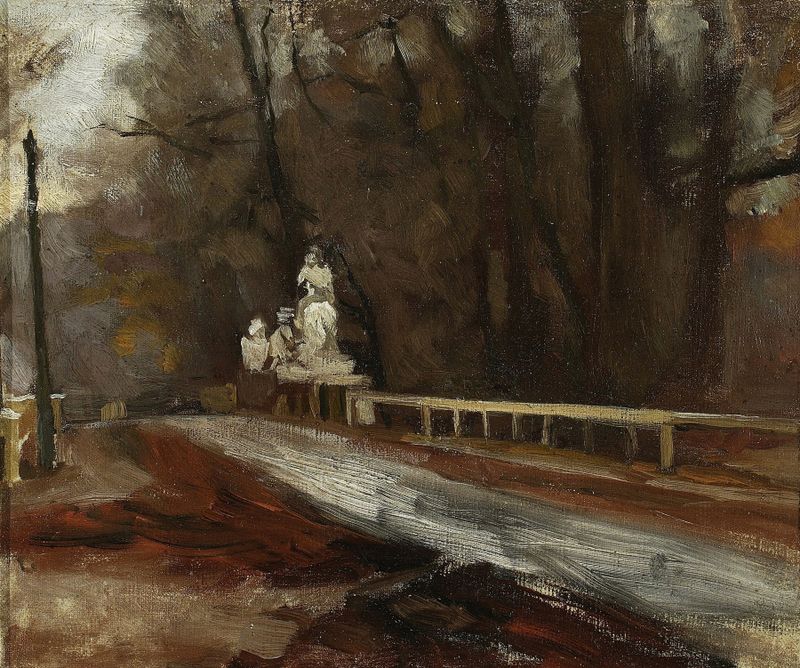
Bridge with the statue of Sobieski at Agrykola
Władysław Podkowiński
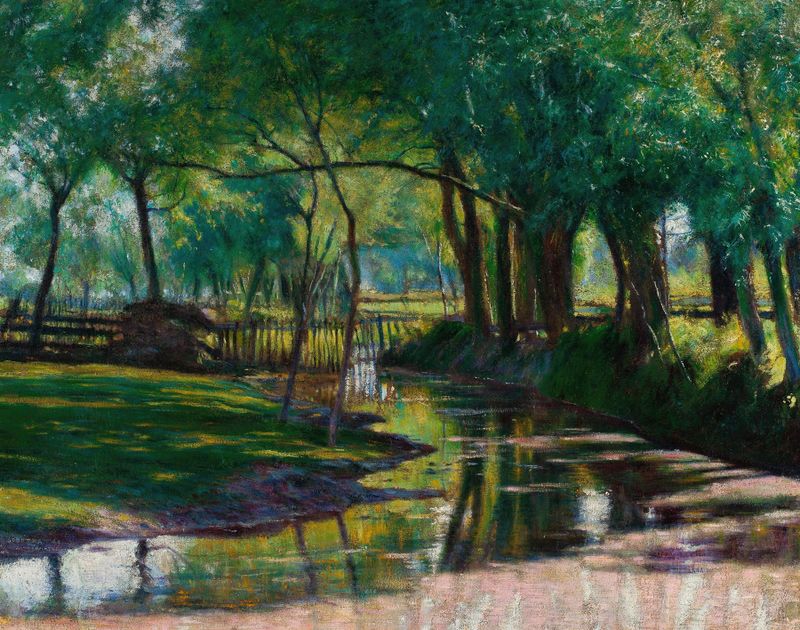
Green landscape with a stream
Władysław Podkowiński

View of Saska Kępa
Władysław Podkowiński

Landccape from Sobótka
Władysław Podkowiński

Funeral March
Władysław Podkowiński





