Incoming tide, Mahurangi — History & Facts
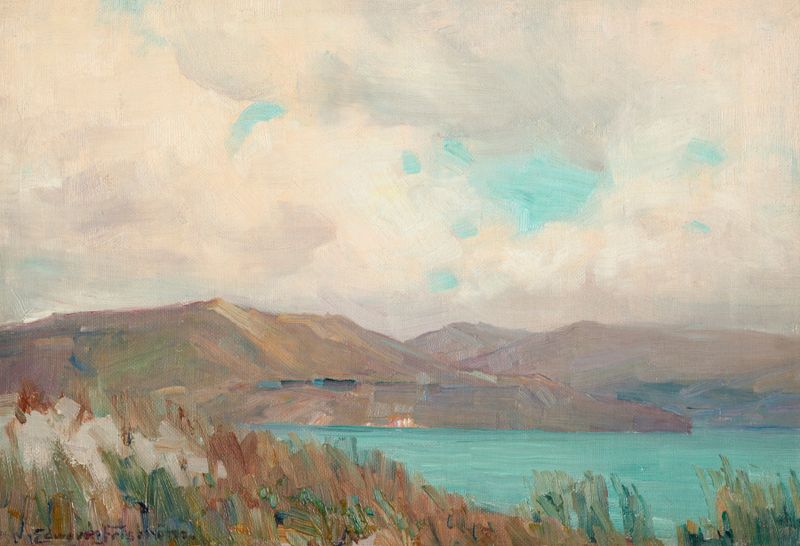
Could a single brushstroke hold eternity? In Edward Friström's Incoming tide, Mahurangi, the very essence of awakening is captured, inviting viewers to lose themselves in the moment where land and sea converge. Look to the bottom of the canvas, where the restless waves rise, their frothy peaks glistening like jewels under a sun that seems to pour warmth over the scene. The gentle hues of blue and green meld seamlessly, creating a rhythmic quality that mimics the tide's embrace. The dappled sunlight kisses the sandy shore, where untouched footprints suggest a fleeting presence, beckoning you to consider your own experience of this coastal tranquility. Delve deeper into the interplay between light and shadow; notice how the soft strokes give life to the clouds swirling above.
The contrast between the vibrant palette of the water and the muted tones of the land evokes a sense of transience, reflecting the constant ebb and flow of time. Each element weaves a narrative of impermanence, prompting a contemplation of both nature's resilience and human vulnerability. In 1905, Friström painted this evocative scene in New Zealand, a time when the Impressionist movement was influencing artists worldwide. He was capturing the shifting landscapes of a new world while navigating his own artistic identity among evolving techniques and ideas.
This work stands as a testament to his ability to translate the profound beauty of nature into a visual symphony, marking a pivotal moment in both his life and the broader artistic landscape of the era.