Wellington Harbour from Muritai — History & Facts
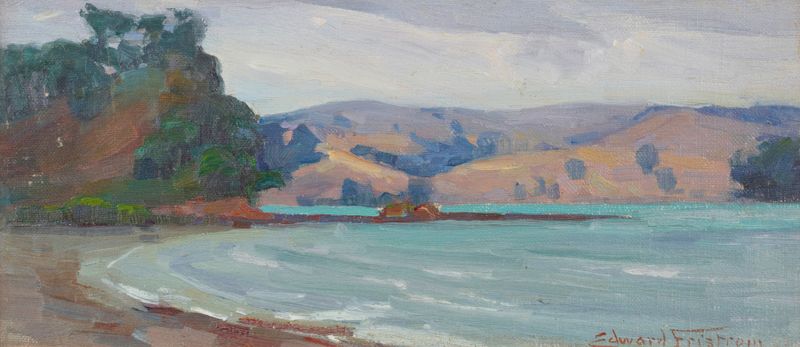
In Wellington Harbour from Muritai, the dance of movement is captured not just in the waves, but in the very essence of life along the water's edge. The work invites the viewer to consider how each moment resonates, echoing the cycles of nature and human existence. Focus on the vibrant blue of the sea, where the brushstrokes form rhythmic patterns that suggest both calmness and chaos. Notice how the light glimmers on the surface, drawing your eye to the horizon where the sky meets the water, creating a sense of infinity.
The distant hills, softened by atmospheric perspective, cradle the scene, while the lively boats in the foreground seem to leap through the waves, hinting at the bustling life of the harbour. The contrast between the bright colors of the boats and the muted tones of the hills evokes a sense of human endeavor against the backdrop of nature's majesty. Each vessel, marked by its unique hue, serves as a reminder of individuality amidst the collective rhythm of maritime life. This interplay between man and nature reflects a deeper tension—the transient nature of activity in an ever-changing environment. In 1910, Edward Friström was immersed in the vibrant artistic community of New Zealand, where he painted this piece during a period of exploration and identity formation in New Zealand art.
The early 20th century was a time of burgeoning national pride, and as Friström captured the lively essence of Wellington Harbour, he was contributing to a growing narrative of place and belonging, reflecting the aspirations and movements of his time.