Inside a forest — History & Facts
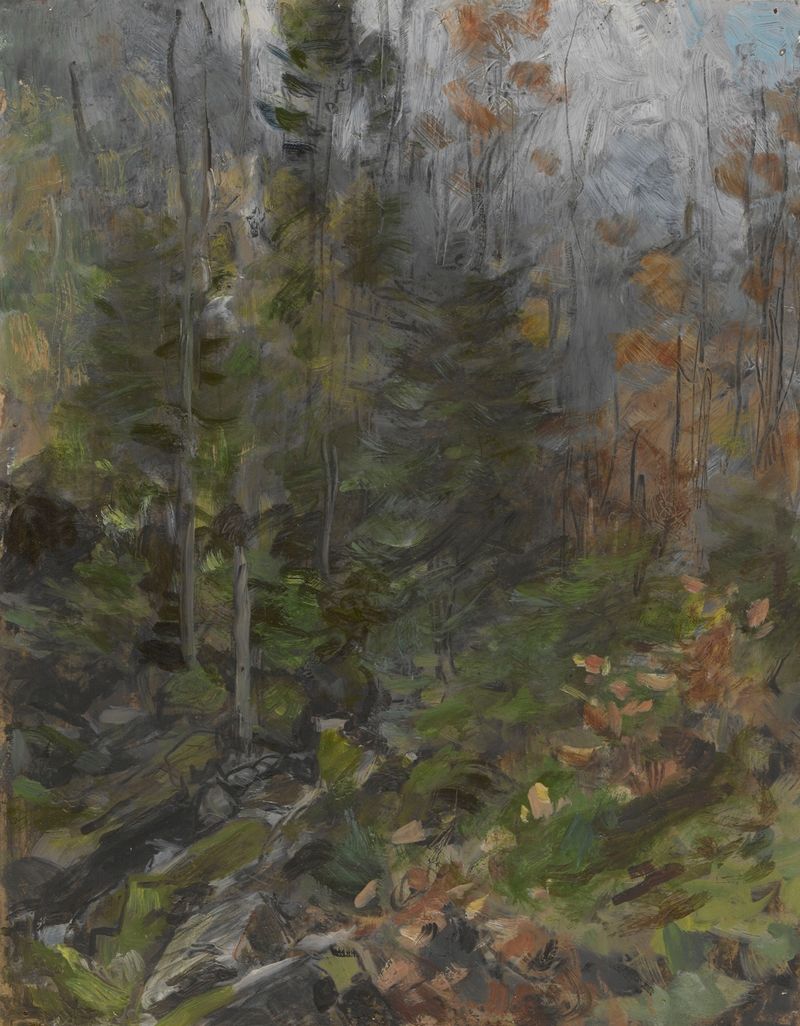
Where does light end, and longing begin? In the gentle interplay of shadows and whispers, one finds the fragility of existence embodied within a forest. Focus on the soft glow that filters through the canopy above. The trees, majestic yet delicate, stretch upward, their gnarled branches cradling the diffused sunlight. The ground below, carpeted with a mosaic of leaves and underbrush, appears inviting yet transient, hinting at the beauty and impermanence of life.
Each stroke of the brush captures the intricate details—veins in the leaves, the texture of bark—inviting the viewer to contemplate the very essence of nature's cycle. The emotional tension in this piece lies in the contrasts between light and shadow, growth and decay. The luminous patches appear almost ethereal, suggesting hope and vitality, while the darker, more foreboding areas evoke a sense of melancholy and introspection. This duality reflects the fragility of the natural world, where life thrives but is constantly shadowed by its inevitable decline.
Each element speaks to a deeper connection between humanity and the wilderness, reminding us that beauty is often paired with vulnerability. Johannes Graf created this work during an undetermined period, likely influenced by his surroundings and the evolving trends in the realm of art at the time. The soft, almost dreamlike quality of his forest scenes resonates with a growing appreciation for nature and introspective themes prevalent in the late 19th to early 20th century. Through his exploration of light and shadow, the artist captured a moment of stillness in nature, inviting contemplation in a world that often moves too swiftly.