
Italian Cemetery — History & Facts
Who listens when art speaks of silence? In Italian Cemetery, the quietude of the graveyard invokes an obsession with memory and loss that resonates deeply within us. Look to the left at the weathered stone monuments, their textures etched by time, each one telling a story of lives once vibrant. The artist employs a muted palette of earthy tones, punctuated by the soft green of creeping vines, which contrasts with the cool gray of the gravestones. Observe how the gentle light filters through the sparse canopy above, casting a dappled glow that breathes life into the somber scene, inviting the viewer to contemplate the weight of the past. As you move through the painting, notice the interplay of shadows and light, and how they mirror the tensions between life and death.
The slight incline of the terrain suggests a hidden depth, while the scattered flowers hint at remembrance and mourning. In this stillness, there lies an obsession with nature reclaiming its space, illuminating the inevitable cycle of existence and the ephemeral nature of human life. Created between 1660 and 1665, this work emerged during a period in Adam Pynacker's life when he was entrenched in the exploration of landscapes and their psychological implications. Based in the Netherlands, he was influenced by the Baroque style, which emphasized dramatic realism and emotional depth.
This painting reflects the growing fascination in art with mortality and the sublime beauty found in decay, marking a pivotal moment in Pynacker's artistic journey.
More Artworks by Adam Pynacker
Browse all →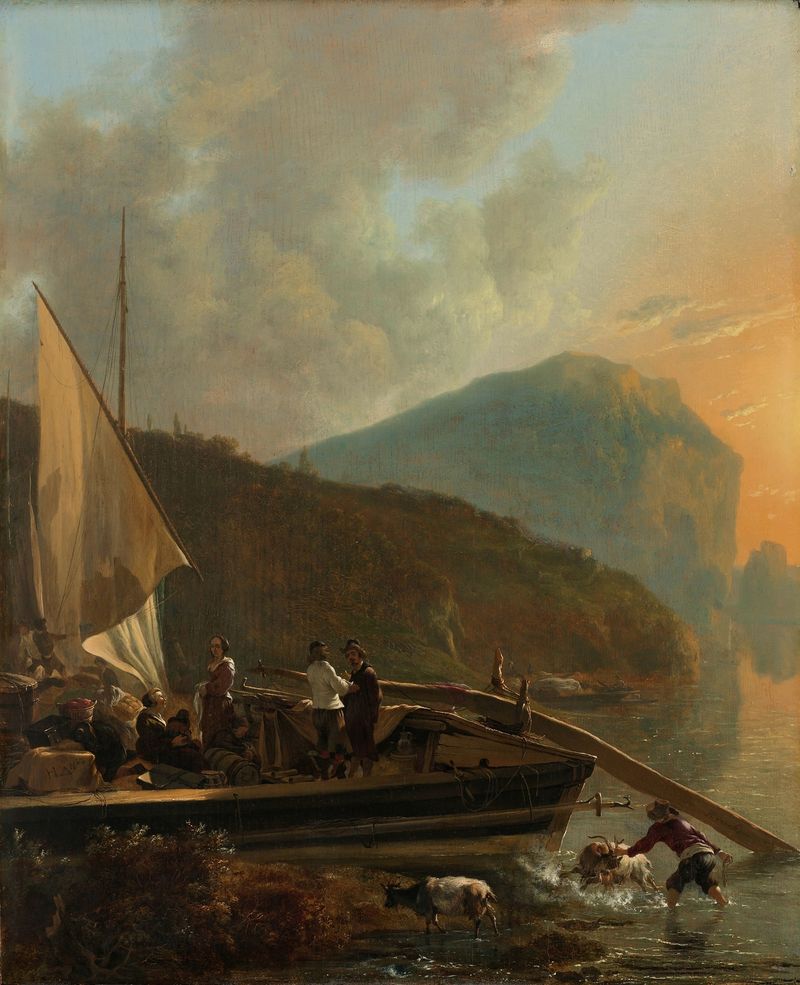
Italianate River Landscape
Adam Pynacker
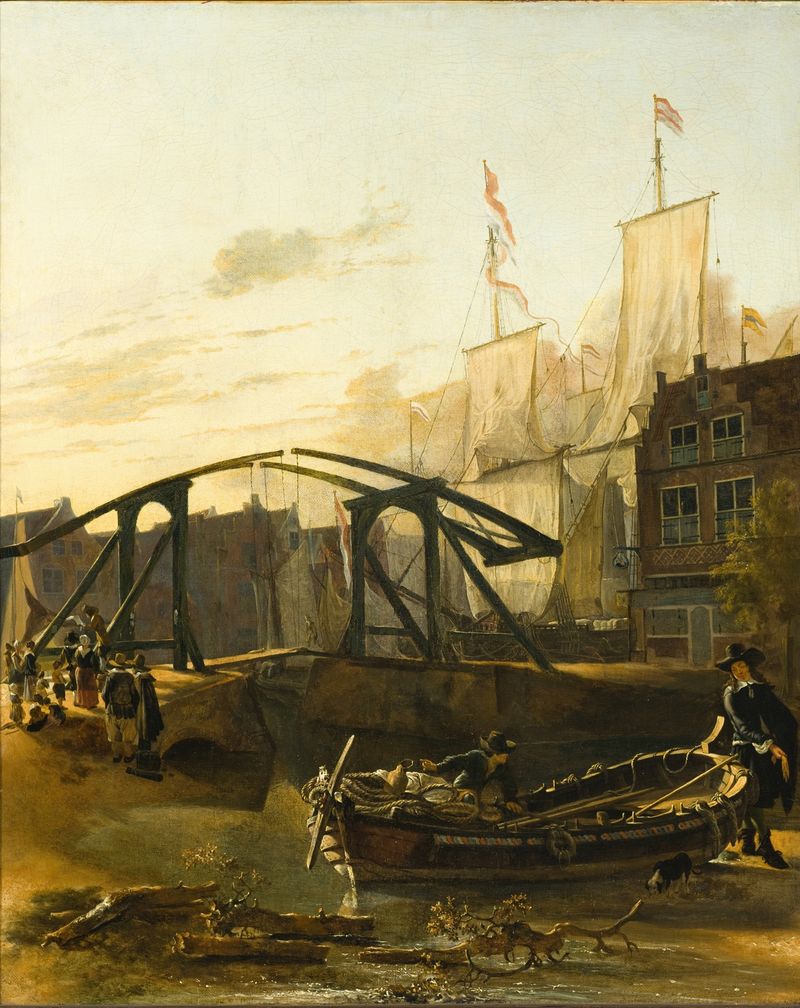
View of a Harbor in Schiedam
Adam Pynacker

Landscape with a Goatherd
Adam Pynacker

Mountainous Landscape with Waterfall
Adam Pynacker
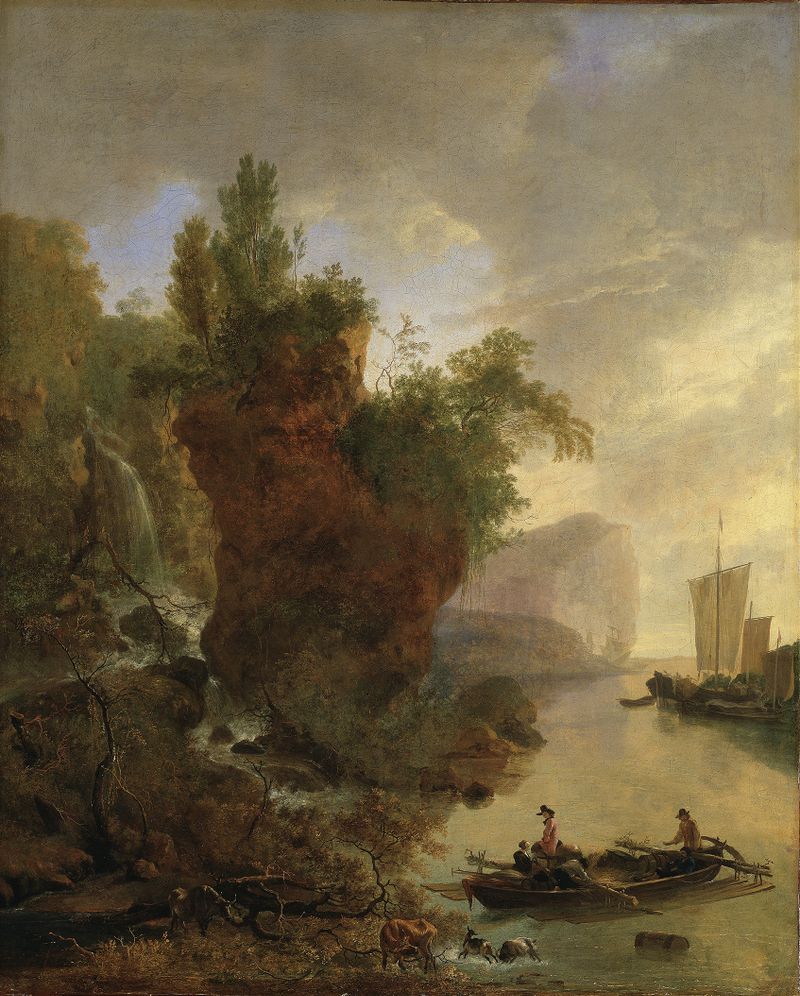
Bay with a Rocky Coast
Adam Pynacker
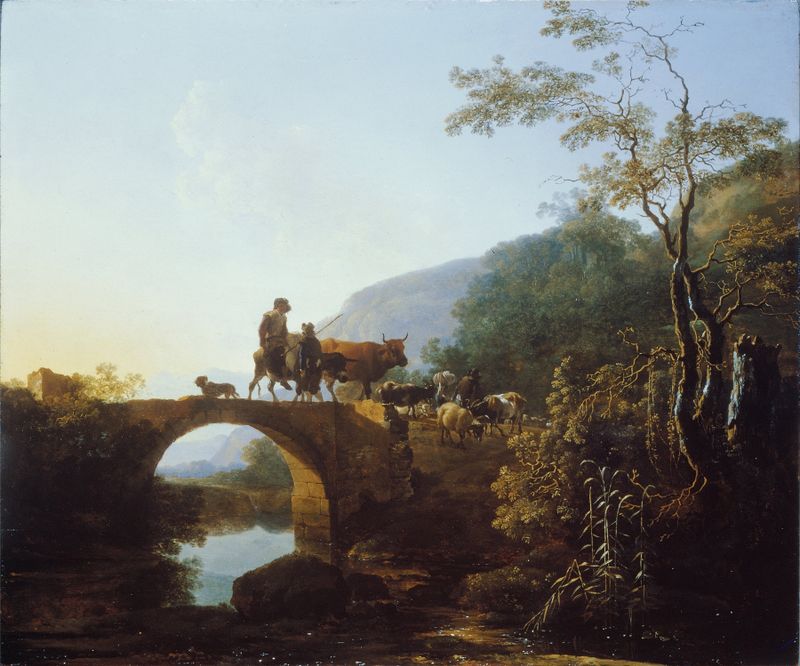
Bridge in an Italian Landscape
Adam Pynacker

Italian Landscape with Ancient Tempietto
Adam Pynacker
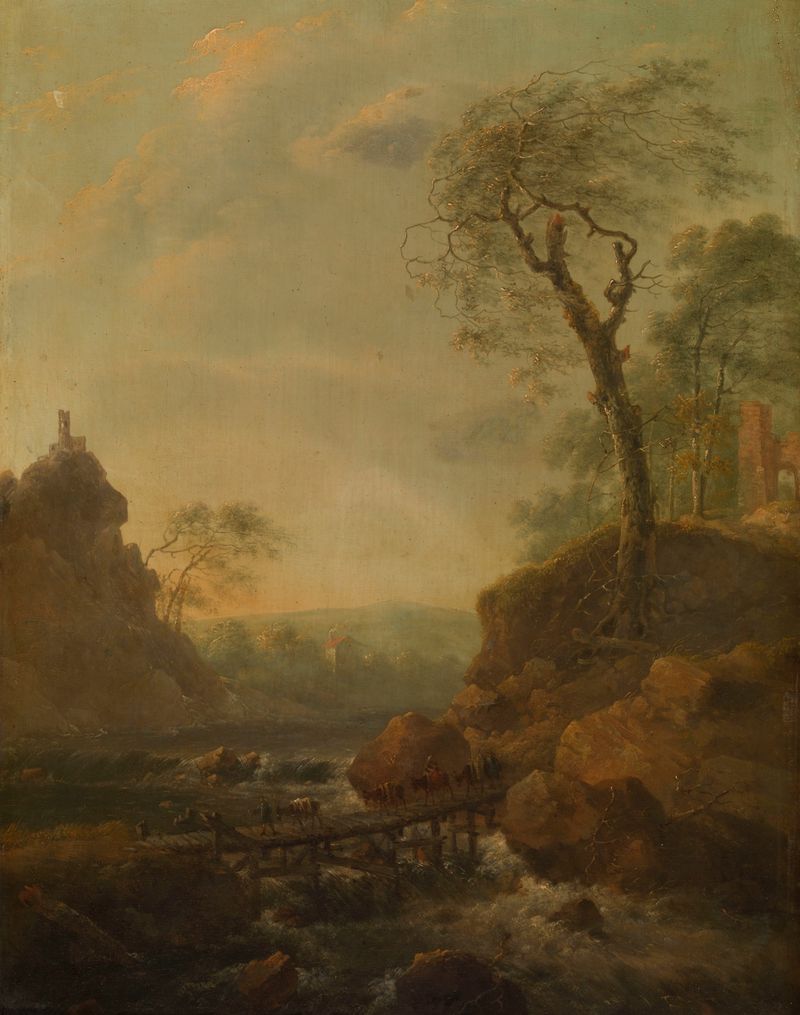
Landscape
Adam Pynacker

Landscape with cattle
Adam Pynacker
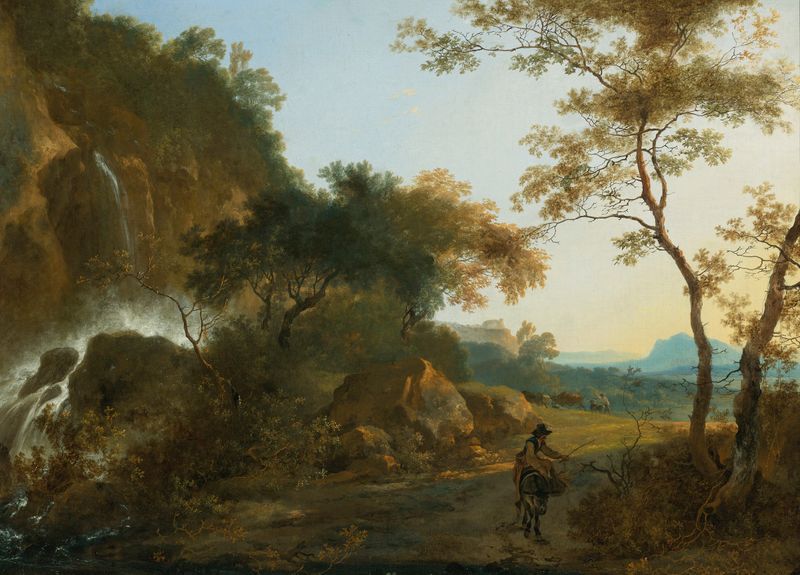
An Italianate Landscape With A Traveller On A Path By A Waterfall
Adam Pynacker





