
Italian Landscape — History & Facts
What secret hides in the quiet of the canvas? A serene stillness envelops the viewer, beckoning them to step into the tranquil embrace of nature depicted by the skilled hands of a master. Focus first on the gentle rolling hills that cradle the horizon, their soft greens and muted browns merging seamlessly. Notice how the light spills over the landscape, casting a warm glow that seems to breathe life into every blade of grass. The delicate brush strokes create a tapestry of texture, inviting your gaze to wander among the lush trees and the distant mountains that stand sentinel against the sky—a sky that shifts from cerulean to soft whites, echoing the tranquility of the moment. Yet beneath this idyllic scene lies an emotional depth.
The absence of human presence speaks volumes, suggesting a yearning for solitude or perhaps a reflection on the passage of time. The gentle interplay of light and shadow evokes a sense of harmony, but the stillness also hints at an underlying tension, as if nature itself holds its breath, waiting for something to break the silence. This juxtaposition between peace and anticipation adds a layer of complexity to the landscape. In 1848, Barend Cornelis Koekkoek painted this piece during a period marked by both personal and artistic fervor.
The artist was living in the Netherlands, where Romanticism was blossoming, and he was immersed in capturing the beauty of nature. His focus on serene landscapes was a response to the growing industrialization of Europe, serving as a reminder of the powerful and unyielding beauty of the natural world.
More Artworks by Barend Cornelis Koekkoek
Browse all →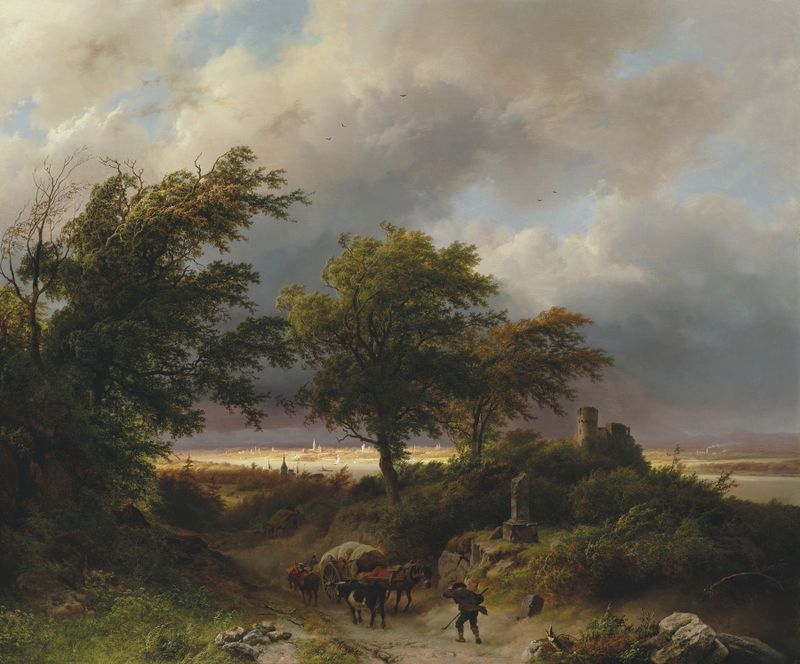
A wooded landscape
Barend Cornelis Koekkoek

Panoramalandschaft am Mittelrhein
Barend Cornelis Koekkoek
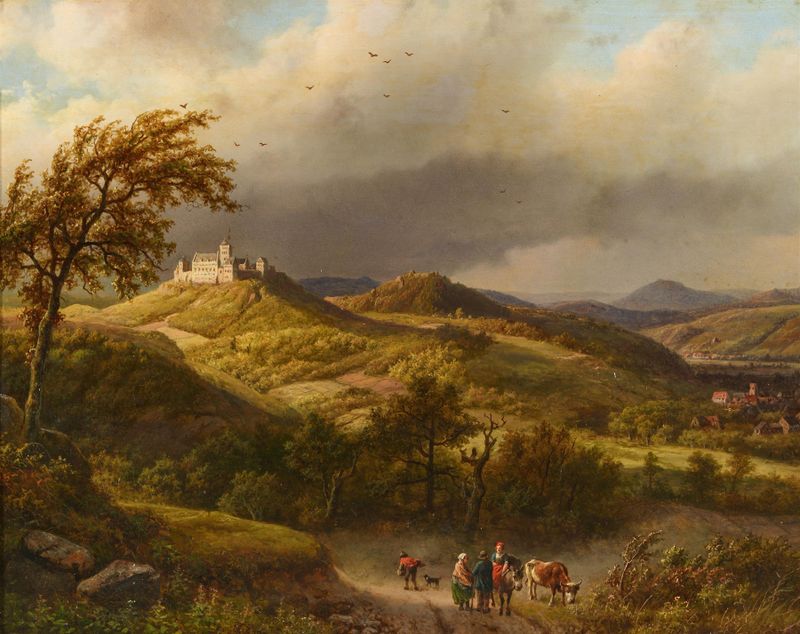
Die Wartburg bei Eisenach
Barend Cornelis Koekkoek
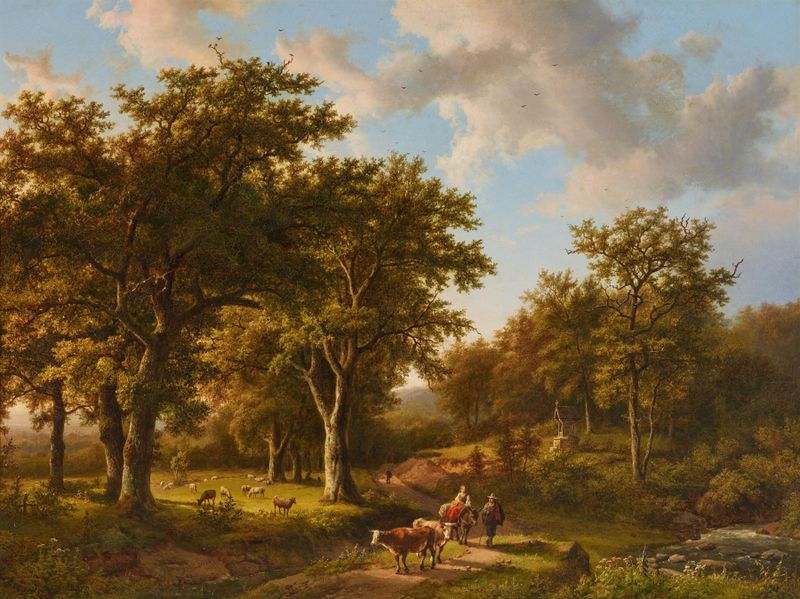
Waldlandschaft mit Hirten und Vieh
Barend Cornelis Koekkoek
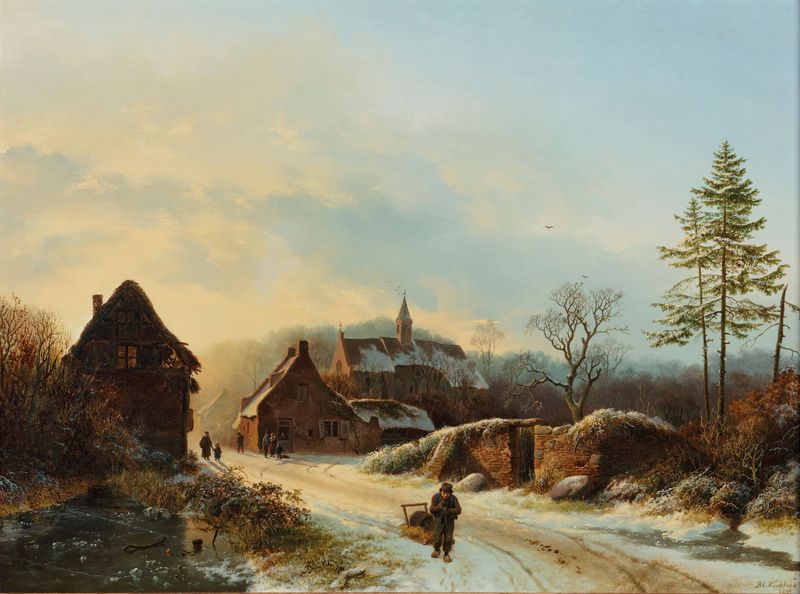
A winter’s day
Barend Cornelis Koekkoek

Travellers On A Road
Barend Cornelis Koekkoek
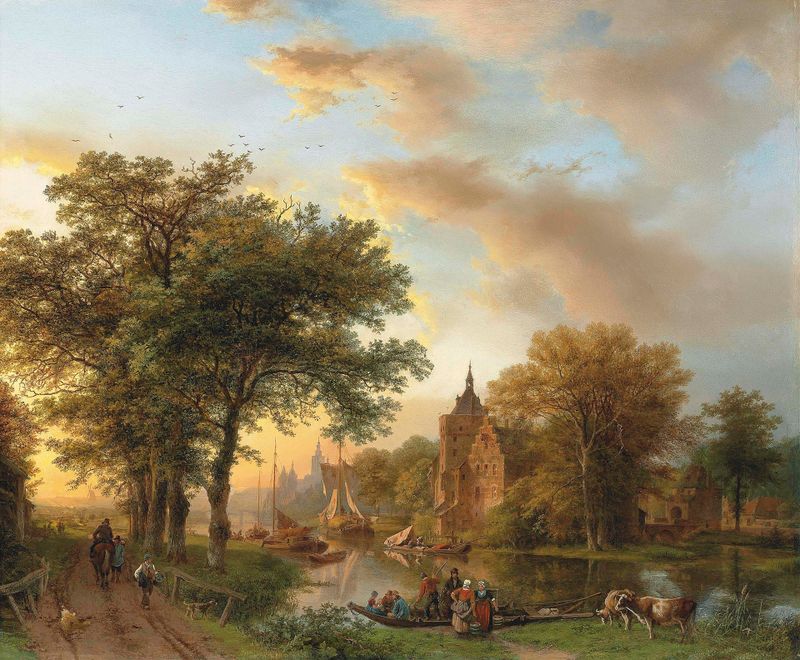
A River Landscape in Holland at Sunset
Barend Cornelis Koekkoek

A panoramic landscape with a view on the Middle-Rhine with a castle
Barend Cornelis Koekkoek
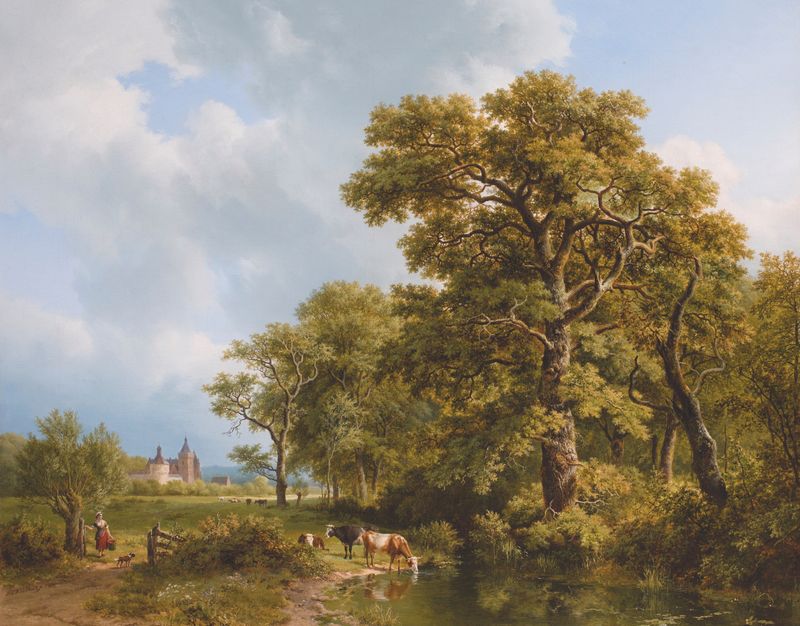
A Summer Landscape With cows Watering, A Castle In The Distance
Barend Cornelis Koekkoek
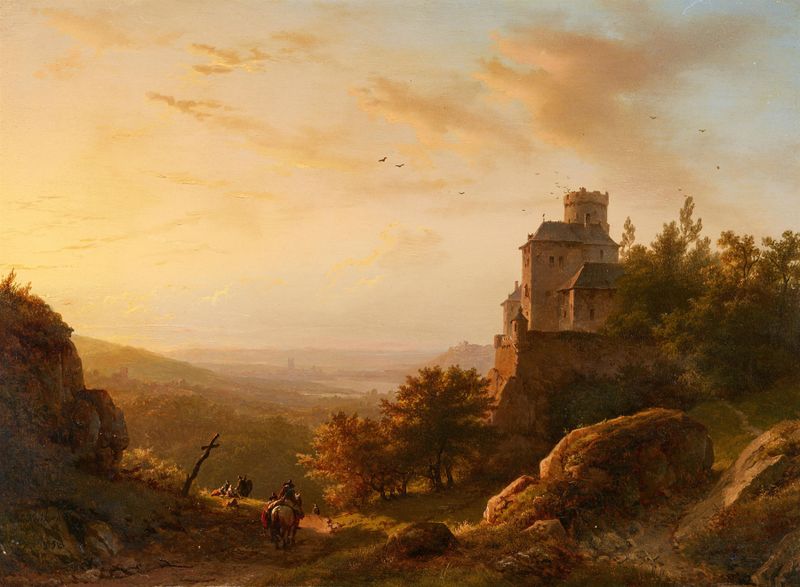
Landschaft mit Burg
Barend Cornelis Koekkoek





