
Panoramalandschaft am Mittelrhein — History & Facts
In a world that often prioritizes noise, the subtleties of landscape provide a canvas for profound reflection. Here, the illusion of distance and depth invites viewers into a serene yet complex dialogue with nature. Look to the left at the lush, verdant hills that rise majestically against the sky. The artist employs a delicate blend of greens and blues, guiding your gaze toward the layers of foliage and the tranquil river winding through the valley.
Notice how the golden light dapples the scenery, infusing warmth and vibrancy into the entire composition, yet it also casts long shadows that hint at the mysteries lurking beneath the surface. In this artwork, the interplay between light and shadow unveils an emotional tension — a juxtaposition of calm and unease. The serene river, which seems to beckon exploration, contrasts with the looming, darkened hills, suggesting that beauty often hides deeper truths. The meticulous detail in the foliage, where each leaf appears to whisper secrets, speaks to the artist’s intent of capturing not just a place, but a moment suspended between reality and illusion. In 1852, Koekkoek painted this masterpiece during a transformative time for landscape art, where Romanticism was reshaping perceptions of nature.
Working in Germany, he was influenced by the picturesque qualities of the Rhine region, while also responding to the growing desire for realism in art. His technique and vision would go on to influence many, bridging the gap between romantic idealism and the emerging realism of the era.
More Artworks by Barend Cornelis Koekkoek
Browse all →
Italian Landscape
Barend Cornelis Koekkoek
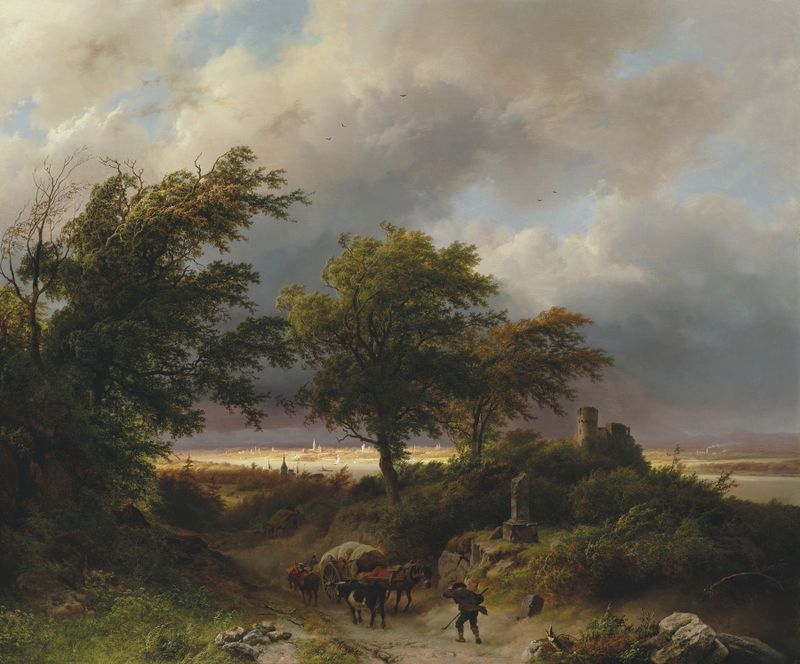
A wooded landscape
Barend Cornelis Koekkoek
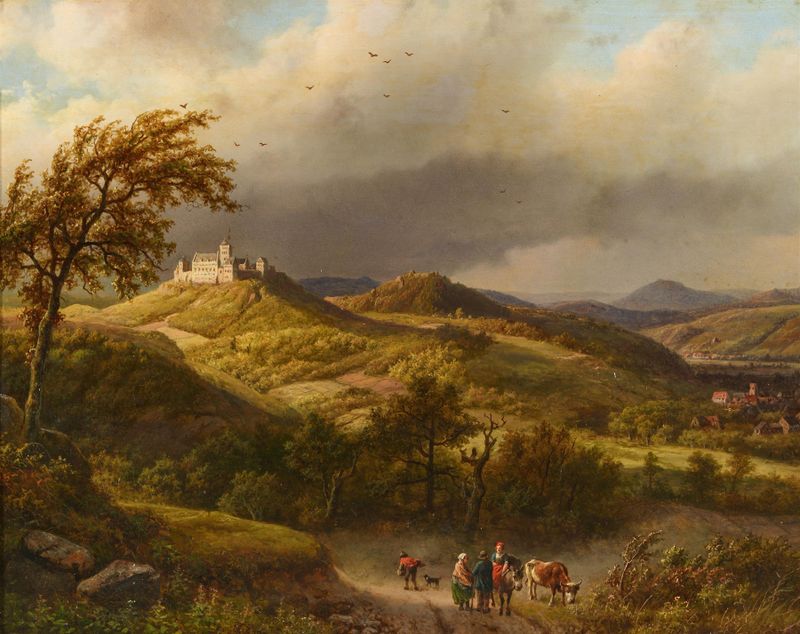
Die Wartburg bei Eisenach
Barend Cornelis Koekkoek
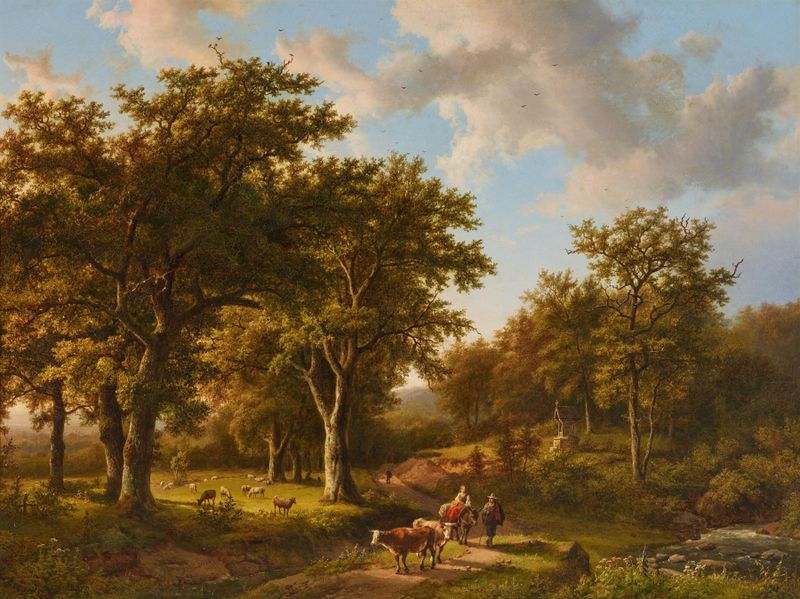
Waldlandschaft mit Hirten und Vieh
Barend Cornelis Koekkoek
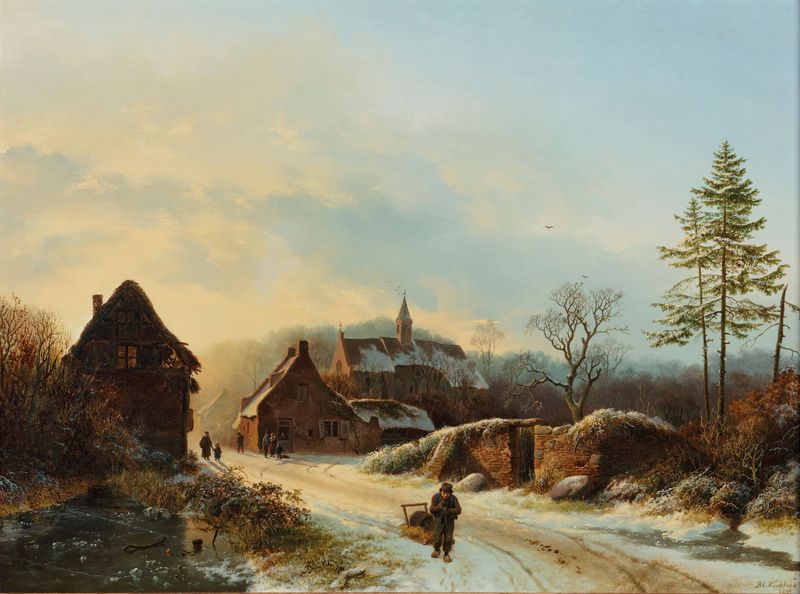
A winter’s day
Barend Cornelis Koekkoek

Travellers On A Road
Barend Cornelis Koekkoek
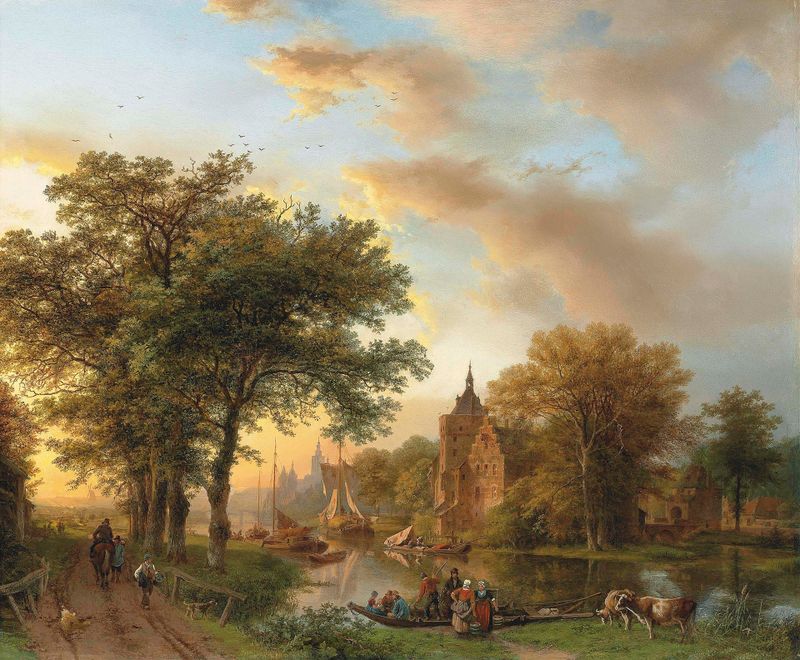
A River Landscape in Holland at Sunset
Barend Cornelis Koekkoek

A panoramic landscape with a view on the Middle-Rhine with a castle
Barend Cornelis Koekkoek
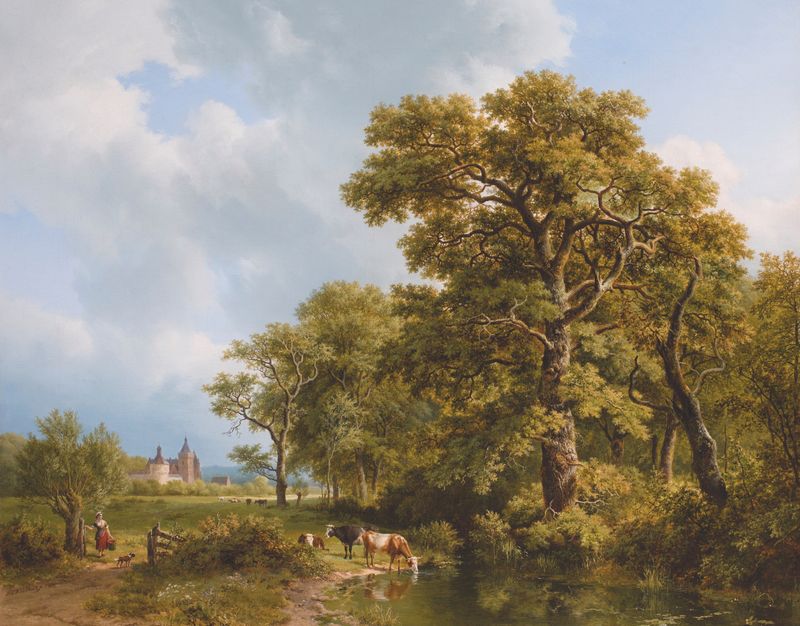
A Summer Landscape With cows Watering, A Castle In The Distance
Barend Cornelis Koekkoek
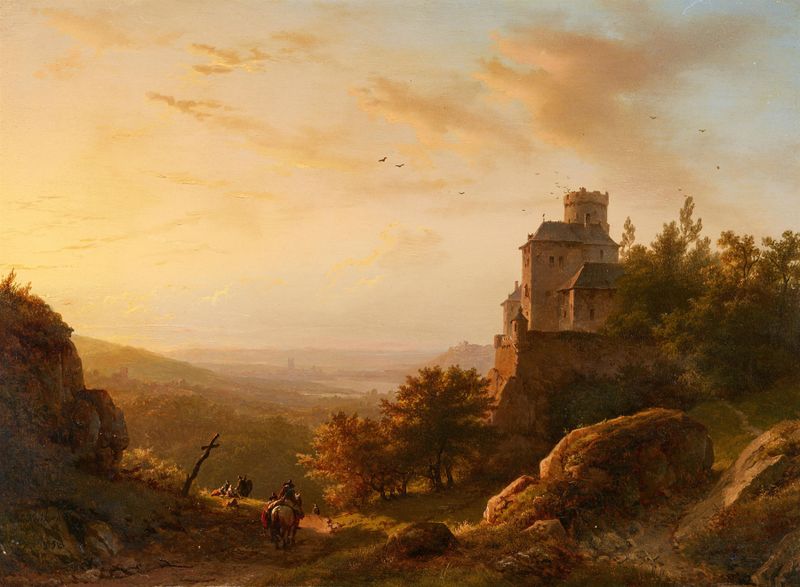
Landschaft mit Burg
Barend Cornelis Koekkoek





