
Waldlandschaft mit Hirten und Vieh — History & Facts
In the tranquil embrace of nature, an undercurrent of fear lingers, reminding us that serenity can mask deeper anxieties. Focus on the interplay of light and shadow in Waldlandschaft mit Hirten und Vieh. The lush greenery invites the eye, while shafts of sunlight pierce through the canopy, illuminating the figures of shepherds and livestock in the foreground. Notice how the brushstrokes convey movement—the gentle sway of the trees, the soft grazing of the animals.
Each element is rendered with meticulous attention to detail, creating a scene that is both idyllic and unsettling. Delve deeper, and the emotional tension becomes palpable. The shepherds’ posture is not one of carefree leisure; they appear vigilant, their gazes sweeping the landscape as if anticipating an unseen threat. The lushness of the forest contrasts dramatically with the isolation implied by their watchful presence.
This duality evokes a sense of unease—the beauty of the landscape is laden with the weight of vulnerability, reflecting the fragility of existence within nature's grandeur. Painting this piece in the mid-19th century, Koekkoek was part of the Romantic movement, which celebrated the sublime beauty of nature while often hinting at the darker aspects of human experience. During this time, the art world was shifting towards realism, yet Koekkoek embraced the emotional depth of landscapes, seeking to capture not only the visual splendor of the scenery but also the complex feelings it evokes. As he stood before the canvas, the world around him brimmed with industrial change, a stark contrast to the pastoral peace depicted in his work.
More Artworks by Barend Cornelis Koekkoek
Browse all →
Italian Landscape
Barend Cornelis Koekkoek
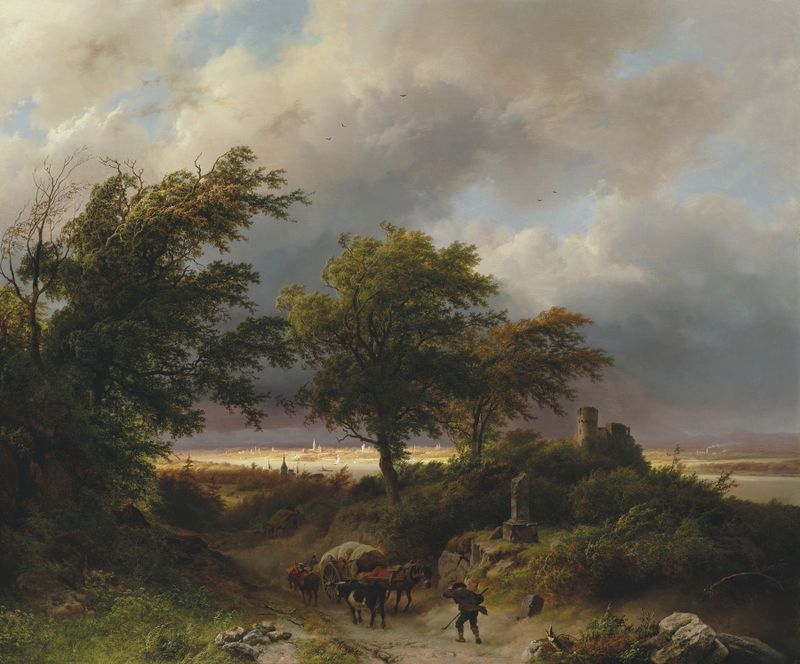
A wooded landscape
Barend Cornelis Koekkoek

Panoramalandschaft am Mittelrhein
Barend Cornelis Koekkoek
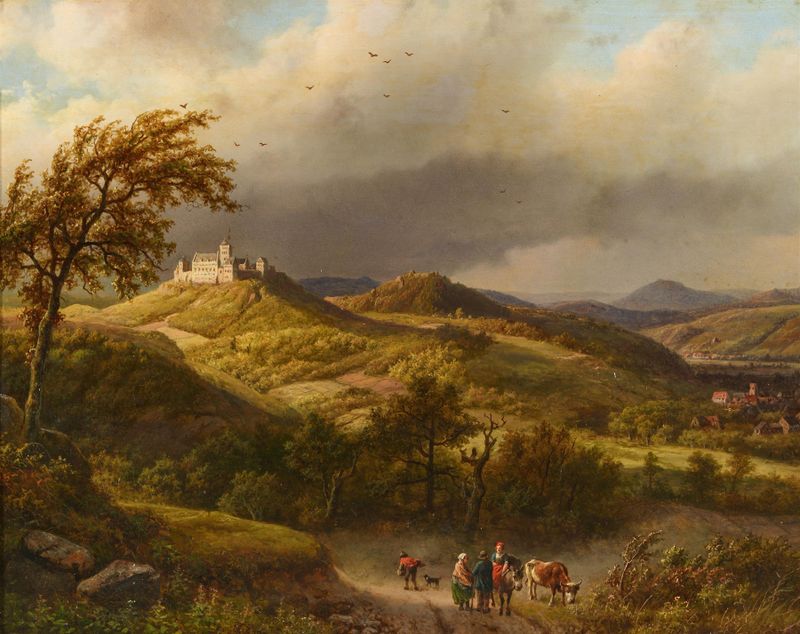
Die Wartburg bei Eisenach
Barend Cornelis Koekkoek
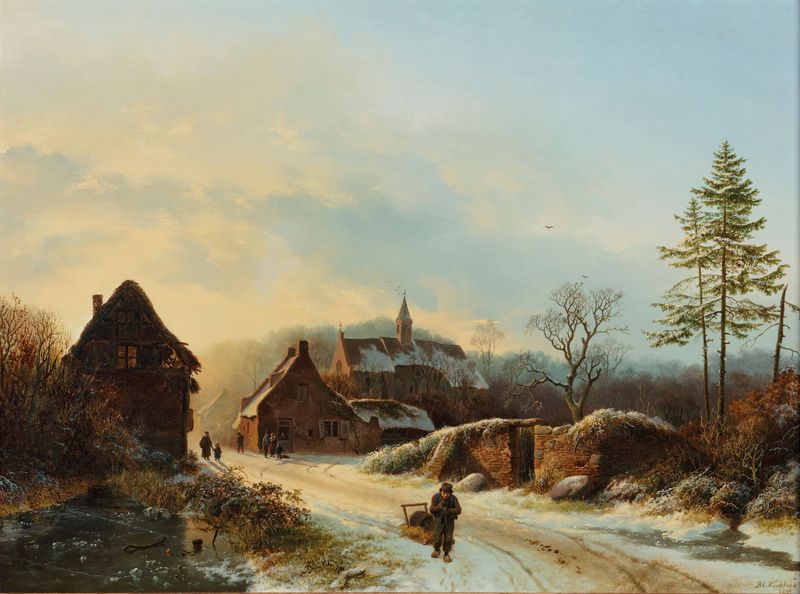
A winter’s day
Barend Cornelis Koekkoek

Travellers On A Road
Barend Cornelis Koekkoek
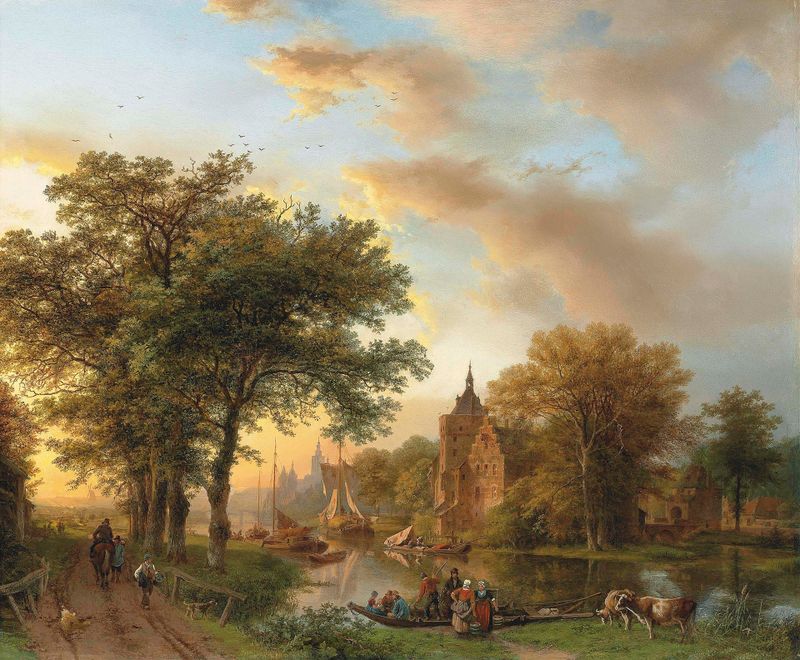
A River Landscape in Holland at Sunset
Barend Cornelis Koekkoek

A panoramic landscape with a view on the Middle-Rhine with a castle
Barend Cornelis Koekkoek
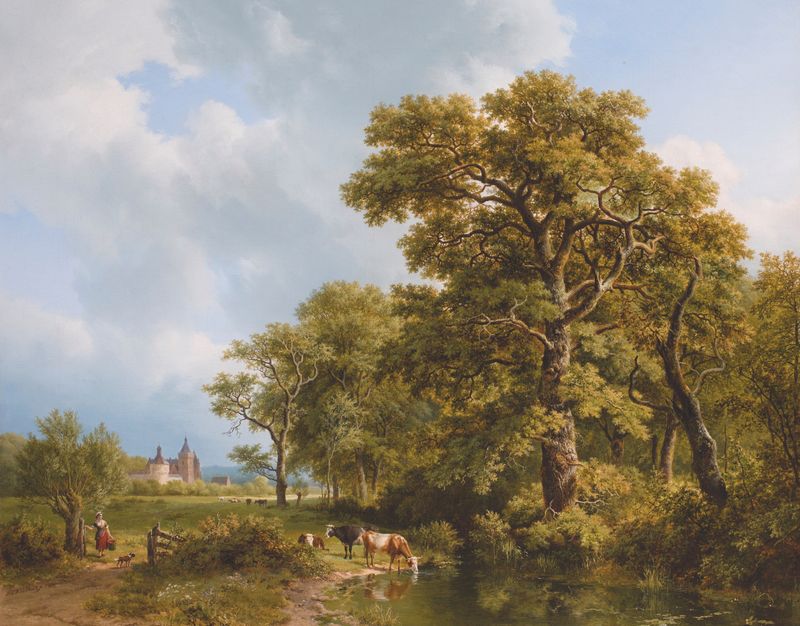
A Summer Landscape With cows Watering, A Castle In The Distance
Barend Cornelis Koekkoek
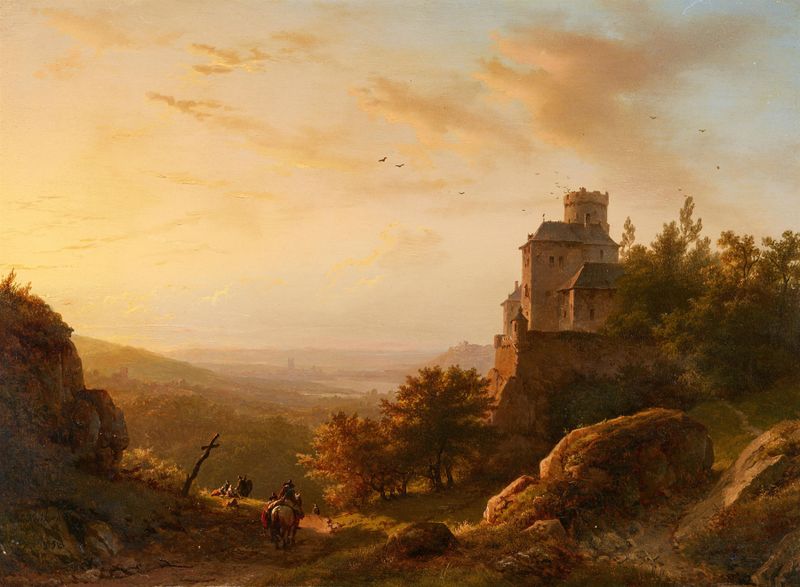
Landschaft mit Burg
Barend Cornelis Koekkoek





