Italian landscape — History & Facts
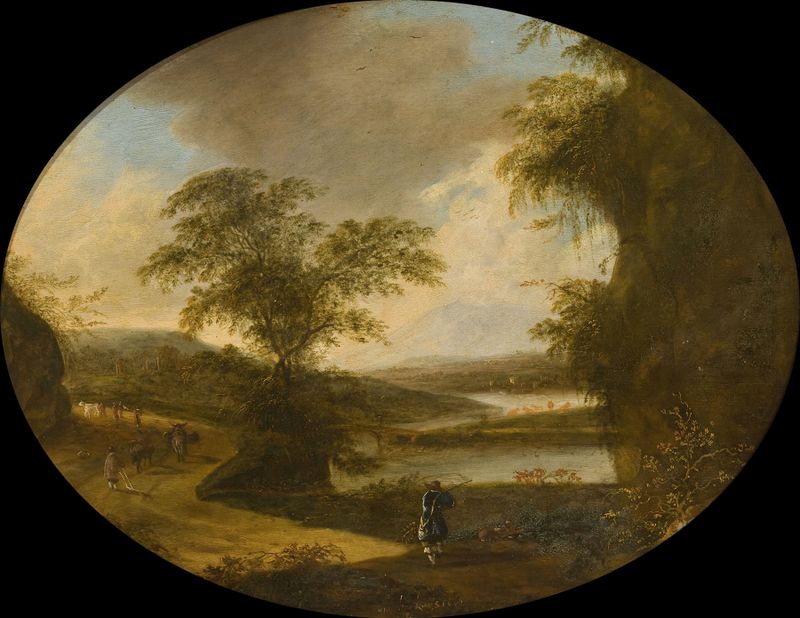
Who listens when art speaks of silence? In the haunting tranquility of an Italian landscape, there lies a quiet conversation between nature and the passage of time, echoing the decay of forgotten moments. Focus on the soft, fading light that tenderly illuminates the rolling hills to the right, casting long shadows across a once-vibrant terrain. The muted greens and earthy browns intertwine, revealing a world that is both lush and wilting. Notice how the delicate brushstrokes conjure a sense of nostalgia, with each blade of grass seemingly whispering stories of seasons passed.
The sky above, a gentle wash of blues with wisps of cloud, enhances the ethereal quality, inviting the viewer to linger in this poignant stillness. Beneath the surface, this landscape teeters on the brink of decay, mirroring the transitory nature of existence. The crumbling stone structures nestled among the trees seem to sigh under the weight of their own history, embodying a contrast between vitality and decline. The stillness resonates with a profound melancholy, as if the land itself mourns what it has lost—once bustling with life, now left to fade into memory. In 1661, while painting this piece, Ottomar Hackius was immersed in the Baroque movement, which was characterized by dramatic expression and the embrace of naturalism.
Working in Italy, he was influenced by his surroundings and the prevailing artistic trends of capturing not just beauty, but the deeper narratives of age and passage. At this moment in his career, Hackius was navigating the balance between tradition and personal interpretation, striving to infuse his landscapes with an emotive resonance that would speak to viewers across time.