
Italianate landscape with shepherds afraid by a snake — History & Facts
When did color learn to lie? Nostalgia seeps through the painted landscapes, weaving a tale of innocence and trepidation, awakening echoes of a forgotten world. First, observe the lush greenery that blankets the rolling hills, its vibrant hues almost pulsating with life. Look to the foreground where shepherds, caught in a moment of alarm, turn away from the lurking serpent. The vivid reds and earthy browns contrast sharply with the ethereal blues of the sky, creating a tension that draws the eye towards the central figures, frozen in their instinctive fear.
The brushwork, a dance of deft strokes, renders the grass almost tactile, inviting touch while encapsulating the fragile balance between beauty and danger. Delve deeper, and you will find layers of meaning nestled within the pastoral scene. The snake, an age-old symbol of deception and fear, silently challenges the calmness of rural life, hinting at the latent anxieties of the human experience. The shepherds, typically embodiments of serenity, are rendered vulnerable, showcasing a poignant juxtaposition of the innocence of nature against the threat that lurks in its shadows.
This contrast speaks to the fragility of existence, evoking emotions of nostalgia for moments untouched by such peril. Created in 1801, the artist painted this piece during a period marked by the aftermath of the French Revolution, a time characterized by both political upheaval and a yearning for a return to simpler, pastoral ideals. Pierre-Athanase Chauvin, active in France, crafted works that often reflected the romantic longing for nature, intertwined with the complexities of societal change, encapsulating a moment in art history where the sublime was sought amidst chaos.
More Artworks by Pierre-Athanase Chauvin
Browse all →
View Of The Gardens Of The Villa D’este, Tivoli
Pierre-Athanase Chauvin
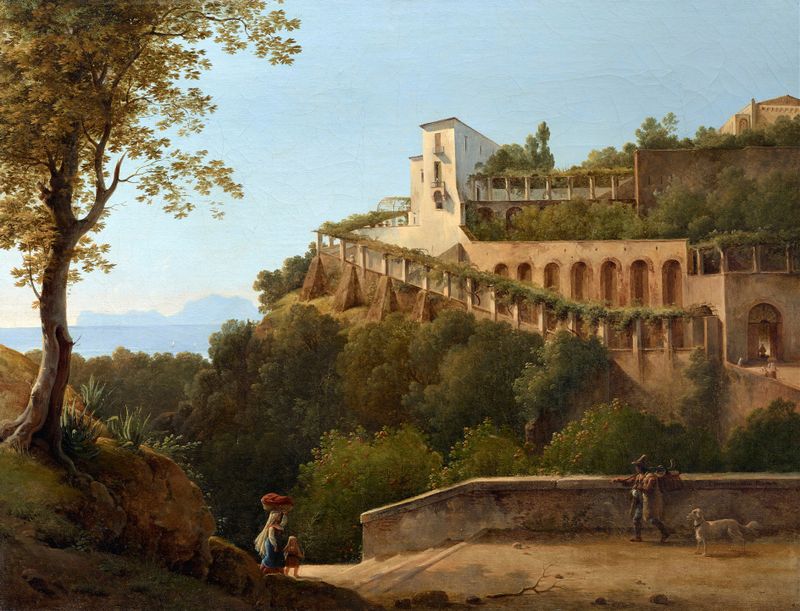
A Convent Near Naples, with a View of Capri
Pierre-Athanase Chauvin
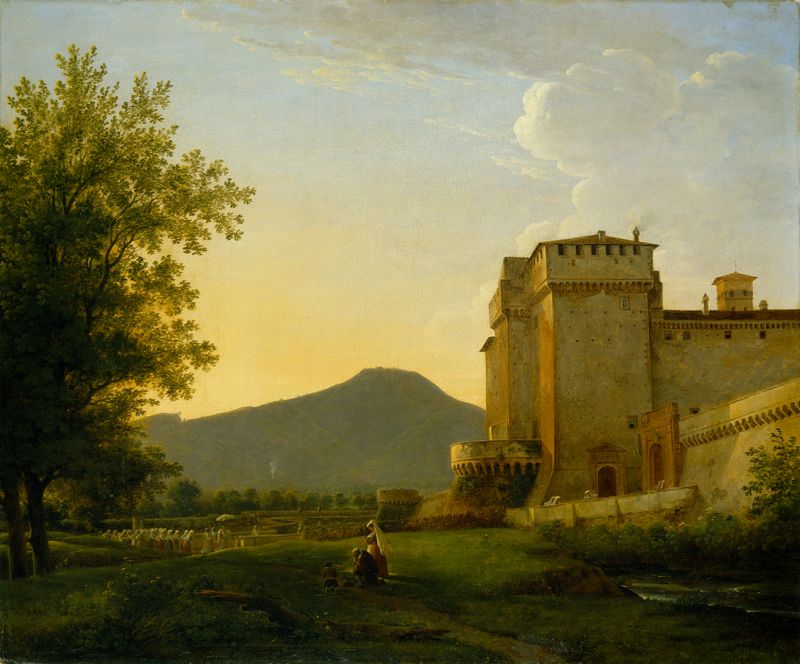
Grotta Ferrata In The Alban Hills
Pierre-Athanase Chauvin
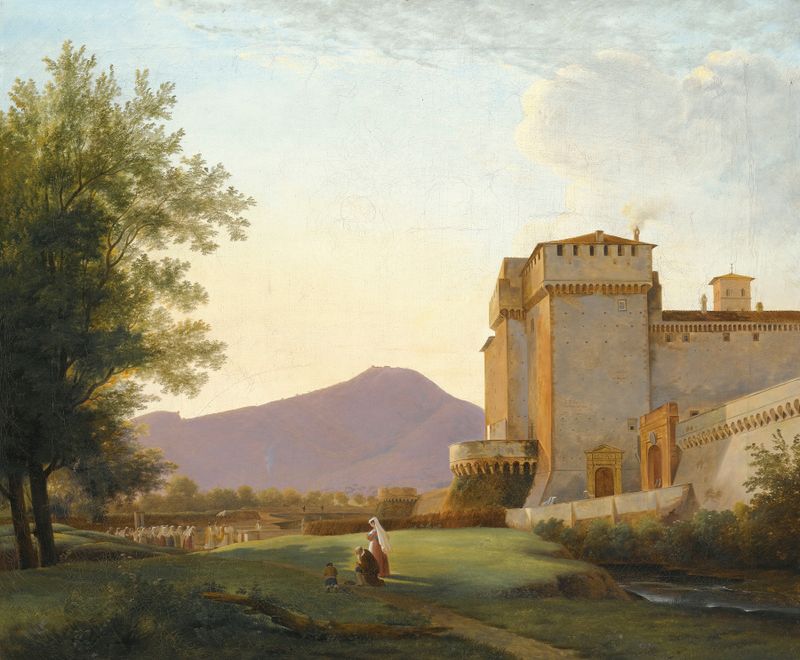
A View Of The Abbey Of Grottaferrata
Pierre-Athanase Chauvin
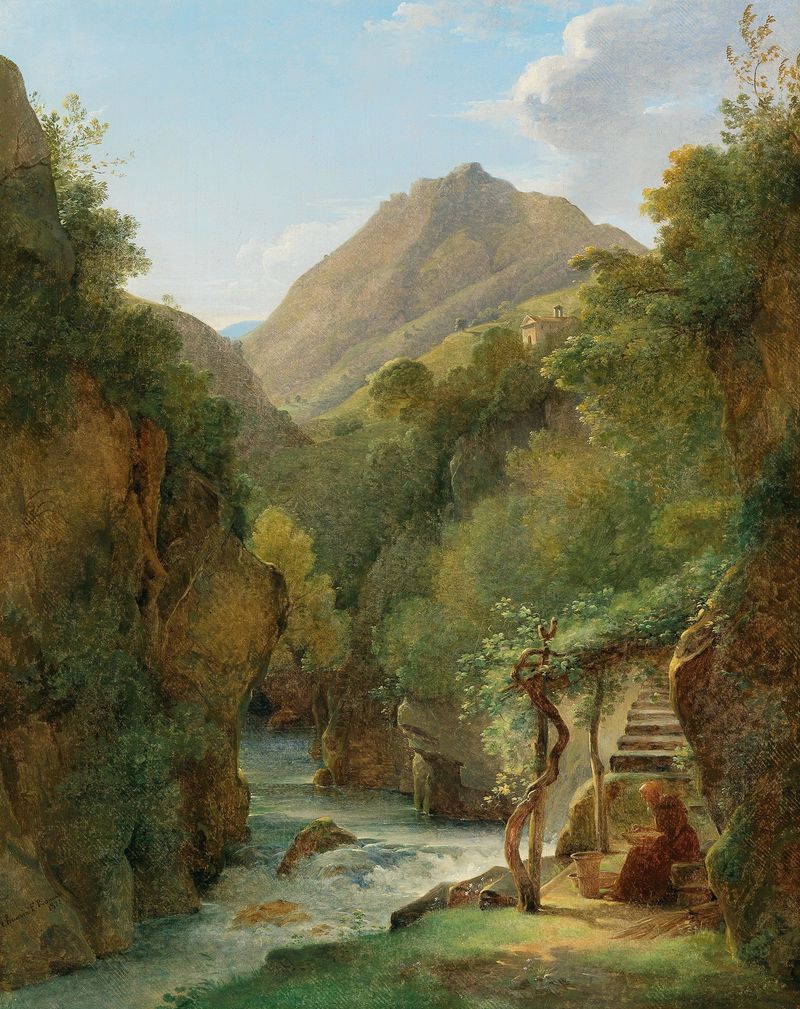
The hermit
Pierre-Athanase Chauvin
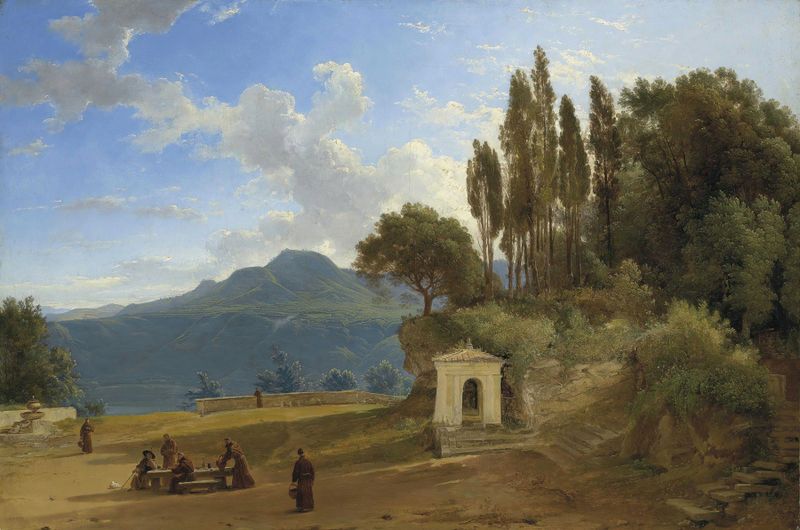
Monks Before Lake Nemi, Italy
Pierre-Athanase Chauvin
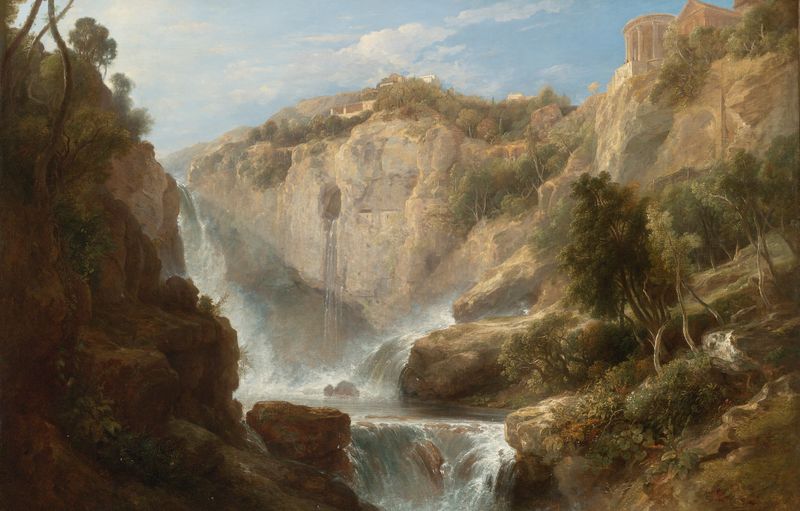
View Of Tivoli
Pierre-Athanase Chauvin
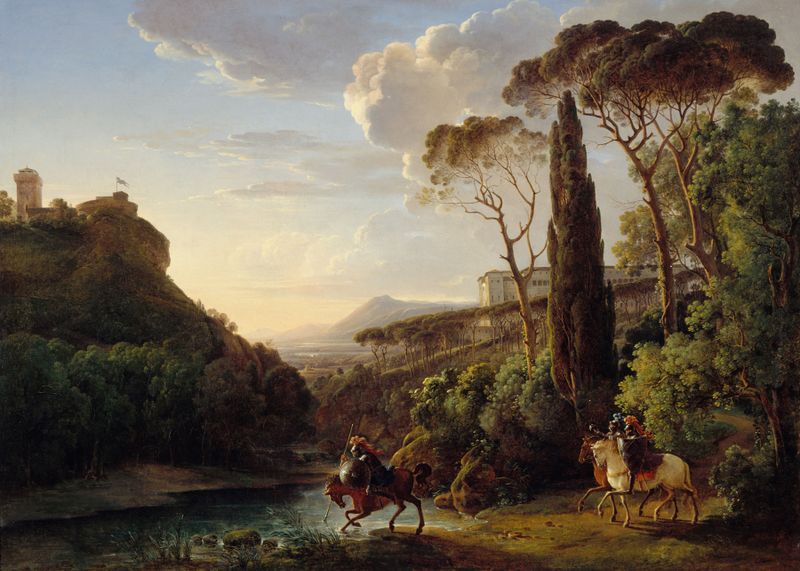
Paysage d’Italie avec trois chevaliers
Pierre-Athanase Chauvin





