Italienische Landschaft — History & Facts
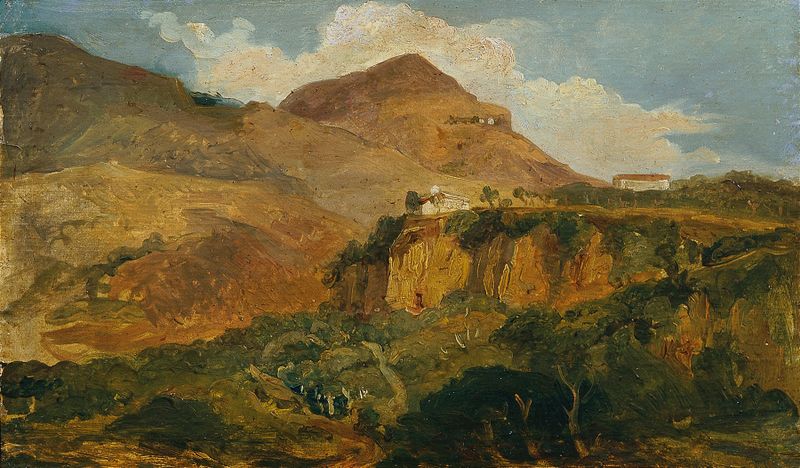
It whispers through the vibrant hues and tranquil forms, inviting us to explore a realm untouched by the complexities of time—a landscape where innocence breathes. Look closely at the foreground, where lush, verdant fields stretch beneath a sweeping sky. The painter’s brush has captured the interplay of light and shadow, illuminating the soft contours of the rolling hills. Notice how the delicate greens are punctuated by flecks of gold, suggesting a sun-drenched afternoon.
The scene is not merely a backdrop; it breathes life, drawing the viewer into a moment of serene contemplation. As you delve deeper, the emotional tension unveils itself in the contrast between the rugged mountains in the distance and the gentle serenity of the countryside. Each element speaks of harmony—nature's beauty untainted by human presence—yet hints at a longing for connection. The painting encapsulates a fleeting moment of innocence, where silence reigns, yet promises the unspoken stories of those who might have once tread upon this land. Carl Rahl painted this landscape at an unspecified time, likely during the mid-19th century, when Romanticism was reshaping the visual arts.
As one of the notable figures of the Austrian landscape tradition, Rahl sought to evoke emotional resonance through nature, mirroring the broader artistic movements of his time that emphasized emotional depth and the sublime.