Italienische Stadt am Meer — History & Facts
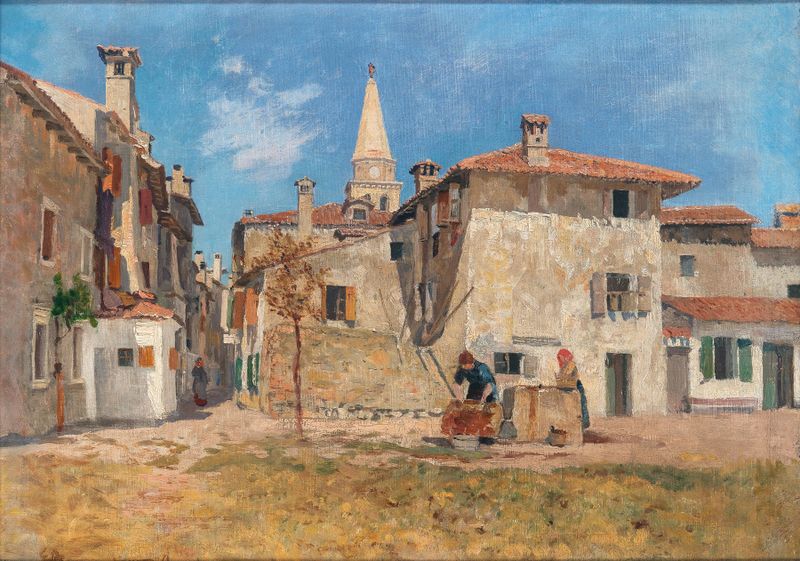
What if silence could speak through light? In Italienische Stadt am Meer, Eduard Ameseder captures an atmosphere thick with unvoiced emotions, where fear simmers beneath the surface of serene beauty. Focus your attention on the luminous glow that bathes the coastal town, set against an expansive sky that evokes a sense of foreboding. Notice the intricate details in the architecture, with light cascading over the buildings, yet shadows lurking in the alleys hint at secrets untold. The gentle waves whisper against the shore, their rhythm a stark contrast to the stillness that envelops the scene, inviting contemplation and unease. Amidst the idyllic setting, the painting embodies a tension between light and dark, joy and dread.
The bright sky may suggest hope, yet the deep blues of the water and the obscured corners of the town evoke a lurking fear, as if the beauty is a veil for a deeper unease. These contrasting elements create a dialogue within the painting, challenging the viewer to confront what lies beneath the apparent tranquility. In 1905, when this work was painted, Ameseder was immersed in the cultural currents of a changing Europe, exploring themes of identity and existential dread. Living in Vienna, he was influenced by the burgeoning modernist movements that questioned traditional narratives and aesthetics, seeking depth in the unseen.
This work stands as a testament to his exploration of the emotional landscape that defines the human experience.