Winter — History & Facts
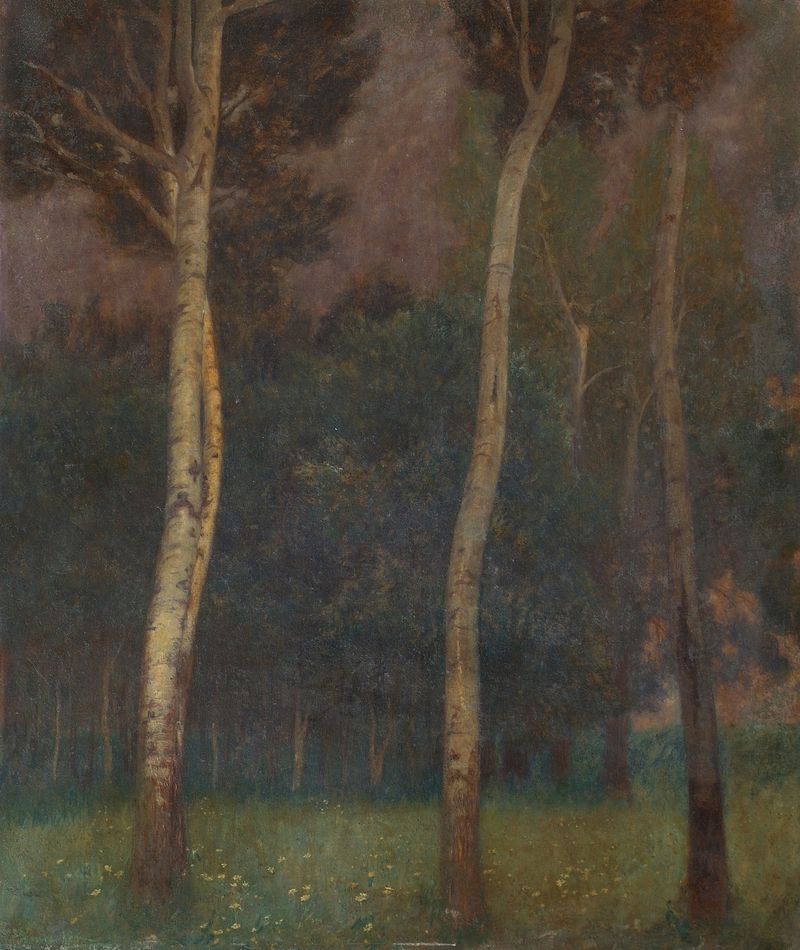
Could beauty survive in a century of chaos? In Winter, the stillness of a snow-laden landscape invites contemplation on desire and the human spirit’s resilience amidst adversity. Look to the foreground, where delicate snowflakes cloak the ground, their intricate patterns whispering secrets of fleeting moments. Notice how the soft, muted palette of whites and grays enhances the sense of quietude, while subtle hints of blue suggest the chill of the air. The trees, stark and bare, rise against the horizon, their sharp silhouettes contrasting with the serene expanse of snow, creating a visually arresting tension. Beneath the surface, the canvas speaks volumes about longing.
The cold beauty exudes a sense of isolation, yet within this stillness, there is a yearning for warmth and connection. The contrast between the harsh winter environment and the delicate beauty of nature embodies a profound emotional tension, echoing the inner struggles of the time. Each brushstroke reflects a deep desire for solace and serenity, capturing the heart's wish to find peace even in the bleakest of seasons. In 1908, Ameseder was immersed in a world on the brink of transformation, as avant-garde movements began to reshape the art landscape.
Living in Austria, he was influenced by the tumultuous socio-political climate, which heightened the emotional weight of his work. This piece emerges as a poignant reflection of personal and collective desires, rooted in a quest for beauty amid uncertainty.