
Jacob’s Journey — History & Facts
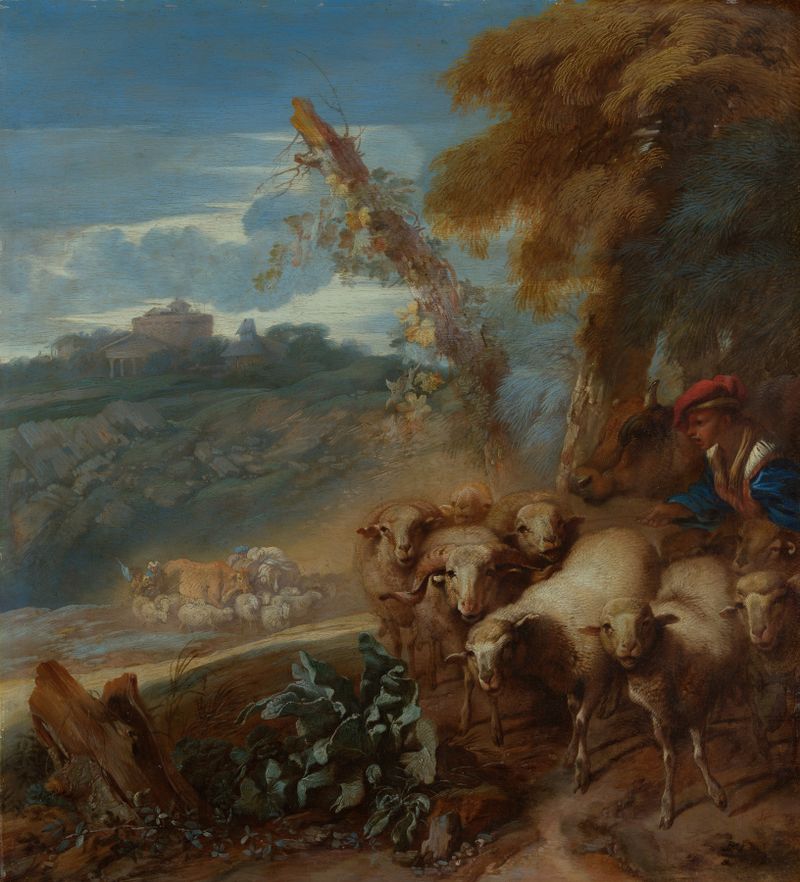
Where does light end, and longing begin? In the realm of Jacob’s Journey, desire is palpable, a silent whisper echoing through the canvas, urging us to step closer to its profound depths. Focus on the radiant play of light across Jacob’s figure, illuminating the contours of his form as he traverses a rugged landscape. The chiaroscuro technique reveals the duality of his experience—where the bright highlights speak of hope, the shadows evoke the weight of his challenges. Notice how the rich earth tones contrast with the ethereal glow surrounding him, guiding the viewer's eye toward his outstretched hand, brimming with an unspoken yearning. Delve deeper into the emotional resonance of the work.
The rugged terrain symbolizes the obstacles encountered along the path of aspiration, while Jacob’s determined gaze hints at an internal struggle between faith and doubt. The juxtaposition of light and shadow encapsulates the tension of his journey; every stroke breathes life into the discontent of his heart, and every detail insists on the importance of perseverance amidst uncertainty. In 1633, Castiglione painted this piece during a period of personal and artistic evolution. Living in Genoa, he was immersed in the Baroque movement, experimenting with light and chiaroscuro that would later influence many artists.
The socio-political climate of Italy, marked by both turmoil and vibrant artistic expression, fueled his exploration of themes such as desire, fate, and the human condition, beautifully encapsulated in this evocative portrayal of Jacob’s journey.
More Artworks by Giovanni Benedetto Castiglione
Browse all →


More Religious Art
Browse all →
The Return of the Prodigal Son
Rembrandt van Rijn

The Garden of Earthly Delights
El Bosco

Count Orgaz’ funeral
El Greco

The Hundred Guilder Print: the central piece with Christ preaching, the plate arched
Rembrandt van Rijn

The Descent from the Cross
Rogier van der Weyden

The return of the prodigal son
Rembrandt van Rijn