
Noah Leading the Animals into the Ark — History & Facts
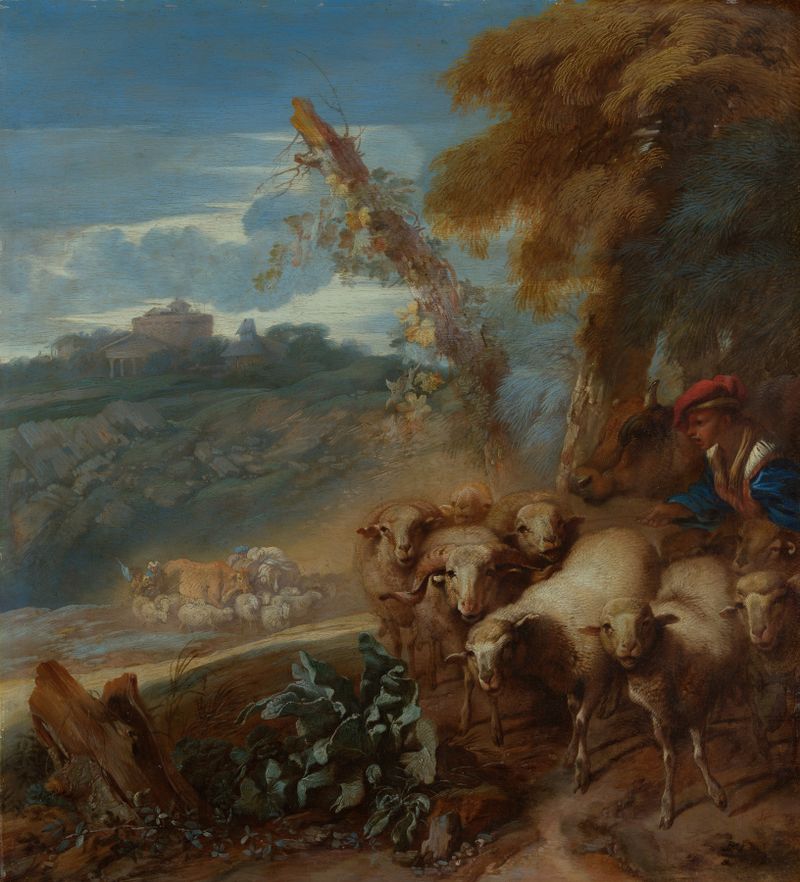
In Noah Leading the Animals into the Ark, dreams of salvation and preservation dance upon the canvas, inviting us to witness a moment suspended between earth and sky. Look to the left at Noah, his weathered face a testament to faith, as he gestures toward the gathering throng of creatures. The warm, earthy tones envelop the scene, while a cascade of light illuminates the ark in the background, creating a stark contrast with the dark, brooding clouds. Each brushstroke is deliberate, capturing the tension of urgency and divine purpose, drawing our eyes across the congregation of animals, each imbued with character and life. Beneath the surface, the painting is a dialogue between humanity and nature, evoking a sense of both harmony and impending loss.
Notice how the animals, from the majestic lion to the delicate dove, compose a microcosm of the world, symbolizing unity amidst chaos. The somber atmosphere, paired with the promise of hope represented by the ark, speaks to the fragility of existence, urging the viewer to reflect on the balance between destruction and preservation in their own lives. During the mid-17th century, Castiglione painted this masterpiece while living in Genoa, a period marked by intense religious fervor and artistic innovation. The artist was at the forefront of the Baroque movement, grappling with themes of fate and divine intervention, reflecting the anxieties of a society on the brink of transformation.
More Artworks by Giovanni Benedetto Castiglione
Browse all →


More Religious Art
Browse all →
The Return of the Prodigal Son
Rembrandt van Rijn

The Garden of Earthly Delights
El Bosco

Count Orgaz’ funeral
El Greco

The Hundred Guilder Print: the central piece with Christ preaching, the plate arched
Rembrandt van Rijn

The Descent from the Cross
Rogier van der Weyden

The return of the prodigal son
Rembrandt van Rijn