
Jacob's ladder — History & Facts
What if beauty was never meant to be finished? In Jacob's Ladder, the viewer is drawn into a moment of divine revelation, where earthly concerns dissolve into the ethereal. This painting speaks to the tension between the visible and the unseen, urging us to explore the depths of our own understanding. Look to the center, where a luminous cloud unfurls like a divine curtain, revealing a staircase leading up to the heavens. The figures around it, bathed in a warm, golden light, vary in expression; some gaze in awe, while others seem to question the nature of what they witness.
The chiaroscuro technique—a hallmark of the artist’s mastery—creates a dynamic interplay between shadow and light, amplifying the emotional weight of the scene. The rich, earthy tones contrast with the celestial brightness, underscoring the migration from the mundane to the sublime. In the layers of this composition lie profound contrasts. The upward motion of the ladder symbolizes aspiration, a journey toward higher truths, while the figures represent humanity's struggle with faith and doubt.
The intricate details, such as the fluidity of the clouds and the stillness captured in the figures’ poses, draw us into a contemplation of revelation, suggesting that enlightenment often comes from a place of uncertainty. This paradox of striving for beauty and truth amidst chaos resonates across time, echoing the human quest for meaning. Rembrandt painted Jacob's Ladder in 1655 during a period marked by personal and professional upheaval. Living in Amsterdam, he was grappling with the death of his beloved son and the financial strain of his artistic pursuits.
The art world was shifting, leaning toward the Baroque style, yet Rembrandt remained steadfast in his dedication to capturing the human experience—making this piece a poignant reflection of his own life and the spiritual longing that permeated his work.
More Artworks by Rembrandt van Rijn
Browse all →
The Night Watch Militia Company of District II under the Command of Captain Frans Banninck Cocq
Rembrandt van Rijn

The Return of the Prodigal Son
Rembrandt van Rijn

The Hundred Guilder Print: the figures leaning on the wall in the centre left
Rembrandt van Rijn

The Hundred Guilder Print: the central piece with Christ preaching, the plate arched
Rembrandt van Rijn

Isaac and Rebecca, Known as ‘The Jewish Bride’
Rembrandt van Rijn
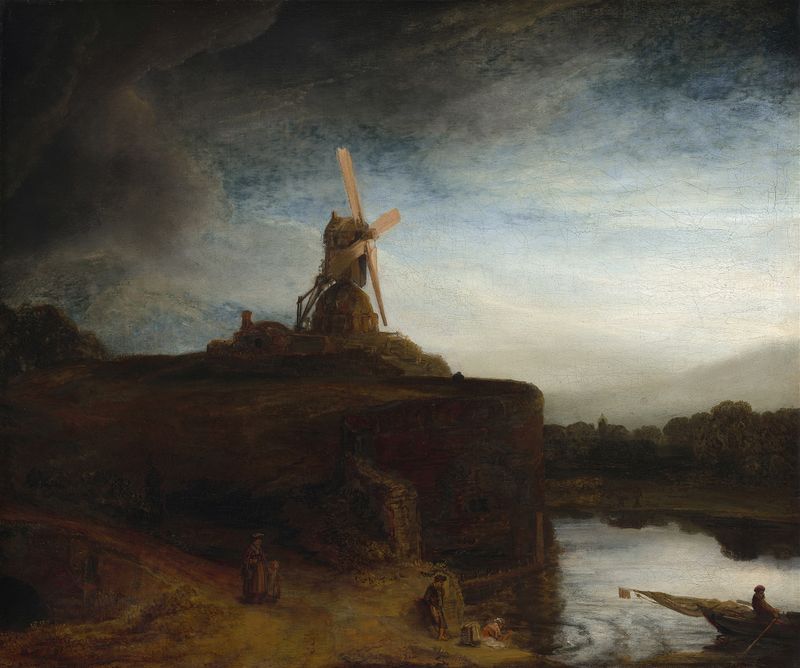
The Mill
Rembrandt van Rijn

The Sampling Officials of the Amsterdam Drapers’ Guild, Known as ‘The Syndics’
Rembrandt van Rijn

The return of the prodigal son
Rembrandt van Rijn
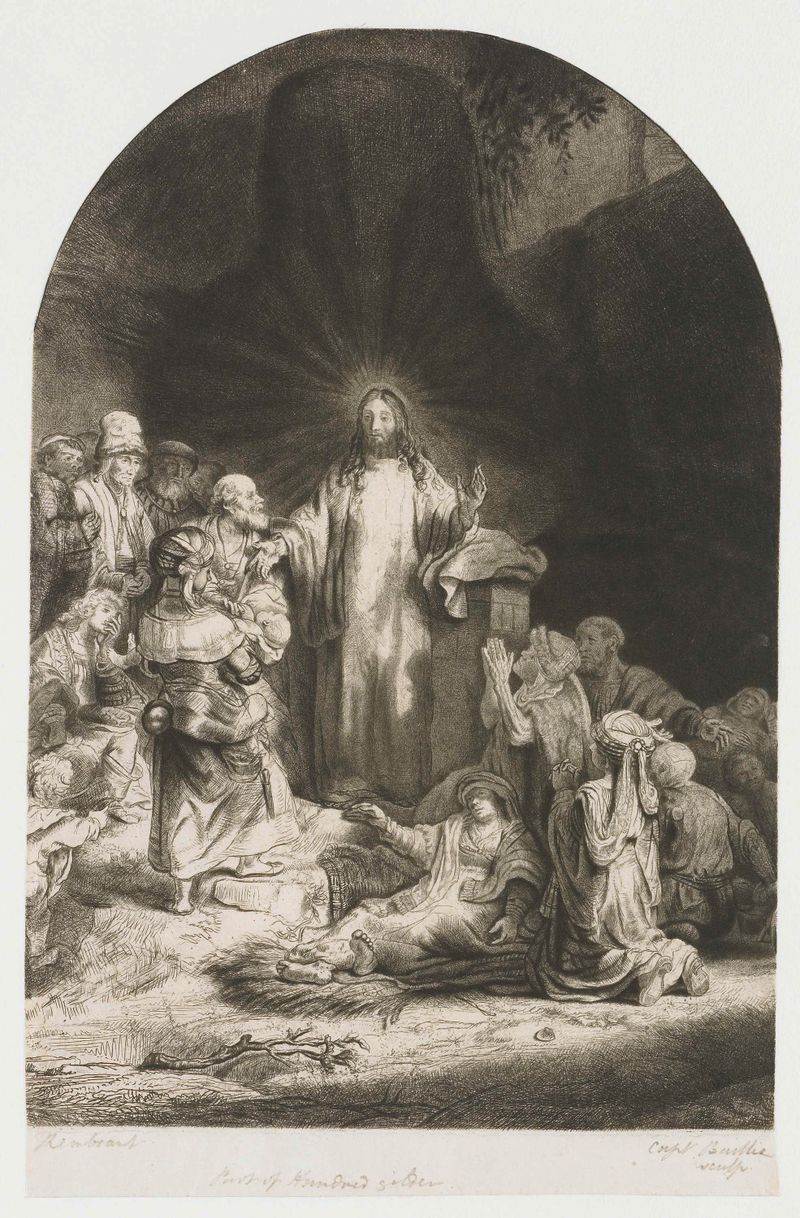
The Hundred Guilder Print: the central piece with Christ preaching, the plate arched
Rembrandt van Rijn

The Hundred Guilder Print: the man seen on the back in the lower left corner
Rembrandt van Rijn
More Religious Art
Browse all →The Return of the Prodigal Son
Rembrandt van Rijn

The Garden of Earthly Delights
El Bosco

Count Orgaz’ funeral
El Greco
The Hundred Guilder Print: the central piece with Christ preaching, the plate arched
Rembrandt van Rijn

The Descent from the Cross
Rogier van der Weyden
The return of the prodigal son
Rembrandt van Rijn