Joe the swineherd — History & Facts
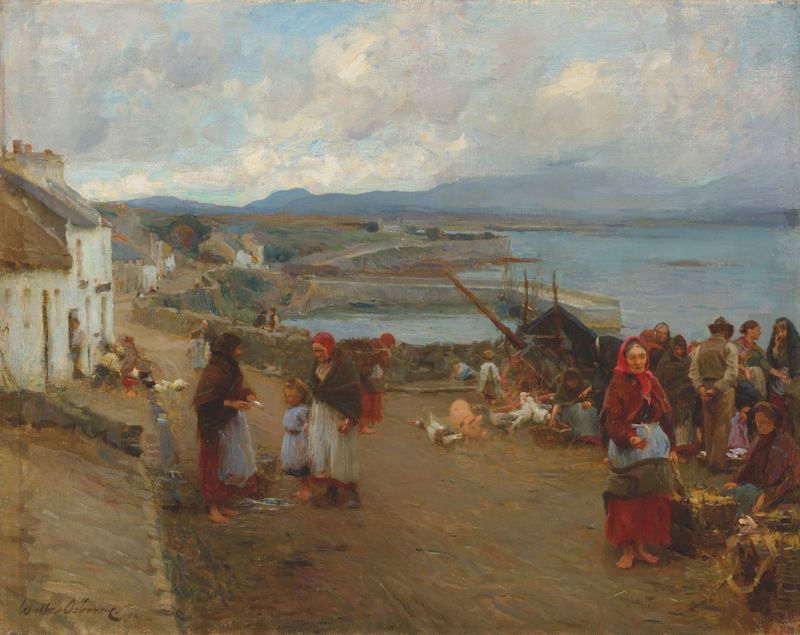
When did color learn to lie? Within the palette of this painting lies a world obscured by nostalgia and unfulfilled longing. Look to the foreground, where the figure of the swineherd stands with a quiet dignity, enshrined in the soft, earthy tones of his ragged attire. Notice how the light dapples across his weathered skin, illuminating the tenderness of his expression amidst the shadows of his surroundings. The subtle brushwork captures the texture of both the pigs and the lush, green field, drawing the viewer into a pastoral scene steeped in tranquility yet tinged with an unmistakable yearning. In the background, the fading garden blurs into the horizon, evoking a sense of distance and separation.
The swineherd’s gaze seems to pierce through the canvas, suggesting a narrative that transcends the immediate moment—a silent prayer for freedom woven into the fabric of his existence. There is a poignant contrast between the vitality of nature and the solitude of the figure, drawing attention to the delicate balance between contentment and desire. In 1890, the artist painted this work amidst a burgeoning movement toward naturalism in art, reflecting a period of personal and creative exploration. Living in Dublin, he was influenced by both the local landscapes and the changing sociopolitical climate, all while grappling with his own artistic identity.
This piece encapsulated the intersection of personal experience and broader societal themes, solidifying the artist’s place within the narrative of late 19th-century art.