
Johanneksen kirkko, Helsinki — History & Facts
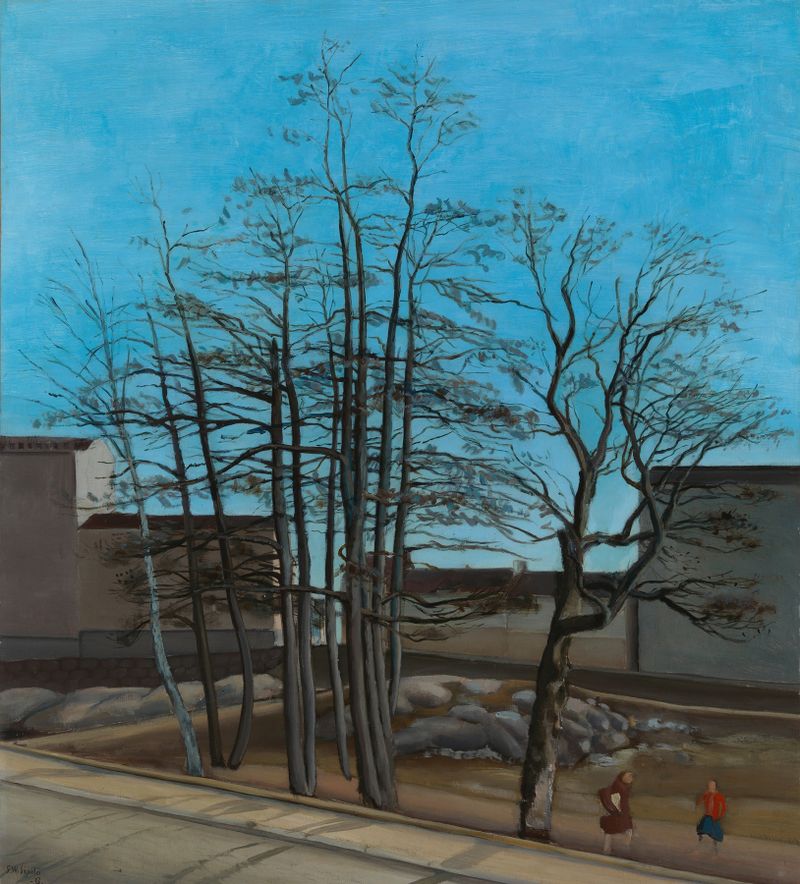
Can paint confess what words never could? Within the strokes of Johanneksen kirkko, Helsinki, a poignant silence envelops the viewer, echoing the sorrow of loss that lingers in the air. Focus first on the church's towering spire, dominating the canvas and reaching skyward as if desperate to bridge earth and heaven. The muted palette of blues and grays envelops the structure, suggesting a somber afternoon where the light struggles to penetrate the clouds. Notice how the dappled sunlight falls softly on the intricate stonework, illuminating details that speak of craftsmanship and devotion, yet also cast long shadows that whisper of absence and longing. The emotional tension lies in the contrasts between the solidity of the church and the ethereal quality of the surrounding atmosphere.
The soft, almost ghostly hues evoke memories of those who have come to seek solace within its walls, while the quiet stillness of the scene hints at voices no longer heard. Each brushstroke tells a story of grief—perhaps for a lost loved one or for a time gone by, intertwining personal sorrow with collective memory. In 1931, Sulho Sipilä crafted this piece during a period of significant change in Finnish society, as the nation was navigating its identity post-independence. Living in Helsinki, the artist focused on capturing the essence of the urban landscape, reflecting both the beauty and the heartache of the time.
The painting resonates as a timeless tribute to the enduring nature of grief intertwined with the architectural legacy of his city.
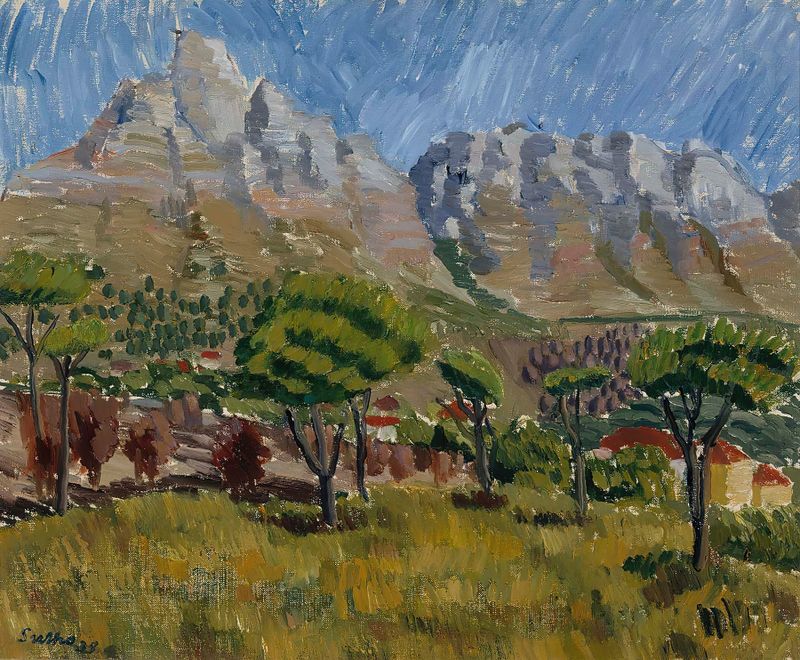
More Artworks by Sulho Sipilä
Browse all →

More Architecture Art
Browse all →
The statue of Liberty
Frédéric Auguste Bartholdi

View of Houses in Delft, Known as ‘The Little Street’
Johannes Vermeer

View of Houses in Delft, Known as ‘The Little Street’
Johannes Vermeer

The Cathedral in Rouen. The portal, Grey Weather
Claude Monet

The yellow house
Vincent van Gogh

The Church in Auvers-sur-Oise, View from the Chevet
Vincent van Gogh