The Skating Rink — History & Facts
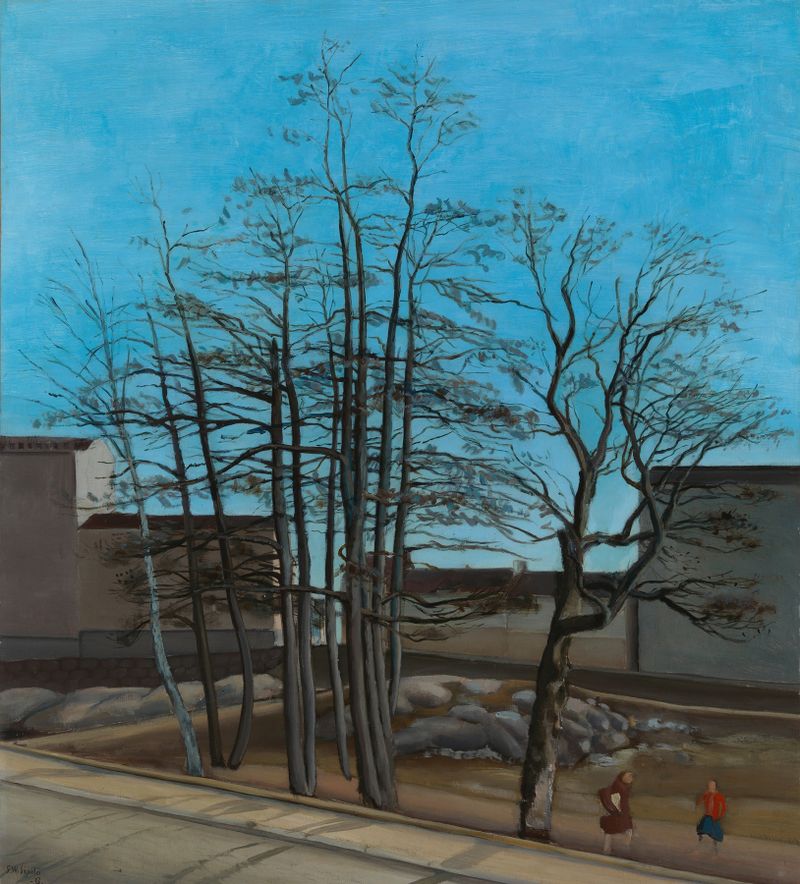
What secret hides in the quiet of the canvas? In The Skating Rink, serenity envelops a seemingly ordinary moment, beckoning the viewer to linger longer amidst the frozen tableau. Look to the left at the gentle curve of the frozen lake, where skaters glide effortlessly beneath a canopy of soft, diffused light. The cool blues and whites dominate the scene, punctuated by the warm, inviting tones of the spectators bundled in cozy garments. Sipilä’s brushstrokes are both precise and fluid, capturing the delicate balance of motion and stillness, as the figures intertwine in joyful harmony against the expanse of ice. Deep within this tranquil setting, small details resonate with meaning—the way a child clutches a parent’s hand, the laughter captured in a moment of shared joy, and the distant trees casting elongated shadows.
Each skater, though engaged in their own dance, is connected by the shared experience of winter’s embrace, evoking themes of community and tranquility. The stillness of the scene belies a deeper emotional pulse, contrasting the vibrancy of life with the isolation found in winter’s chill. In 1932, the artist captured this picturesque scene from his native Finland. During this period, Sipilä was immersed in the exploration of light and color, seeking to express the serene beauty of Nordic landscapes.
As Europe grappled with social and political challenges, his work offered an escape—a visual meditation on the simplicity and joy found in everyday moments.