The First of May — History & Facts
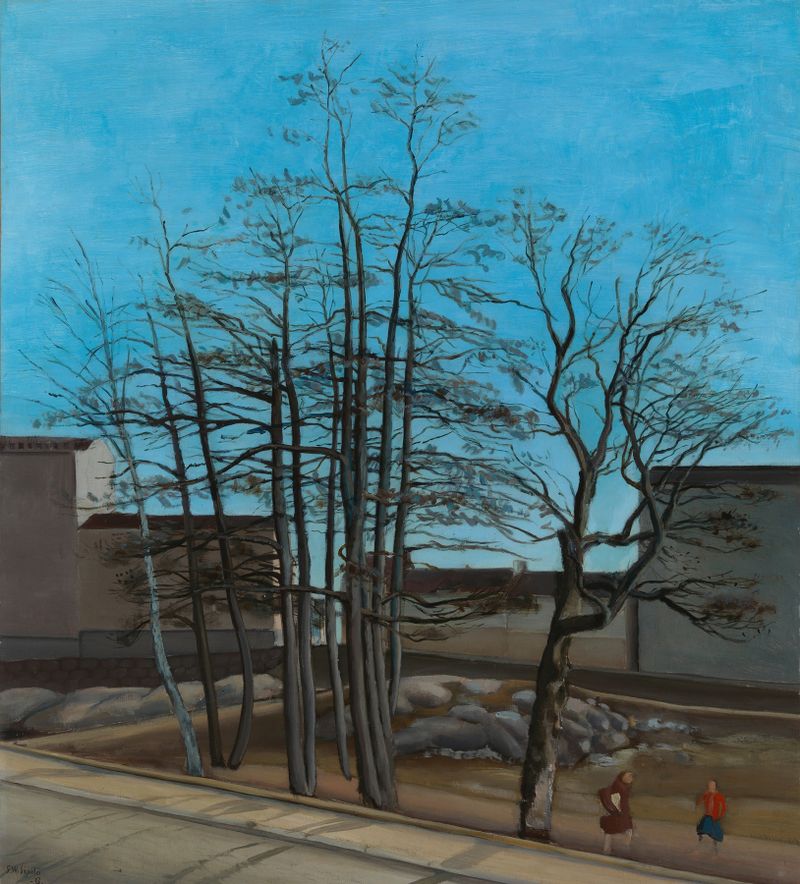
What if beauty was never meant to be finished? This lingering question dances through the heart of The First of May, echoing the solitude that permeates the canvas. Look to the center of the composition, where a solitary figure stands beneath a sprawling tree. The artist employs soft, muted greens and browns, layering them with gentle brushstrokes to create a sense of serenity and stillness. Notice how the light filters through the leaves, casting dappled shadows that caress the figure’s form, accentuating both presence and absence.
This delicate interplay of light and shadow invites you to contemplate the contrast between the vibrancy of nature and the quiet isolation of the subject. Deeper insight reveals a poignant narrative hidden within. The figure, though surrounded by the lushness of spring’s arrival, exudes a palpable sense of loneliness, suggesting that even in moments meant for celebration, isolation can linger. The blossoming flowers at the tree’s base represent fleeting beauty, reminding us of the transient nature of joy and connection.
Sipilä captures not just a moment in time, but an emotional stillness, a snapshot of longing that resonates beyond the frame. Created in 1932, this piece reflects Sulho Sipilä’s search for identity amid the evolving Finnish art scene, marked by the aftermath of World War I and the rise of modernism. Living in Helsinki during a period of political and social unrest, Sipilä’s work became a medium for exploring complex emotions, ultimately conveying the interplay between individuality and the collective experience of society.