
John Winthrop (1588-1649) — History & Facts
In this stillness, color becomes a truth-teller, an unspoken language bridging the past to the present. Every hue gives voice to history, while shadows whisper stories long forgotten, urging us to listen. Look carefully at the figure of Winthrop, framed against a backdrop of muted greens and browns. Focus on the way the deep blue of his cloak contrasts with the earthy tones surrounding him, drawing your gaze to his contemplative expression.
Notice the delicate play of light illuminating his face, capturing a moment of reflection as if he is poised between two worlds — the historical and the contemporary. Beneath the surface, the painting explores themes of leadership and legacy. Winthrop’s solemn demeanor evokes a sense of responsibility, his posture suggesting both strength and vulnerability. The stark contrasts in color not only highlight these dualities but also hint at the tumultuous period of his life, as he navigated challenges and aspirations in the New World.
It invites viewers to ponder the weight of history carried in silence. In the early 1840s, Osgood painted this work during a time of burgeoning American identity, as the nation forged its path in the wake of independence. Living in a period marked by an interest in historical figures, he sought to present Winthrop not merely as a relic of the past but as a symbol of the values and struggles that shaped America. This painting reflects Osgood’s engagement with both the artistic and cultural dialogues of his time, marrying history and visual art into a powerful narrative.
More Artworks by Charles Osgood
Browse all →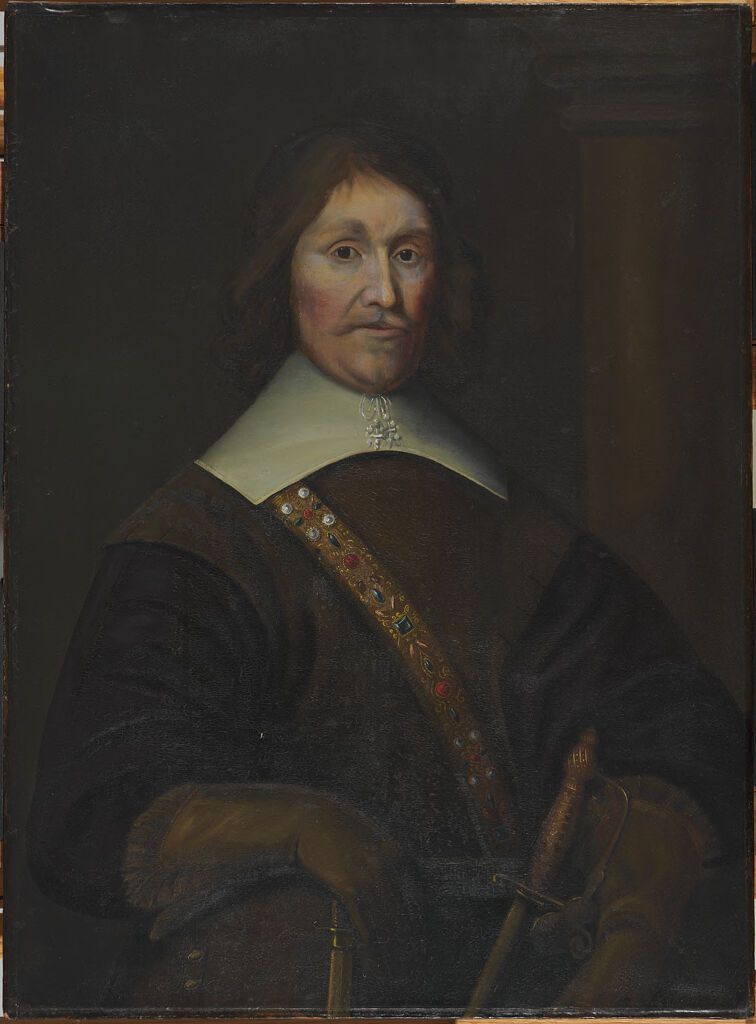
More Portrait Art
Browse all →
Las meninas
Diego Velázquez

Self-portrait with a Bandaged Ear and Pipe
Unidentified artist

Girl with a Pearl Earring
Johannes Vermeer

The Sampling Officials of the Amsterdam Drapers’ Guild, Known as ‘The Syndics’
Rembrandt van Rijn

The Hundred Guilder Print: the man seen on the back in the lower left corner
Rembrandt van Rijn

Portrait of Dr Gachet
Vincent van Gogh