
Jærlandskap — History & Facts
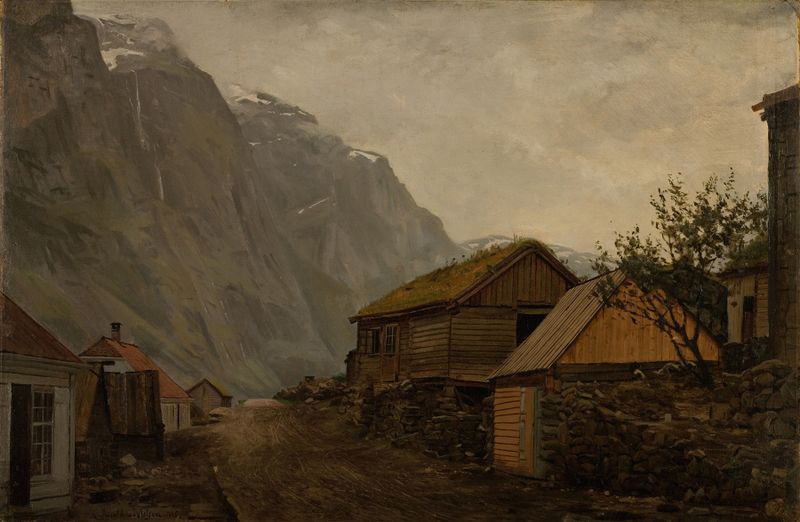
When did color learn to lie? Beneath its vibrant surface, does it conceal a deeper solitude waiting to be unveiled? Look to the center of the canvas where the rolling hills undulate gently, their rich greens meeting the dusky oranges of a setting sun. Notice how the brushwork, both fluid and deliberate, creates a rhythm that draws you in; each stroke is a whisper, a soft invitation to explore the vastness of the landscape. The trees, positioned to the left, stand stately yet isolated, their dark silhouettes contrasting sharply against the warm horizon.
This juxtaposition of light and shadow captures not just the beauty of nature, but also a profound sense of abandonment. Delve deeper into the imagery, and the emotional tension surfaces. The expansive sky, alive with dramatic hues, possesses an overwhelming grandeur that evokes both awe and isolation — a reminder of the loneliness inherent in nature’s splendor. Each element, from the solitary trees to the winding paths, hints at a journey that could lead anywhere yet feels forever unfinished.
This landscape speaks of solitude, as if the viewer, too, is a wandering spirit suspended in this vibrant yet desolate world. In 1892, Amaldus Nielsen painted Jærlandskap amidst a period of artistic exploration in Norway, where natural beauty was intertwined with national identity. As he captured this scene, Norway was undergoing significant cultural transformation, reflecting a collective yearning for connection with the land. Nielsen, an influential figure in the landscape movement, sought not only to depict the physical attributes of his surroundings but also to convey the emotional weight they carried, mirroring his own introspective journey through art.
More Artworks by Amaldus Nielsen
Browse all →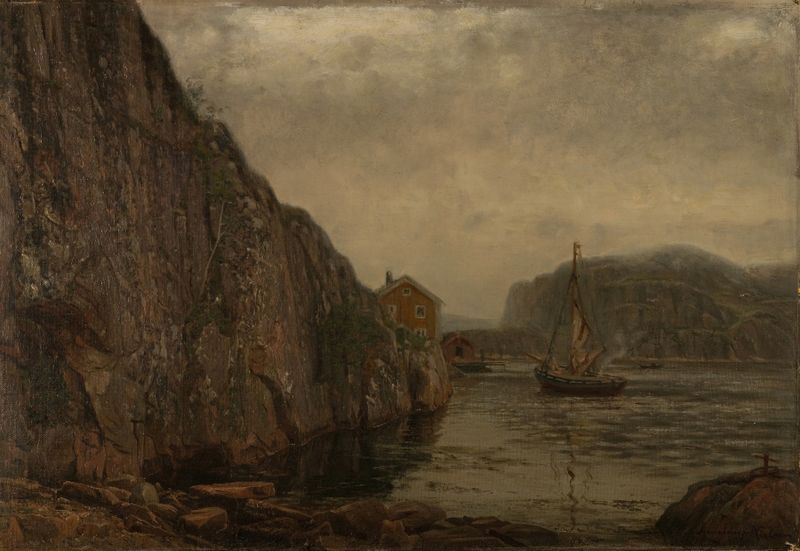
Skjærgård, Ny-Hellesund
Amaldus Nielsen
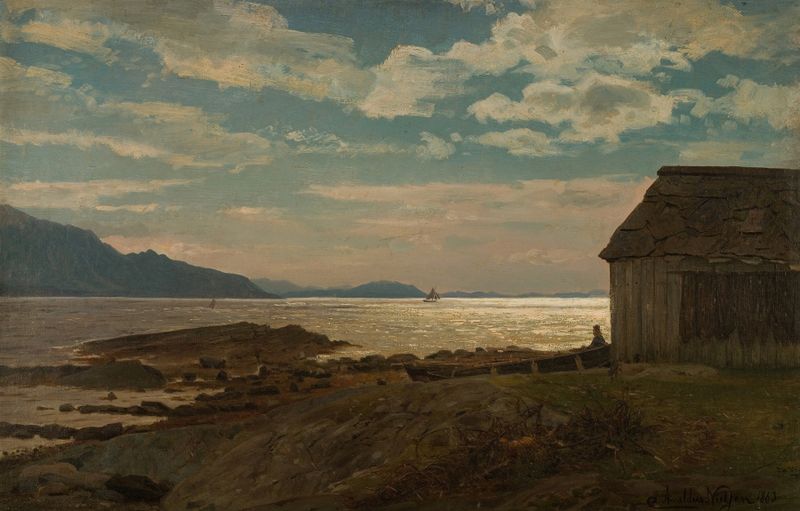
Fra Ølvestranden, Hardanger
Amaldus Nielsen
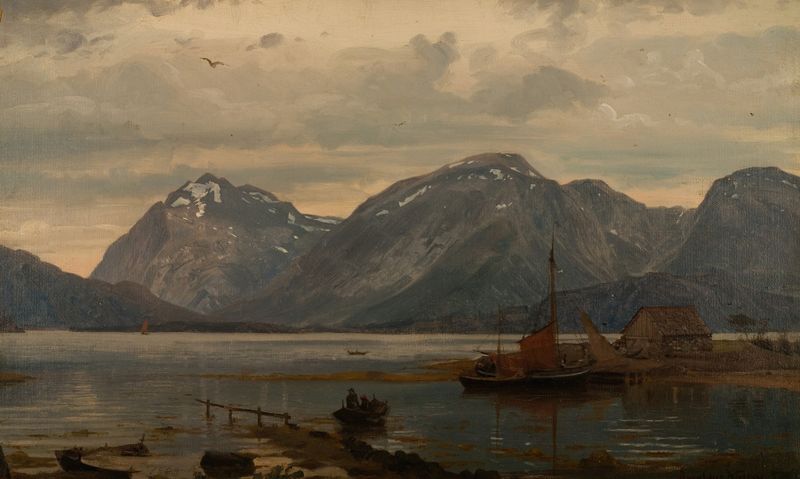
Fra Englafjellene, Hardanger
Amaldus Nielsen
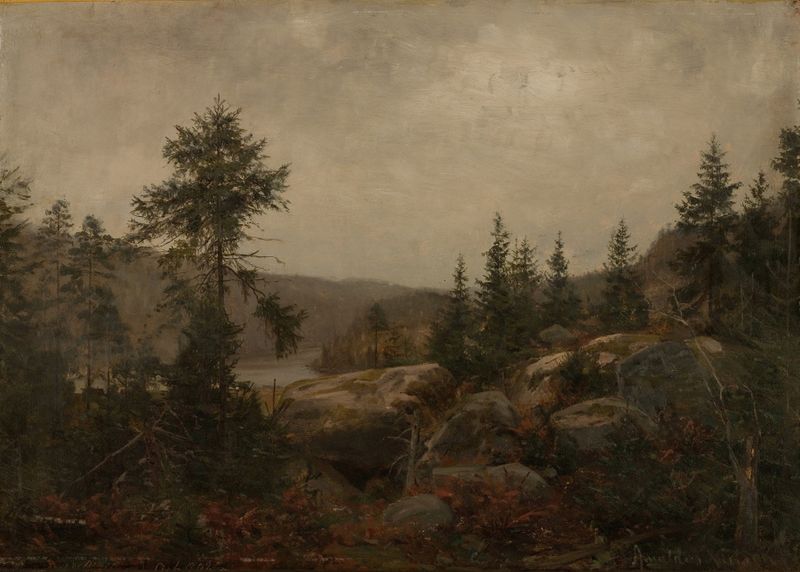
Duskregn . Gården Foss, Mandalselven
Amaldus Nielsen
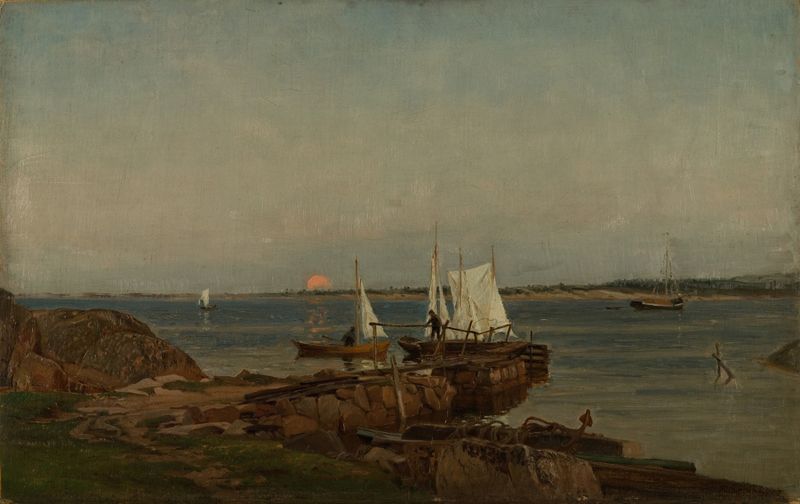
Sommernatt, Hvaler
Amaldus Nielsen
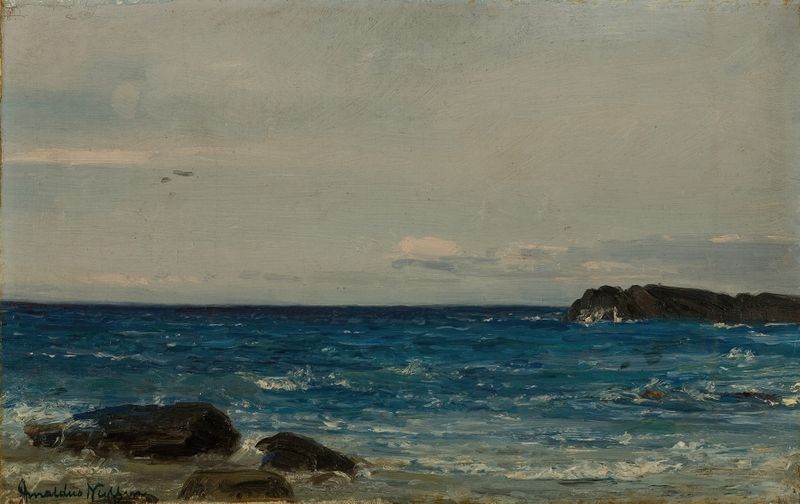
Fra Jæren
Amaldus Nielsen
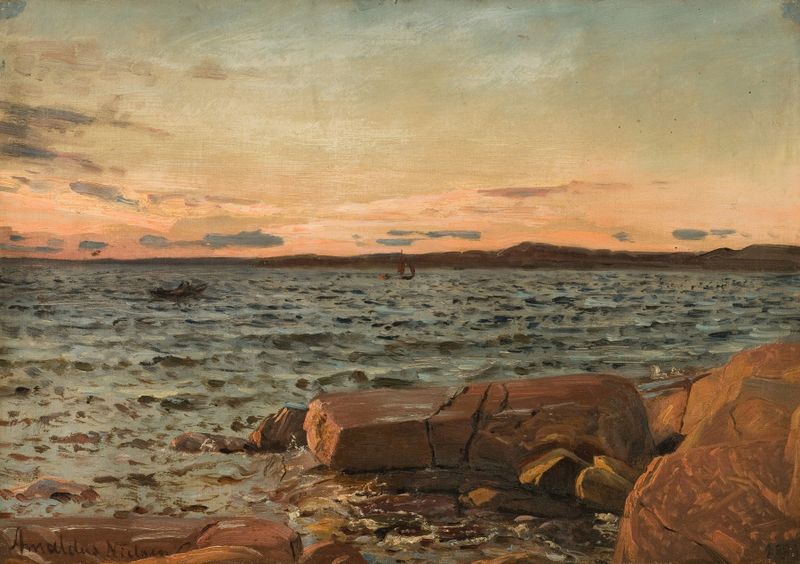
Solgangsvind, Hvaløene
Amaldus Nielsen
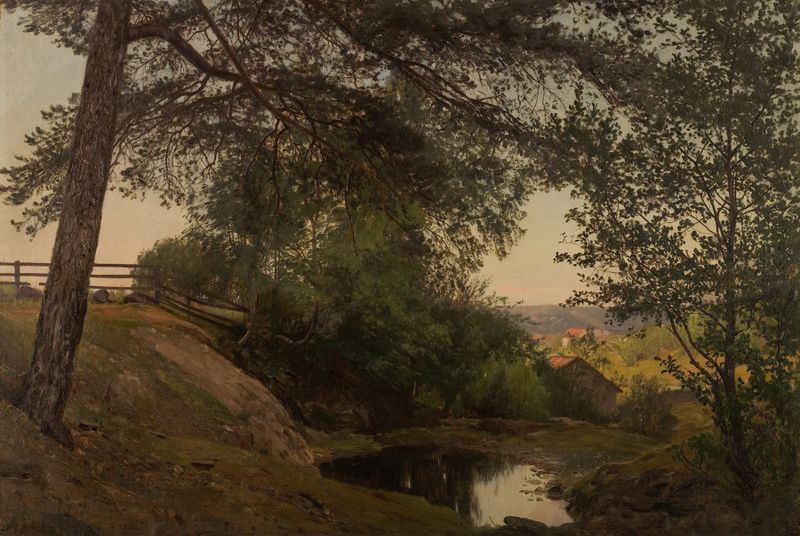
Mellom trærne. Lervik, Stord
Amaldus Nielsen

Båtbyggeri, Lillesand
Amaldus Nielsen
Regnstemning, Gudvangen
Amaldus Nielsen





