Kalwarya — History & Facts
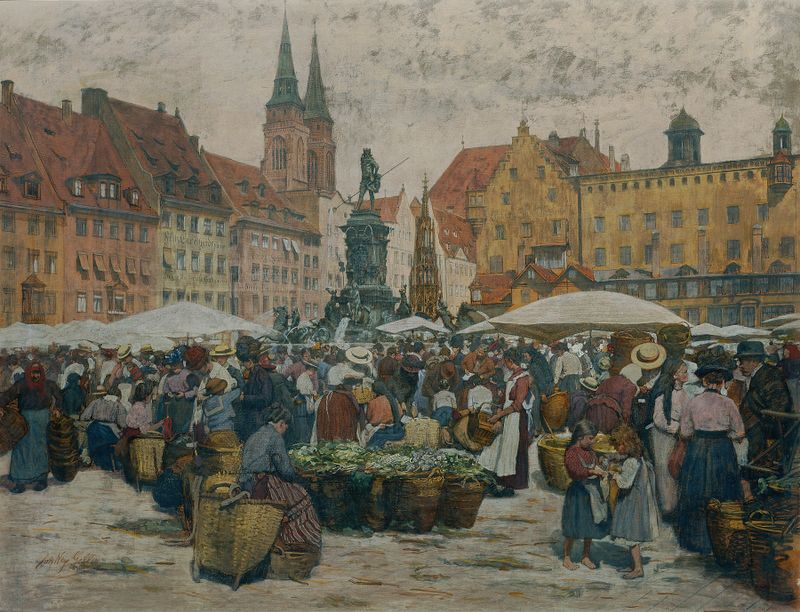
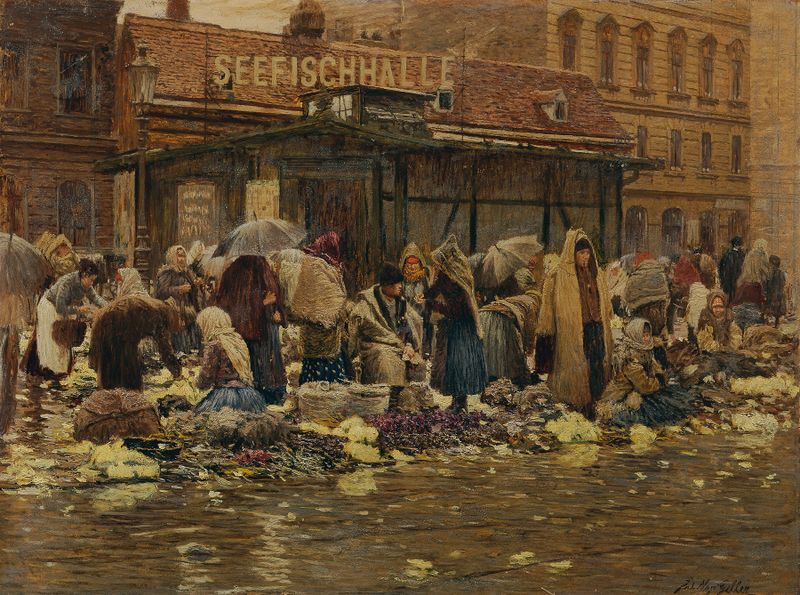
Can beauty exist without sorrow? The question lingers like a whispered secret, inviting contemplation beneath layers of illusion and truth. Direct your gaze to the ethereal interplay of light and shadow that envelops the composition. Notice how the warm tones pulse softly against the cooler undertones, creating a visual tension that draws you deeper into the scene. The figures, caught in intimate conversation, appear almost ghostly, as if they exist between worlds, enhanced by the delicate brushwork that blurs the boundaries of reality.
Every detail, from the luminous fabric of their garments to the glimmering surface of the water, serves to heighten the sense of wonder and uncertainty. Yet, amid the allure lies a whisper of melancholy. The serene expressions mask an underlying complexity, suggesting stories of longing and unfulfilled desires. Observe the distant horizon, where the sun’s descent hints at an ending, a transition that mirrors the fleeting nature of beauty itself.
This duality is a poignant reminder of how closely joy and sorrow are intertwined, echoing the artist’s intricate exploration of the human experience. Kalwarya was created by Johann Nepomuk Geller near Krakau, during a time when Romanticism was blossoming in Europe, encapsulating the essence of emotional depth and natural beauty. The artist, navigating his own journey, imbued this work with a sense of personal reflection, as the world around him grappled with rapid changes and existential questions. This artwork stands as a poignant mirror of its time, capturing the duality of existence through a lens of enchantment and introspection.