Markt in Nürnberg — History & Facts
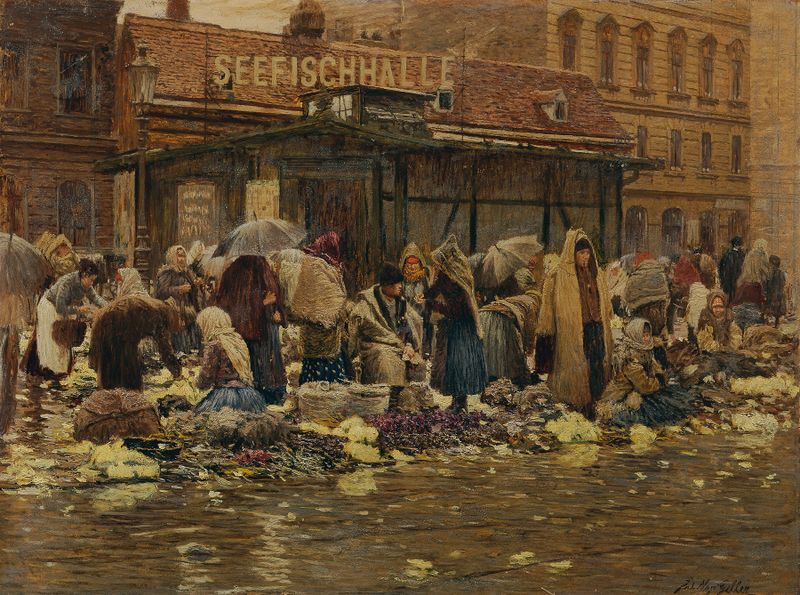
In the delicate interplay of architecture and humanity, we find ourselves drawn into a world alive with unspoken stories and hushed whispers of vibrancy. Look to the center of the canvas, where a bustling market unfolds, bursting with life. The artist skillfully composes a tapestry of figures, each one imbued with distinct gestures, speaking volumes through their movements. Notice how the light filters through the etchings of the buildings, casting intricate shadows on the cobblestone streets below.
The palette is a harmonious blend of warm ochres, deep greens, and muted blues, evoking the warmth of a community gathering under the watchful gaze of historical architecture. As you explore the edges of the scene, subtle contrasts emerge; the joyful interactions of the market-goers juxtapose the steadfast presence of the towering structures that have seen generations come and go. Each stall, laden with goods, becomes a focal point of attention, yet it’s the quiet observer in the corner — an elderly gentleman, perhaps a keeper of memories — who draws the gaze, illustrating the passage of time and the weight of history within this vibrant locale. While crafting Markt in Nürnberg between 1894 and 1895, Johann Nepomuk Geller was deeply engaged in his exploration of realism, reflecting the cultural and social changes of his time. Working in a period marked by the rise of urban life and impressionistic techniques, Geller’s focus on capturing everyday life in a historically rich setting showcases his commitment to representing the essence of human experience amidst the evolution of the modern world.